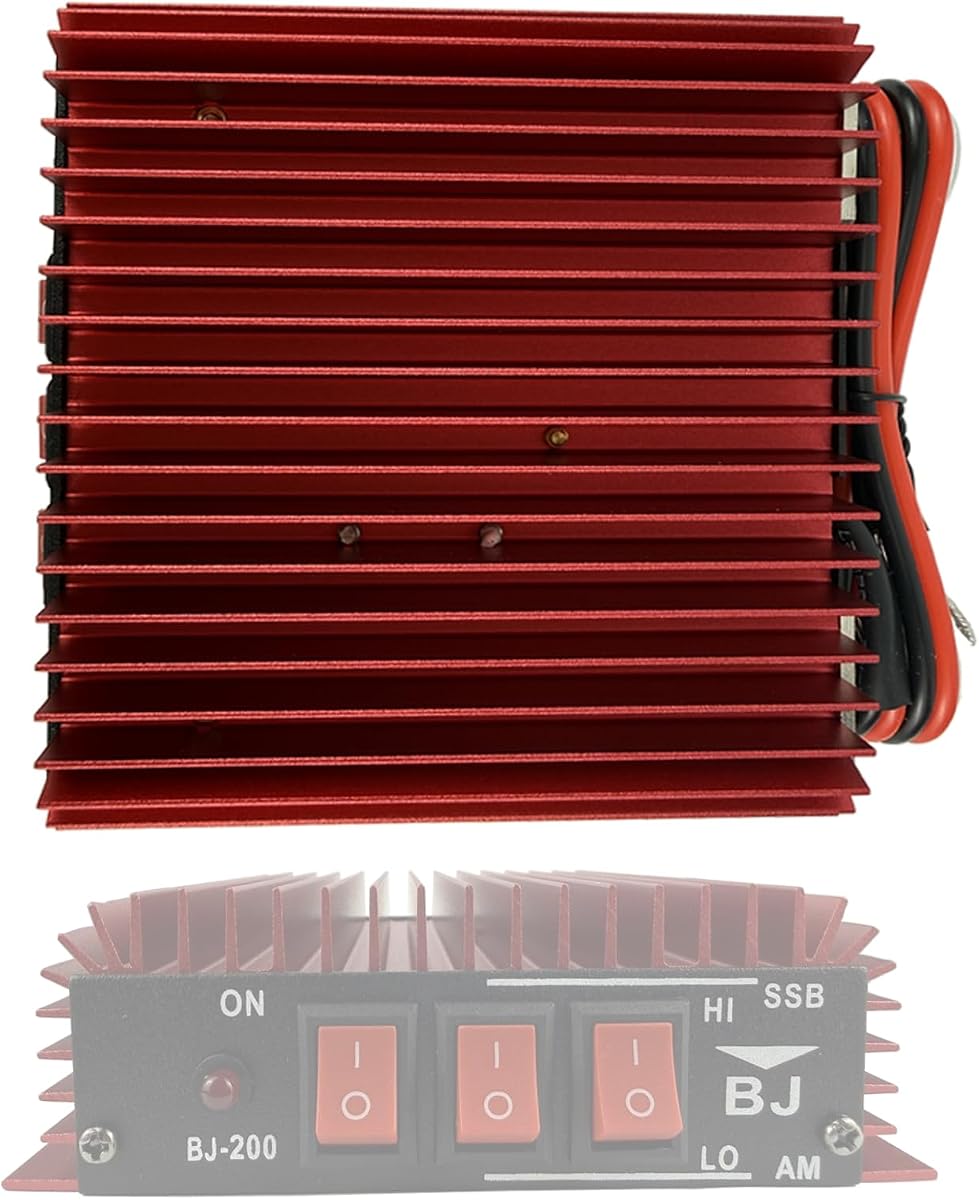
BJ-200 Linear Power AMP, 3-30MHz Radio AMP 50W FM 100W AM 150W SSB for 3-5W Input 2-Way Radio Transceiver, 13.8V
5.0Editor score
150W SSB output power
Compact aluminum heat sink
Polarity reversal protection
Discover the top 10 linear amplifiers for ham radio in October 2026. This expert guide compares performance, features, and reliability for HF stations.
Linear amplifiers are essential tools for amateur radio operators seeking to extend their communication range. These devices boost signal power, ensuring clearer transmissions across HF bands. Choosing the right amplifier depends on your specific radio setup and operating needs.
This comprehensive guide evaluates ten distinct linear amplifiers based on power output, band compatibility, and build quality. We analyzed technical specifications, user feedback, and manufacturer claims to provide an accurate comparison. Each product offers unique advantages for different operator requirements.
Our selections highlight top performers in budget, mid-range, and premium categories. You will find detailed reviews, key features, and practical advice for integration. Please note that availability and pricing may fluctuate over time. Always verify current details before purchasing.
5.0Editor score

4.2Editor score

3.9Editor score
The following table provides a side-by-side comparison of all ten linear amplifiers reviewed in this guide. Examine key specifications such as output power, input requirements, and specific features to identify the best fit for your station setup.


The Xiegu GPA100 stands out as a high-performance linear amplifier designed for HF transceivers. With a solid-state design, it delivers clean and stable RF output up to 100W on HF bands. This ensures crystal-clear performance across SSB, AM, FM, CW, and digital modes, making it ideal for serious operators.
We may earn a commission when you buy through this link, at no additional cost to you.
Key strengths include its flexible band switching capabilities. You can choose between manual buttons with indicator lights or enable auto mode for seamless automatic band tracking. The built-in Bluetooth allows wireless control, connecting directly to radios like the IC-705 for a cable-free setup.
Honest trade-offs involve its compatibility focus. It is tailored for low-power transceivers such as the Xiegu G90 or IC-705. While it expands QRP setups effectively, high-power base stations might require different input requirements. The Bluetooth feature also bypasses unsupported bands, which could interrupt continuity.
Who should buy this? Operators with QRP or low-power transceivers looking to upgrade to 100W. Its smart cooling and intelligent protection ensure safe operation during long sessions. The GPA100 is highly recommended for those valuing signal purity and modern connectivity features.
The solid-state linear design minimizes distortion, ensuring high efficiency and exceptional signal quality for clear transmissions.
Bluetooth connectivity eliminates cable clutter, enabling automatic band switching for a streamlined and modern operating experience.
We may earn a commission when you buy through this link, at no additional cost to you.
The BJ-300 Plus is designed for high-power performance across CB and Ham Radio bands. It supports multiple modulation modes including AM, FM, SSB, and CW, delivering up to 150W on SSB. This extends communication range for reliable long-distance operation effectively.
We may earn a commission when you buy through this link, at no additional cost to you.
Its thermal management system is a key strength. Equipped with a high-efficiency cooling fan and a large red aluminum heat sink, it prevents overheating during extended use. Safety features include electronic polarity reversal protection and dual 15A fuses for electrical surge protection.
Trade-offs relate to input requirements. It works best with HF transceivers needing 3-5W for AM/FM or 2-10W for SSB. Users with incompatible radios may face setup challenges. Additionally, the lower user rating suggests some variability in performance consistency.
Ideal for users seeking a cost-effective boost for existing radios. The compact design and simple controls make installation quick. If you need robust power with reliable thermal protection, the BJ-300 Plus offers a practical solution for versatile HF use.
High-efficiency fan and large heat sink ensure stable operation even during extended transmit cycles without overheating.
Polarity reversal protection and fuses safeguard the amplifier from incorrect connections and electrical surges.
We may earn a commission when you buy through this link, at no additional cost to you.
This variation of the BJ-300 Plus continues the theme of high-power performance for CB and Ham Radio. It supports AM, FM, SSB, and CW modes, delivering 150W on SSB. The amplifier is built to extend communication range for long-distance reliability.
We may earn a commission when you buy through this link, at no additional cost to you.
Thermal management remains a critical feature. The built-in high-efficiency cooling fan combined with a large aluminum heat sink prevents overheating. This ensures stable performance during extended sessions while protecting internal components from thermal stress.
The design prioritizes user-friendliness. Controls are simple with a power switch, mode selector, and high/low power adjustment. Standard PL-259 connectors make installation and setup straightforward for both new and experienced users looking for versatility.
Who should consider this? Users needing a reliable, simple amplifier for HF bands. While the rating is moderate, the protection features and cooling system offer practical value. It is a solid choice for those prioritizing ease of use and robust output.
Simple controls and clear connectors make installation quick and operation easy for all user experience levels.
Advanced cooling and safety fuses protect the unit during long transmit cycles ensuring reliability.
We may earn a commission when you buy through this link, at no additional cost to you.
The BJ-300 delivers high-performance output with up to 150W on SSB. It supports AM, FM, and CW modes across the HF range. This makes it ideal for radio and HF transceiver applications requiring reliable signal amplification and consistent power delivery.
We may earn a commission when you buy through this link, at no additional cost to you.
Key features include dual power control with HI/LO switches to adjust output strength based on needs. Enhanced protection is provided by an electronic switch and polarity inversion protection to safeguard the amp from incorrect power connections and surges.
Trade-offs include the lack of user ratings, which makes verification difficult. However, the durable practical design features a compact aluminum alloy heat sink. Standard antenna and transceiver ports facilitate quick installation for both base and mobile stations.
Who should buy this? Users seeking a straightforward amplifier without complex digital features. If you need a solid, high-output device with basic safety protections, the BJ-300 fits well. It is a practical solution for enthusiasts prioritizing output power.
HI/LO power switches allow you to adjust output strength based on operating needs for flexibility.
Compact aluminum alloy heat sink construction ensures efficient heat dissipation and long-term durability.
We may earn a commission when you buy through this link, at no additional cost to you.
The BJ-200 is a top performer with a perfect 5.0 rating. It supports AM, FM, and SSB modes across 3-30MHz. Delivering up to 150W SSB output from a low input, it is versatile for CB radio use and two-way radio enthusiasts.
We may earn a commission when you buy through this link, at no additional cost to you.
Reliable power safety is a strong point. Operating on 13.8V DC, it features built-in polarity reversal protection to prevent damage from incorrect connections. User-friendly controls include clear ON/OFF switches and HI/LO power adjustment for easy operation.
Trade-offs include the specific voltage requirement. However, the red aluminum alloy heat sink ensures optimal thermal management. Its rugged and compact form factor makes it ideal for vehicle or base station installation in diverse environments.
Who should buy this? Budget-conscious users seeking proven reliability. The perfect rating suggests high satisfaction. If you need a cost-effective upgrade for 2-way radios or HF bands, the BJ-200 is a highly recommended choice.
Achieving a 5.0 rating indicates exceptional reliability and user satisfaction compared to competitors.
Red aluminum alloy heat sink design maintains stable performance and extends amplifier lifespan.
We may earn a commission when you buy through this link, at no additional cost to you.
The Xiegu XPA125B combines a power amplifier with an automatic antenna tuner. It handles 14-500 ohm loads in HF and 6-meter bands. With up to 125W output, it suits QRP radios or low-power SDR transceivers needing a boost.
We may earn a commission when you buy through this link, at no additional cost to you.
Safety is a priority with intelligent protection circuits. If SWR is too high or temperature too elevated, it enters bypass mode with an alarm. The large 2.7-inch backlit LCD display shows input/output power, SWR, and status messages clearly.
Trade-offs involve the cost and complexity. While compact compared to older versions, it may be overkill for basic setups. However, the versatility of the tuner and amplifier unit allows for independent use if needed.
Who should buy this? Users wanting a streamlined station upgrade. The integrated tuner saves space and effort. If you have a low-power station seeking 100W output without external tuners, this premium unit is the ideal solution.
Handles 14-500 ohm loads in HF and 6-meter bands independently or with the amplifier.
Large LCD screen clearly shows power, SWR, voltage, and temperature for easy monitoring.
We may earn a commission when you buy through this link, at no additional cost to you.
The LICAEVEY 30W board delivers linear power output across the full shortwave spectrum. It is engineered for high frequency operation from 3MHz to 30MHz. This module supports both CW and SSB modulation with minimal distortion for clear voice and Morse code.
We may earn a commission when you buy through this link, at no additional cost to you.
Its broadband design uses advanced circuitry to deliver consistent gain without manual tuning. The high-efficiency transistors and wide bandwidth make it a versatile addition to your HF station. It handles extended transmit cycles without overheating thanks to integrated thermal management.
Trade-offs include the 30W limit, which is lower than full units. It requires technical skill for integration. However, it offers ample signal boost for QRP transceivers and kits. Its stability against overcurrent and voltage fluctuations ensures reliable operation.
Who should buy this? DIYers needing a module for portable setups or home stations. It fits well in limited spaces. If you seek a robust upgrade for QRP gear with clear signal integrity, this module is an effective choice.
Advanced broadband circuitry delivers consistent gain across the shortwave range without manual tuning.
Protects against overcurrent and voltage fluctuations for reliable long-term performance.
We may earn a commission when you buy through this link, at no additional cost to you.
This amplifier offers a simple solution for CB power needs. It supports 12-14V wide DC input compatible with automotive supplies. The stable operation during engine start ensures reliability while driving. It uses a simple three-wire connection for RF input, output, and DC power.
We may earn a commission when you buy through this link, at no additional cost to you.
SO-239 connectors are standard for most CB radios and antenna systems. This simplicity makes installation straightforward without complex wiring. It is designed for standard stationary or vehicle setups requiring robust signal enhancement.
Trade-offs include basic features. It lacks advanced protections or displays. However, for pure signal boosting in a CB setup, it is functional. The compact form factor ensures it fits easily into limited spaces.
Who should buy this? Users needing a no-fuss power boost. If you prioritize simplicity and standard compatibility, this option works well. It is a practical choice for mobile stations requiring consistent RF amplification.
Three-wire connection and SO-239 connectors make setup quick for most CB radios.
Wide input ensures stable operation during engine start without signal disruption.
We may earn a commission when you buy through this link, at no additional cost to you.
This Low Noise RF Amplifier (LNA) operates from 0.1MHz to 2000MHz. It offers 32dB gain and a low noise figure for improved reception. With a max output of 13dBm, it is ideal for RF receiving front-end applications.
We may earn a commission when you buy through this link, at no additional cost to you.
It supports 9V to 12V power with only 27mA current consumption. This battery-friendly operation makes it great for field use. It covers FM, VHF/UHF, and even cellular signals. Stable performance ensures increased communication distance and better reception quality.
Trade-offs: this is a receiving amp, not a transmitter. It does not boost transmit power. However, for weak signal environments or SDR setups, it is essential. It helps clear noise in remote or urban settings.
Who should buy this? Users focused on reception and weak signals. If you want clearer listening for shortwave or SDR, this LNA is perfect. It is a cost-effective upgrade to improve signal integrity without complexity.
32dB gain and low noise figure significantly improve weak signal reception.
Only 27mA consumption supports portable field use with standard batteries.
We may earn a commission when you buy through this link, at no additional cost to you.
This Xiegu XPA125B variant focuses on seamless integration with Xiegu host models. It delivers 100W output in HF range with automatic tuning. This simplifies tuning so users focus on communication. It is specifically compatible with G90, G106, X5105, and future models.
We may earn a commission when you buy through this link, at no additional cost to you.
It maintains maximum output power automatically. The unit is constructed from premium quality materials for durability and reliability. After-sales service is provided by Xiegu technicians through Ham Club Only to ensure a perfect user experience.
Trade-offs: compatibility is limited to specific radios. If you use non-Xiegu gear, this won't work. However, for existing Xiegu users, it offers optimized control. It enhances operational efficiency without manual interference.
Who should buy this? Xiegu users seeking seamless expansion. If you own a G90 or similar, this is the logical upgrade. It ensures robust communication capabilities and long-term reliability with expert support.
Designed for G90, G106, and X5105 for automatic tuning and consistent output.
After-sales service provided by Xiegu technicians for reliability.
We may earn a commission when you buy through this link, at no additional cost to you.
Selecting the right linear amplifier requires careful consideration of technical factors. This guide outlines key aspects to ensure you find the perfect match for your station needs.
Output power determines the range and clarity of your transmission. Most ham radio setups benefit from 100W to 150W SSB output. Check your transceiver's input limits to ensure the amplifier can handle the drive power efficiently.
Always match the amplifier's output to your licensing and operational goals.
Linear amplifiers often target specific frequency ranges such as HF or VHF/UHF. Ensure the device covers the bands you operate on regularly. Some models support multiple bands through manual or automatic switching.
Verify that the amplifier supports all your required amateur bands without gaps.
Your amplifier must be compatible with your existing radio. Low-power transceivers often require specific drive levels. Some units are designed for brands like Xiegu or general use with 3-5W input.
Consult your radio's manual to confirm drive requirements before purchasing.
Continuous operation generates heat. Look for models with high-efficiency cooling fans and large heat sinks. Good thermal management prevents overheating during extended transmission sessions and protects internal components.
Prioritize units with proven cooling solutions for reliable longevity.
Built-in protections are essential for equipment safety. Features like reverse polarity protection and overvoltage safeguards prevent damage from electrical surges. Some units also monitor SWR and enter bypass mode if conditions are unsafe.
Always choose amplifiers with robust safety features for peace of mind.
Installation complexity varies. Simple units use standard connectors like SO-239 or PL-259. Advanced models may have display screens or wireless controls. Consider your technical skills and available space in your setup.
Select a unit with straightforward connectors for quick and reliable setup.
Materials matter for long-term use. Aluminum alloy heat sinks provide efficient heat dissipation. Rugged builds withstand transport for field operations. Check reviews for consistent performance over time.
Invest in units with premium materials for stable, long-lasting operation.
Prices vary based on features and power. Entry-level models offer basic amplification, while premium units add tuning and displays. Determine your budget but prioritize reliability and essential features.
Focus on value rather than just the lowest price for consistent performance.
Start by connecting the amplifier correctly. Use standard connectors to link your transceiver output to the amplifier input. Ensure all cables are secure and match impedance standards. Incorrect connections can cause damage to both devices.
Monitor the thermal management system during use. Ensure the cooling fan is running and airflow is unobstructed. If the unit gets hot, allow it to cool down before continuing transmission. This maintains stable performance over long sessions.
Regularly inspect connections and safety circuits. Check fuses and polarity protection features periodically. Keep the exterior clean to prevent dust accumulation. Proper maintenance extends the amplifier's lifespan and ensures reliable signal integrity.
A linear amplifier amplifies the signal without introducing distortion, preserving the original waveform. Standard amplifiers may clip or alter signals. This makes linear amplifiers essential for modes like SSB and CW where signal purity is critical.
Most linear amplifiers require a 13.8V DC power supply to operate correctly. Ensure the power supply provides sufficient current to handle the amplifier's draw. Inadequate power can lead to unstable operation or equipment failure.
Not all transceivers are compatible. Check the input power requirements. Some amplifiers are designed for low-power units like QRP sets. Using an incompatible transceiver can result in insufficient drive or excessive distortion.
High SWR indicates a mismatch between the amplifier and antenna. Check antenna connections and tuning. If the issue persists, stop transmission to prevent damage. Many units will enter bypass mode automatically for protection.
Yes, cooling fans are crucial for managing heat during operation. Without proper cooling, internal components may overheat and fail. Look for models with high-efficiency fans and adequate heat sinks for continuous use.
Ensure the amplifier has built-in protection circuits like overvoltage and polarity reversal safeguards. Using an external surge protector adds an extra layer of security. This protects both the amplifier and your transceiver from damage.
Yes, compact linear amplifiers are designed for portable use. Look for lightweight models with efficient power consumption. They are ideal for field day operations or remote locations where range and signal strength are essential.
Regular inspections every few months are recommended. Check connections, fuses, and ventilation. Keep the unit clean from dust. This maintenance ensures consistent performance and extends the lifespan of your equipment.
This guide has explored ten top linear amplifiers for ham radio in November 2026. The Xiegu GPA100 stands out with its advanced features and reliability. The BJ-200 offers budget-friendly efficiency. The XPA125B leads in premium integration.
Prioritize compatibility and power needs when selecting your unit. Ensure it matches your transceiver requirements and operational bands. Consider thermal management and safety features for long-term stability. Choose based on what matters most for your setup.
Prices and availability fluctuate regularly. Always check current details before purchasing to confirm specifications. Verify your local regulations and frequency permissions. With the right choice, your communication range will improve significantly.