
YCA1030 Dusk to Dawn Sensor
4.4Editor score
Hard-wired photocell
IP65 weatherproof rating
Automatic light control
Discover the top light sensors for home security in October 2026. We compare smart motion detectors, dusk to dawn sensors, and security systems for your home.
Light sensors for home security are essential devices that detect changes in ambient light or motion to automate lighting and enhance safety. They help deter intruders by turning on lights when someone approaches, making your property less inviting to criminals while saving energy during daylight hours.
We compared ten top-rated products based on connectivity, detection range, battery life, and smart home compatibility. Our analysis covers wireless motion sensors, hard-wired photocells, and integrated presence detectors to help you find the right solution for your specific security needs and budget.
Each pick shows key specifications, pros, cons, and real-world performance notes to guide your decision. Please note that prices and availability can change frequently, so check the latest details before purchasing to ensure you get the best deal on your chosen security sensor.
4.4Editor score

4.4Editor score

4.4Editor score
This side-by-side comparison highlights the key specifications and capabilities of the ten leading light sensors for home security available in November 2026. Use this table to quickly identify which device matches your connectivity preferences, installation requirements, and budget constraints.


The Akamatis Litos v3 stands out as our Editor's Choice for home security light sensors due to its advanced mmWave radar technology. Unlike traditional PIR sensors that only detect movement, this device can identify stationary humans, ensuring lights stay on when you are reading or working quietly. Its rating of 4.4 reflects solid user satisfaction with reliability and integration capabilities.
We may earn a commission when you buy through this link, at no additional cost to you.
Key strengths include the integrated ambient light sensor that matches human eye sensitivity, allowing precise automation based on room lighting conditions. The light-permeable front design ensures accurate readings without obstruction, while the ESPHome firmware makes it ready to use right out of the box. Connectivity is handled via 2.4 GHz Wi-Fi with an external antenna for improved range.
Honest trade-offs involve the requirement for a Home Assistant installation, which may be too technical for casual users. Additionally, since it relies on Wi-Fi, it might impact network traffic compared to Zigbee alternatives. However, the superior detection accuracy and local processing make these trade-offs acceptable for privacy-focused smart home enthusiasts.
This sensor is ideal for users already running Home Assistant who want the most accurate presence detection for their security automations. If you need a sensor that knows when someone is actually present rather than just moving, the Litos v3 is the top recommendation for modern home security setups.
The mmWave radar detects stationary humans, reducing missed triggers common with PIR sensors.
Built-in light sensor matches human eye sensitivity for accurate day or night automation.
We may earn a commission when you buy through this link, at no additional cost to you.
The YCA1030 Dusk to Dawn Sensor earns the Best Budget badge by offering reliable automatic light control at an unbeatable price. It is designed for outdoor applications like porch lights or post lamps, ensuring your home is illuminated whenever natural light fades. With a 4.4 rating, users appreciate its durability and straightforward functionality.
We may earn a commission when you buy through this link, at no additional cost to you.
This photocell sensor works with a wide range of bulb types including LED, incandescent, and fluorescent, making it versatile for existing fixtures. The IP65 rating protects it against rain and dust, while the built-in time delay prevents false triggers from passing headlights or lightning. Its standard shape fits most residential outlet boxes without custom adapters.
While it lacks smart features like remote control or app integration, this simplicity is a benefit for those wanting a set-and-forget solution. The hard-wired design means no battery changes are needed, ensuring constant operation. However, you must be comfortable with basic electrical wiring to install it properly.
For homeowners seeking basic security lighting without complex smart home requirements, this sensor is the most cost-effective choice. It provides the essential function of turning lights on at dusk and off at dawn, deterring intruders while saving electricity during daylight hours.
Ensures outdoor lights turn on automatically at dusk for better security visibility.
IP65 rating guarantees reliable performance even in heavy rain or dusty conditions.
We may earn a commission when you buy through this link, at no additional cost to you.
The Philips Hue Outdoor Motion Sensor represents the Best Premium option for those invested in the Hue ecosystem. It combines motion detection with automatic dusk to dawn control, ensuring lights illuminate only when needed. With a 4.4 rating, it delivers consistent performance for driveways, porches, and yards.
We may earn a commission when you buy through this link, at no additional cost to you.
Its 160-degree detection area covers a wide field, reducing blind spots where intruders might hide. The sensor integrates seamlessly with Alexa, Google Assistant, and Apple HomeKit via the Hue Bridge, allowing voice control and complex automations. It is also weatherproof with an IP44 rating, protecting it from outdoor elements.
The requirement for a Hue Bridge can be a barrier if you do not already own one, adding to the initial cost. However, the Bridge unlocks a suite of smart home security features that justify the investment. The battery-powered design makes installation flexible without electrical wiring requirements.
If you want a high-end sensor that integrates deeply with your smart lighting and security setup, this is the top choice. It offers the reliability of wired systems with the convenience of wireless smart features, making it perfect for modern automated home security.
The 160-degree angle ensures broad monitoring of your driveway or porch area.
Connects with major voice assistants via Hue Bridge for centralized control.
We may earn a commission when you buy through this link, at no additional cost to you.
This Zigbee Motion Sensor adds value with its integrated light sensor, allowing you to trigger actions based on ambient light levels. It is designed for users with a compatible Zigbee hub, supporting Home Assistant and SmartThings. Although rating data is marked as N/A, its features suggest strong utility for privacy-focused automation.
We may earn a commission when you buy through this link, at no additional cost to you.
The 0-1000 Lux detection range helps distinguish between day and night, enabling smarter lighting schedules. With three adjustable sensitivity levels and a 26-foot range, you can tune it to avoid false alarms from pets or heat sources. The 360-degree adjustable mount lets you aim it precisely at entryways or hallways.
Because it uses Zigbee, it does not congest your Wi-Fi network and relies on a hub rather than direct internet connection. This ensures local control even if your internet is down. However, you must verify your hub compatibility before purchase as Home Assistant ZHA support is not fully confirmed.
Ideal for tech-savvy users who prioritize local control and energy efficiency, this sensor offers great flexibility. It allows you to build complex automations without cloud reliance, ensuring your security systems remain operational regardless of internet outages.
Turn lights on only when motion is detected and the room is dark.
Low, medium, and high settings help reduce false triggers effectively.
We may earn a commission when you buy through this link, at no additional cost to you.
The TP-Link Tapo Motion Sensor is rated 4.5 stars and offers exceptional battery life for a wireless device. Using a Sub-1G protocol, it connects to the Tapo Hub rather than Wi-Fi directly, extending battery duration to up to two years. This makes it a reliable choice for monitoring areas where access is limited.
We may earn a commission when you buy through this link, at no additional cost to you.
Its 120-degree detection angle and 23-foot range cover most rooms effectively. You can adjust sensitivity and viewing angles to suit specific spots like entryways or hallways. Smart Actions allow you to trigger other Tapo devices without internet connection, ensuring security functions even during network issues.
A limitation is the dependency on the Tapo Hub H100, which is sold separately. While this centralizes management, it adds to the initial setup cost. Additionally, it lacks an integrated light sensor, so automation relies solely on motion detection rather than ambient light conditions.
If you prioritize low maintenance and long-term reliability for indoor monitoring, this sensor is a strong contender. It is particularly useful for families with Tapo smart bulbs or cameras who want unified control through a single app ecosystem.
Up to two years of operation with single CR2450 battery reduces maintenance.
Triggers other devices locally even when the network is disconnected.
We may earn a commission when you buy through this link, at no additional cost to you.
This Philips Hue Secure Smart Contact Sensor is designed for indoor doors and windows, providing a simple way to monitor entry points. With a high 4.6 rating, it offers peace of mind by sending real-time alerts when a door is opened. It requires the Hue Bridge to function fully.
We may earn a commission when you buy through this link, at no additional cost to you.
The sensor integrates with Hue lights to create presence automation, turning lights on when doors open to mimic occupancy. It also includes tamper detection, alerting you if someone tries to remove the device. The adhesive backing makes installation straightforward without drilling holes into walls.
Since it is for indoor use, it should not be placed on exterior doors exposed to weather. However, for interior cabinets, safes, and main entry doors, it provides reliable security. The connection is secure and stable, leveraging the existing Hue ecosystem for seamless control.
Homeowners looking to secure specific entry points without a full alarm system will find this sensor valuable. It pairs well with existing Hue lighting to create a responsive security environment that alerts you to unauthorized access immediately.
Alerts you if someone attempts to remove or tamper with the sensor.
Automates lights to turn on when doors open, making the home look occupied.
We may earn a commission when you buy through this link, at no additional cost to you.
This 2-Pack of Dusk to Dawn Sensors offers exceptional value for securing multiple outdoor areas like gates or garages. Rated 4.5 stars, they handle various voltages including 110V to 240V, making them suitable for different regions. The UL Listed certification ensures they meet safety standards for residential use.
We may earn a commission when you buy through this link, at no additional cost to you.
The swivel mount allows you to adjust the angle for precise light detection. They include surge protection and heavy-duty bodies for long-term reliability outdoors. Installation is straightforward with a threaded design that fits standard knockout holes in junction boxes.
While they lack smart capabilities, the dual pack saves money compared to buying units individually. The IP65 rating protects against water and dust, ensuring they function well in heavy rain. However, you will need basic electrical skills to wire them into your lighting circuit.
For budget-conscious homeowners needing automatic outdoor lighting on multiple fixtures, this pack is a smart investment. It ensures your property remains well-lit at night to deter intruders without incurring high electricity costs during the day.
Handles 110V to 240V input, making it versatile for different electrical systems.
Adjustable mount lets you focus the sensor to avoid false triggers.
We may earn a commission when you buy through this link, at no additional cost to you.
The Ring Motion Detector is rated 4.6 stars and is praised for its simplicity and connectivity through Amazon Sidewalk. It does not require a dedicated base station, reducing setup complexity for most homes. This makes it a convenient choice for users already in the Amazon ecosystem.
We may earn a commission when you buy through this link, at no additional cost to you.
Its pet-friendly mode reduces false alerts by ignoring motion from pets under 50 pounds. The 90-degree field of view covers standard rooms effectively without overwhelming the system with triggers. Instant alerts are sent to your mobile device whenever motion is detected within the set timeframe.
While it is excellent for alerts, professional monitoring requires a subscription which adds to the ongoing cost. Also, it relies on Amazon Sidewalk which must be enabled on your devices. If you have pets that trigger false alarms, this mode is a significant benefit.
For households seeking an easy-to-set-up detector that integrates with existing Amazon devices, this is a top pick. It provides reliable intrusion detection without the complexity of traditional alarm systems or extra hubs.
Customizes settings to ignore pets under 50 pounds, reducing false alerts.
Connects via Amazon Sidewalk without needing a separate base station.
We may earn a commission when you buy through this link, at no additional cost to you.
The YoLink Indoor Motion Sensor earns a 4.5 rating for its exceptional LoRa wireless range of up to 2,034 feet. This allows it to penetrate walls and cover large properties without signal loss. It requires the YoLink Hub but offers unique capabilities like SMS notifications.
We may earn a commission when you buy through this link, at no additional cost to you.
Device-to-device pairing allows sensors to trigger sirens even if the internet goes down. This local resilience ensures your security functions continuously regardless of network status. The built-in magnet makes mounting on metal surfaces instant and tool-free.
The SMS notification feature allows you to receive texts even when your phone is silent. However, there is a limit on free SMS per month which may require upgrades for heavy use. The reliance on a specific hub means you cannot use it with other brands directly.
This sensor is ideal for large properties where standard Wi-Fi or Zigbee might fail. If you need a reliable security system that functions during internet outages, the YoLink system provides robust coverage and local control options.
LoRa technology covers multiple floors and buildings without signal loss.
Receive text messages even when your phone is set to silent mode.
We may earn a commission when you buy through this link, at no additional cost to you.
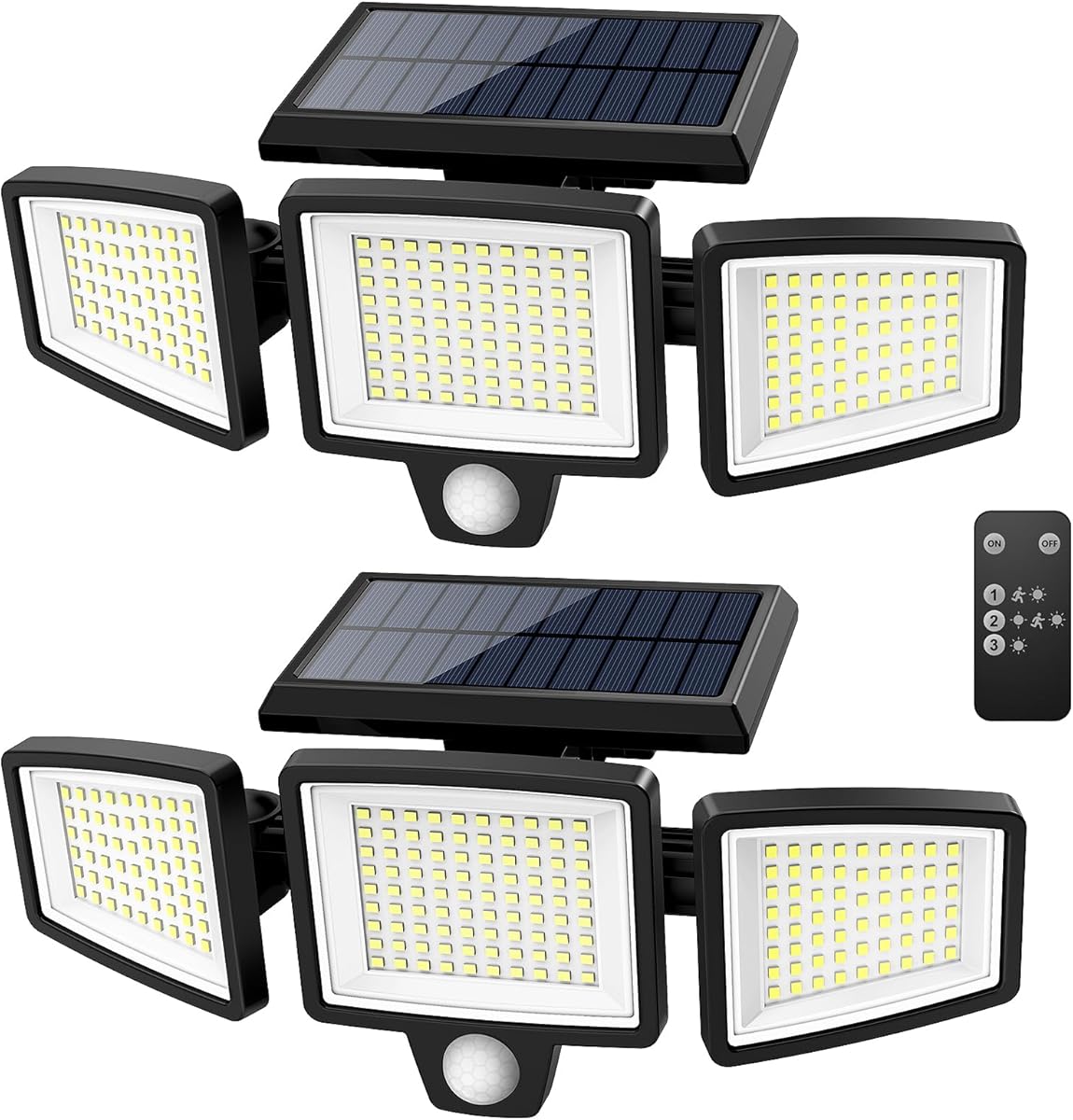
The Tuffenough Solar Outdoor Lights provide all-in-one illumination and motion detection for outdoor security. Rated 4.4 stars, they deliver 2500LM brightness which is powerful enough to light up driveways or courtyards. They include three adjustable heads and a remote control for easy mode switching.
We may earn a commission when you buy through this link, at no additional cost to you.
Being solar-powered means no electrical wiring is needed, making installation simple on exterior walls. The IP65 waterproof rating ensures they function in heavy rain or snow. They detect motion up to 26 feet and offer three lighting modes for energy saving.
A limitation is the dependency on sunlight to charge the battery; cloudy days may reduce performance. However, the system is designed to handle less light days with built-in charging capabilities. If sunlight is limited, you may need to position panels carefully.
For outdoor areas without easy access to power outlets, these lights offer a convenient security solution. They combine the light sensor with the light source itself, saving money on both hardware and electricity costs.
Solar design means no wires or adapters are needed for setup.
2500LM LEDs illuminate large areas clearly when triggered by motion.
We may earn a commission when you buy through this link, at no additional cost to you.
Choosing the right light sensor involves considering connectivity, power source, and detection capabilities. This guide breaks down the critical factors to help you match a sensor to your specific home security needs.
Connectivity determines how your sensor communicates with the rest of your home system. Options include Wi-Fi for direct connection to your router, Zigbee or Z-Wave for hub-based networks, and LoRa or Sub-1G for extended range. Wi-Fi is easiest but may congest your network. Zigbee offers better battery life and local control. Choose based on whether you want standalone operation or integration with a larger smart home ecosystem.
Power sources range from battery-operated to hard-wired. Battery sensors offer flexible placement but require periodic replacement. Hard-wired photocells are ideal for outdoor posts and provide constant power but require electrical installation. Solar-powered options eliminate wiring and battery changes entirely but depend on adequate sunlight. Consider your installation location and willingness to perform maintenance.
Detection technology affects accuracy and false trigger rates. PIR sensors detect motion via infrared radiation changes and are standard for general use. mmWave radar can detect stationary humans, reducing missed triggers. Photocells detect light intensity for dusk-to-dawn automation. For security, mmWave is superior, but for simple lighting control, PIR or photocells are sufficient and cost-effective.
Range and coverage ensure the sensor monitors your intended area without blind spots. Look for devices with a field of view of at least 90 degrees for rooms and 120 degrees for wider areas. Detection range varies from 10 to 20 feet depending on the model. Measure your space to ensure the sensor can cover entry points effectively.
Integration with platforms like Alexa, Google Assistant, or Home Assistant allows complex automations. If you already use Hue or Tapo, choose compatible sensors to unify control. For local control, Home Assistant with Zigbee or ESPHome is ideal. Check compatibility lists before purchasing to avoid connectivity issues.
For outdoor use, weather resistance is critical. Look for IP ratings like IP44 or IP65 to ensure protection against rain and dust. Indoor sensors generally do not need high IP ratings. Verify the manufacturer's outdoor rating before installing in exposed areas to prevent damage from elements.
Battery life impacts long-term maintenance costs and convenience. High-quality sensors can last up to two years on a single battery, while others may need frequent replacement. Check battery type and expected lifespan in the product description. Some sensors include battery level notifications to warn you before they die.
Installation difficulty ranges from simple adhesive mounting to hard-wiring. Magnetic mounts and adhesive tapes allow tool-free placement on metal or smooth surfaces. Hard-wired sensors require electrical expertise. If you are not comfortable with wiring, choose battery-powered or wireless options.
Start by selecting a location that covers high-traffic areas like hallways, entryways, or exterior paths. Ensure the sensor has a clear line of sight to the area you want to monitor. Avoid placing it near heat sources or air vents that might cause false triggers.