
Zigbee Human Presence Sensor Millimeter Wave Radar
4.0Editor score
Works with multiple Zigbee hubs
Two AAA batteries last long
Detects stationary people easily
Compare top Home Assistant Human Presence Sensors with mmWave radar for accurate detection. This guide reviews features, compatibility, and automation
Finding the right sensor for your smart home can be tricky. You need something reliable that detects people even when they are not moving. This guide helps you choose the best Home Assistant Human Presence Sensor for your setup.
We compared ten top models using real-world performance data. Each product was evaluated on radar accuracy, ease of setup with Home Assistant, and overall build quality. This list covers wired and battery options for every need.
Each pick shows key features and what makes it stand out. We highlight strengths and weaknesses so you can decide based on your specific room layout. Keep in mind that prices and stock can change over time.
4.0Editor score

4.4Editor score

3.6Editor score
This side-by-side comparison highlights the key specifications of all ten sensors. You will see differences in connectivity, power source, and additional sensor capabilities. Use this table to quickly find the model that fits your Home Assistant instance.




This sensor stands out as a top choice for Home Assistant users who want precise control. It combines mmWave radar with an integrated light sensor, allowing for smart automation based on both presence and ambient light conditions. The rating reflects its reliability in real-world scenarios.
We may earn a commission when you buy through this link, at no additional cost to you.
The HLK-LD2401 24GHz mmWave radar detects motion and stationary objects up to 20 feet indoors. This means lights stay on while you read or sleep without needing to wave your hands. The external antenna and Seeed XIAO ESP32-C3 provide robust Wi-Fi connectivity.
While it offers great features, it requires an existing Home Assistant installation and some basic familiarity. This limits its appeal to beginners who prefer plug-and-play cloud solutions. However, for local control enthusiasts, this is a minor trade-off for the privacy and customization it offers.
If you are building a Home Assistant setup and need a sensor that understands context, this is the pick. It excels at integrating lighting conditions into automation rules. We recommend it for anyone who values accurate, local detection without cloud dependencies.
The VEML7700 light sensor matches the human eye, enabling automations that only trigger when a room is dark.
Pre-flashed with ESPHome, this sensor connects to your network via a simple hotspot setup without manual coding.
We may earn a commission when you buy through this link, at no additional cost to you.
This model offers a streamlined experience for those who want radar presence detection without extra sensors. It uses the HLK-LD2410B module to detect stationary and moving objects reliably. The setup process is designed to be quick and straightforward for Home Assistant users.
We may earn a commission when you buy through this link, at no additional cost to you.
The sensor works exclusively with Home Assistant, ensuring local control and privacy. It covers an area of up to 20 feet and uses an external antenna to maintain a stable connection. The pre-flashed ESPHome firmware removes the need for technical flashing procedures.
A potential downside is the lack of an integrated light sensor, which might require an additional device for lighting automations. Also, it is not compatible with other smart home platforms. However, for pure Home Assistant integration, its simplicity is a strong point.
Choose this if you prioritize affordability and ease of setup within the Home Assistant ecosystem. It is ideal for spaces where you only need presence detection without complex environmental monitoring. The compact design fits well in various room layouts.
The HLK-LD2410B module offers higher precision than traditional PIR sensors, allowing for fewer units to cover larger areas.
All main components are FCC-certified, ensuring compliance and reliable operation in your home network environment.
We may earn a commission when you buy through this link, at no additional cost to you.
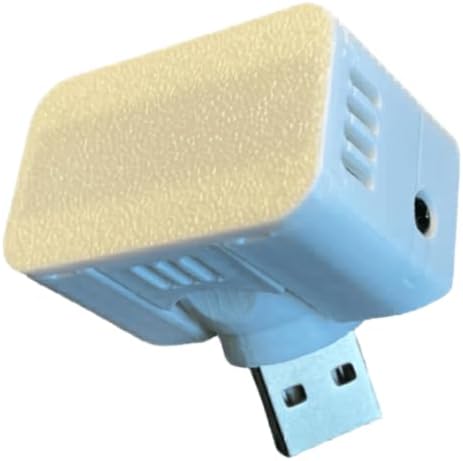
This Zigbee option is a fantastic budget choice for users who already have a Zigbee hub. It detects stationary people effectively, solving the common issue of lights turning off while reading or sleeping. Its compatibility with multiple hubs adds flexibility.
We may earn a commission when you buy through this link, at no additional cost to you.
Powered by two AAA batteries, it can last up to two years in typical usage. This reduces maintenance and makes it ideal for hard-to-reach locations. The radar technology ensures stable detection in bathrooms, bedrooms, and living rooms.
The need for a Zigbee hub means it may not be suitable for those without one. Additionally, it lacks the direct Wi-Fi connectivity of other models. However, if you are invested in the Zigbee ecosystem, this offers excellent value.
We recommend this for cost-conscious buyers who want reliable presence detection. It works seamlessly with Alexa and Home Assistant. If you have a hub already, this is a smart upgrade from traditional motion sensors.
Create smart routines where lights stay on while you are present, even if you are sitting still or motionless.
Two AAA batteries provide power for up to two years, minimizing the need for frequent replacements.
We may earn a commission when you buy through this link, at no additional cost to you.
This sensor is a premium option that combines presence detection with environmental monitoring. It uses 60GHz mmWave radar and AI to adapt to your space, reducing false triggers. It supports Matter over Thread, making it future-proof for evolving ecosystems.
We may earn a commission when you buy through this link, at no additional cost to you.
The 5-in-1 design includes light, temperature, and humidity sensors, allowing for comprehensive automation. You can automate lighting, climate control, and security systems with one device. It works with Apple Home, Home Assistant, and Google Home.
The main drawbacks are the higher price and the need for specific hubs like a Thread Border Router or Aqara hub. It might be overkill for simple rooms. However, for a central hub in a smart home, its capabilities are unmatched.
Choose this if you want an all-in-one solution that goes beyond basic presence detection. It is ideal for living rooms or offices where climate data matters. The flexible installation options make it easy to position anywhere.
Adaptive AI learning continuously optimizes sensitivity to reduce false triggers, ensuring lights stay on when you are lounging.
Combines 60GHz mmWave, PIR, light, temperature, and humidity sensors into one compact device for precise detection.
We may earn a commission when you buy through this link, at no additional cost to you.
This sensor offers unique zone positioning that lets you focus detection on specific areas. It can detect subtle movements like breathing and includes an ambient light sensor with calibration. This makes it ideal for complex rooms with multiple activities.
We may earn a commission when you buy through this link, at no additional cost to you.
The 7-zone detection area allows you to ignore corridors or windows while focusing on key zones like desks. The self-learning calibration filters out interference from appliances or pipes. This adaptive detection ensures stable performance in real-world settings.
While it has great features, it requires a Zigbee hub and USB power. This limits where you can place it compared to battery-powered models. However, for detailed presence tracking, the zoning capability is a significant advantage.
We recommend this for home offices or living rooms where precise control is needed. It works with Home Assistant and Alexa for seamless automation. If you want to avoid false alarms in specific spots, this is a strong contender.
Customize detection with up to 7 configurable zones to match your space and ignore unwanted areas like corridors.
The sensor learns your environment to filter out repetitive interference, reducing false triggers and ensuring stable performance.
We may earn a commission when you buy through this link, at no additional cost to you.
This sensor uses 5.8GHz cmWave radar to detect movement or stationary people. It automatically turns on lights when you approach and keeps them on until you leave. The built-in light detector ensures lights are only on when it is dark.
We may earn a commission when you buy through this link, at no additional cost to you.
Scene linkage between Zigbee devices can be executed normally even without an internet connection. This local smart scene feature enhances privacy and reliability. It supports multiple platforms including Alexa, Google Home, and Home Assistant.
The requirement for a Zigbee bridge means you need a hub to use it. It is less flexible than Wi-Fi models for standalone setups. However, for local automation within a Zigbee network, it performs consistently.
Choose this if you already have a SONOFF Zigbee setup and want cost-effective presence detection. It is suitable for basic automation needs. The local execution ensures your scenes work even if the cloud goes down.
Scene linkage between Zigbee devices can be executed normally even if there is no internet connection for faster response.
The built-in light detector ensures that the lights are only turned on when presence is detected in the dark.
We may earn a commission when you buy through this link, at no additional cost to you.
This device integrates high-precision sensors for temperature, humidity, and illumination alongside presence detection. It is designed specifically for Home Assistant via Zigbee for low latency performance. The compact size fits anywhere discreetly.
We may earn a commission when you buy through this link, at no additional cost to you.
The 24GHz mmWave technology detects micro-movements like breathing. It saves you the hassle of lights turning off while you work or read. The magnetic base allows it to stick to refrigerators or metal surfaces easily.
It is powered by a CR2450 battery, which may not last as long as AAA options. Also, mounting on non-metal surfaces requires tape. However, the all-in-one data collection is great for comprehensive smart home monitoring.
We recommend this for users who want environmental data in one small package. It is ideal for rooms where humidity matters. If you value seamless local control, this sensor delivers reliable performance.
This compact device integrates high-precision sensors for temperature, humidity and illumination, delivering comprehensive data to automate your entire smart home.
Fully compatible with Home Assistant via ZigBee, offering seamless local control and lightning-fast automation triggers.
We may earn a commission when you buy through this link, at no additional cost to you.
This model boasts a high rating from users who value reliability. It uses the HLK-LD2410B radar module to detect moving and stationary objects. The external antenna provides stable Wi-Fi connectivity for consistent performance.
We may earn a commission when you buy through this link, at no additional cost to you.
It comes pre-flashed with ESPHome firmware, removing the need for technical configuration. The USB-A power connector makes it simple to integrate into existing setups. It is designed exclusively for Home Assistant integration.
The lack of a light sensor means you may need separate automation logic for lighting. Also, it requires USB power which limits placement. However, for those who want a dependable presence sensor, it works well.
Choose this if you need a straightforward presence detector for Home Assistant. Its high rating reflects user satisfaction. It is ideal for setups where you prioritize local control over additional features.
Pre-flashed with ready-to-use ESPHome firmware, simply connect to the device hotspot and enter Wi-Fi credentials.
All main components are FCC-certified, ensuring compliance and reliable operation in your home network environment.
We may earn a commission when you buy through this link, at no additional cost to you.
This sensor offers flexible detection settings including sensitivity and delay times. It detects human static and micro motion accurately using a 5.8GHz radar module. It supports Zigbee2mqtt, which allows for advanced configuration options.
We may earn a commission when you buy through this link, at no additional cost to you.
The illuminance monitor in the Tuya app enables smart scene linkage with other devices. You can set data reporting intervals to reduce network noise. It is powered by USB-Type-C for continuous operation.
It requires a Tuya Zigbee gateway for control, which adds cost. Some users may find the configuration process complex. However, the ability to tune settings makes it powerful for specific automation needs.
We recommend this for those who want control over sensor behavior. It works well with Home Assistant via Zigbee2mqtt. If you have a Tuya ecosystem, this is a practical addition.
Set the sensitivity from 1-9 to your own need and adjust unmanned delay time to avoid irrelevant annoying movement.
Supports setting data reporting interval time in ZigBee2mqtt to make your ZigBee network less noisy.
We may earn a commission when you buy through this link, at no additional cost to you.
This sensor combines PIR and mmWave radar to detect changes and presence. It integrates with Home Assistant and Google Home through the Matter framework. The pet-proof shield prevents robot vacuums or pets from triggering it.
We may earn a commission when you buy through this link, at no additional cost to you.
The adjustable base pivots 180° and rotates 360° for optimal positioning. It has a wide viewing angle and detects motion up to 12 meters. It offers offline control and better privacy compared to traditional methods.
It requires a continuous power supply, which limits placement options. Also, while it supports Matter, a hub is needed for Matter compatibility. However, for Home Assistant users, it works without a hub.
Choose this if you want a Matter-compatible device that works with Home Assistant. The pet-proof feature is useful for homes with pets. If you value local control, this sensor provides excellent stability.
Combined with PIR and millimeter wave radar, this sensor offers significant advantages over single-detection sensors.
A pet-proof shield is included to prevent pets or robot vacuum from accidentally triggering the smart motion sensor.
We may earn a commission when you buy through this link, at no additional cost to you.
Choosing the right sensor requires understanding how it connects and what it detects. This section breaks down the key factors to consider.
Sensors connect via Wi-Fi, Zigbee, or Matter. Wi-Fi models offer direct integration but use more bandwidth. Zigbee models require a hub but are more stable and power-efficient. Matter is the future standard for interoperability.
Pick Wi-Fi for simplicity or Zigbee for scale.
mmWave radar detects stationary people unlike PIR. Radar is more accurate for rooms where people sit for long periods. It prevents lights from turning off when you are reading or working.
Ensure the sensor uses mmWave or cmWave for best results.
Some sensors run on batteries while others need USB power. Battery models offer placement flexibility but require replacement. USB models are great for permanent installs near outlets.
Check if your location has power access or needs battery support.
Some models include light, temperature, or humidity sensors. These help automate climate control and lighting based on conditions. If you need environmental data, choose a multi-sensor model.
Decide if you need more than just presence data.
Range varies from 10 to 20 feet. Larger rooms may need multiple sensors or a wide-angle model. Check the field of view to ensure it covers the area.
Match the range to your room size and layout.
Ensure the sensor works with Home Assistant. Some require specific hubs like Zigbee or Matter. Others work directly over Wi-Fi. Check the integration process before buying.
Verify that your Home Assistant instance can host the device.
Some sensors need flashing or complex configuration. Pre-flashed models like ESPHome are easier to set up. Consider your technical comfort level when choosing.
Opt for pre-configured models if you want simplicity.
Prices vary by features and brand. Basic Zigbee sensors are cheaper while Matter-enabled ones are premium. Decide how much you are willing to spend for features.
Balance cost with the automation value you gain.
First, place the sensor at a height where it can see the entire room. Avoid blocking the front panel with objects. For Wi-Fi models, connect to your network using the provided app or portal.
Second, configure your automation rules in Home Assistant. Set up rules that turn lights on when presence is detected. Ensure the sensor is recognized in your devices list before proceeding.
Third, calibrate the sensor to reduce false triggers. Many models have a self-learning feature to adapt to the environment. Keep the lens clean to ensure radar waves are not obstructed by dust.
It is a device that detects if people are in a room using radar technology. Unlike motion sensors, it can detect people who are not moving. This allows for more accurate automation in smart homes.
It depends on the model. Wi-Fi sensors connect directly to your router. Zigbee models require a Zigbee hub like a USB dongle. Matter sensors might need a Thread border router.
Yes, mmWave radar sensors can detect micro-movements like breathing. This allows them to detect stationary people unlike traditional PIR sensors. They are ideal for bedrooms or offices.
Most modern sensors integrate automatically via MQTT or ESPHome. You may need to add an integration in Home Assistant settings. Follow the manufacturer instructions for device pairing.
Most models have a range of up to 20 feet. Some high-end models can reach 30 feet or more. Check the product specs to ensure it covers your room size.
Some models use batteries and can last up to two years. Others use USB power for continuous operation. Battery models are energy-efficient but need periodic replacement.
The top picks offer reliable detection for Home Assistant users. Each sensor brings unique strengths to the table. Whether you need Wi-Fi or Zigbee, there is a match for your setup.
Prioritize mmWave technology for accurate stationary detection. This ensures your lights stay on when you need them most. Also consider power sources to fit your room layout.
Check current prices before making your purchase to get the best deal. Smart home tech updates quickly so verify compatibility. We hope this guide helps you build a better home.