
EVISTR L357
4.2Editor score
64GB storage capacity
Voice activation feature
PCM noise reduction
Compare the top 10 handheld recorders for journalists in October 2026. This expert guide reviews features, audio quality, and portability for field reporting.
Journalists need reliable tools to capture clear audio in unpredictable environments. Handheld recorders offer portability and professional sound quality essential for interviews and field work. Choosing the right device ensures you never miss a critical moment during breaking news or planned stories.
We compared ten top-rated devices based on audio fidelity, battery life, ease of use, and connectivity options. Our analysis focuses on models that balance professional features with the durability required for daily field reporting. Each pick addresses specific needs from budget-conscious freelancers to seasoned news crews.
Every product selection includes detailed insights into microphone quality, storage capacity, and special features like AI transcription. While prices fluctuate frequently, the performance characteristics remain consistent. We recommend verifying current availability and specifications before making your final purchase decision for your news gathering toolkit.
4.2Editor score
4.2Editor score

4.7Editor score
This side-by-side comparison highlights the key specifications and capabilities of the ten leading handheld recorders for journalists. Each device offers unique strengths ranging from basic voice capture to professional multitrack recording. Use this table to quickly identify the model that aligns with your specific reporting needs.




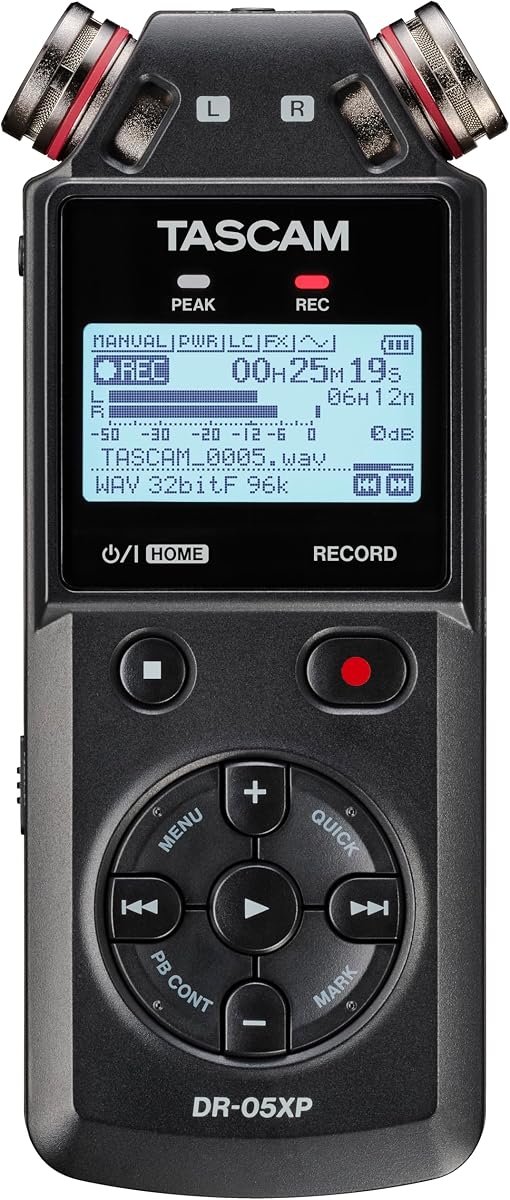
The TASCAM DR-05XP is a versatile handheld recorder designed for capturing high-quality audio in various situations. Its 32-bit float recording capability ensures that dynamic sounds are captured accurately without distortion. This makes it an excellent choice for journalists needing reliable performance in unpredictable field conditions.
We may earn a commission when you buy through this link, at no additional cost to you.
One of the standout features is its ability to handle sound levels up to 125dB SPL without distortion. The omnidirectional condenser microphones provide clear stereo recording for interviews and ambient sounds. The built-in USB-C interface allows for direct connection to computers, functioning as an audio interface for digital transfer.
While the device offers exceptional audio quality, users should note that batteries and SD cards are not included in the package. This means additional costs for initial setup but allows for flexibility in choosing storage and power options. The long battery life of 17.5 hours ensures extended field recording sessions.
This recorder is ideal for journalists who require a balance of professional audio quality and portability. Its robust build and flexible recording modes make it suitable for music, meetings, and video audio. We recommend it for professionals who value technical fidelity and ease of connectivity.
This feature allows recording at high volume without fear of digital clipping, preserving clarity even in loud environments.
Connecting via USB-C makes it easy to transfer files directly to a laptop or use it as a microphone for calls.
We may earn a commission when you buy through this link, at no additional cost to you.
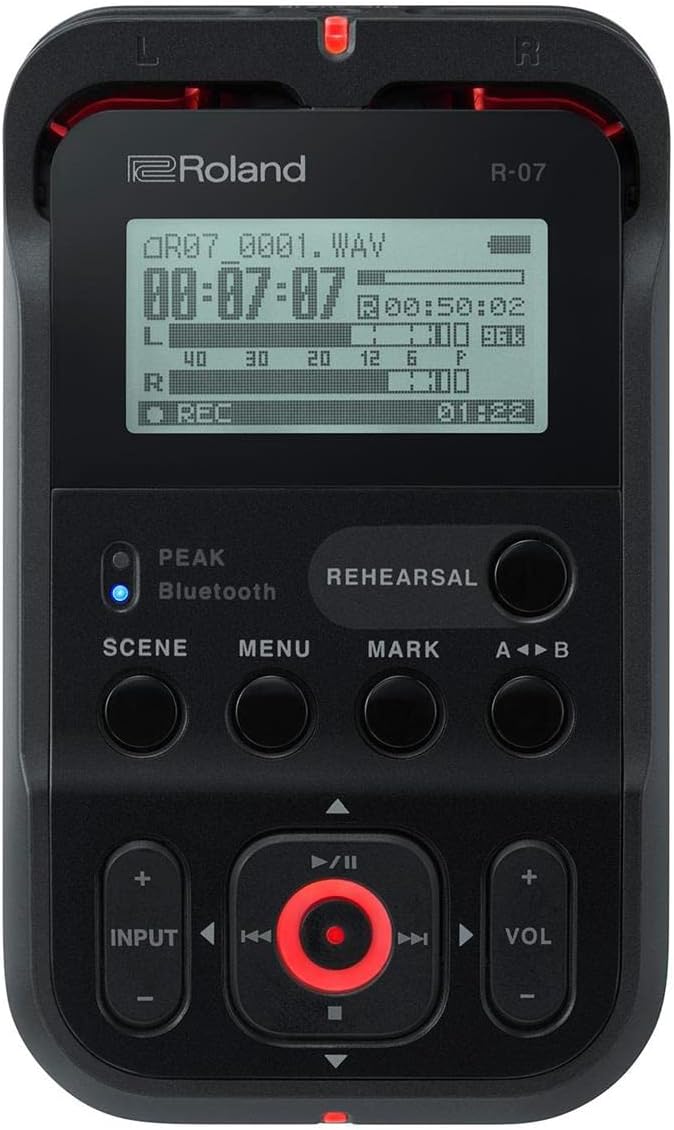
The Roland R-07 is a lightweight compact hi-res recorder that excels in capturing detailed audio for professional use. It supports simultaneous MP3 and WAV recording, giving users the flexibility to have a quick reference file and a high-quality master. The integrated stereo microphones are designed to capture excellent recording quality in various acoustic environments.
We may earn a commission when you buy through this link, at no additional cost to you.
Wireless connectivity is a key feature, with Bluetooth control and low latency monitoring allowing users to manage recordings via smart devices. This is particularly useful for journalists who need to check audio quality on the fly without physical access to the device. The built-in speaker ensures convenient playback anywhere.
Battery performance is solid, offering up to 16 hours of continuous recording on AA batteries. However, users should ensure they have spare batteries or USB power options for extended shifts. The graphic LCD with white backlight improves visibility in low-light conditions common in field reporting.
This model is recommended for journalists who prioritize audio fidelity and wireless convenience. It is robust enough for daily use yet portable enough for travel. Consider this if you need a device that offers advanced recording formats and easy connectivity.
Bluetooth support allows for real-time audio checks on headphones or speakers connected to your phone.
Recording MP3 and WAV simultaneously provides a low-size file for quick sharing and a high-quality file for editing.
We may earn a commission when you buy through this link, at no additional cost to you.
The EVISTR L357 is a highly affordable digital voice recorder that offers impressive capacity and sound quality. It features a dynamic noise reduction microphone and PCM intelligent noise reduction to capture sound in 360 degrees. This makes it a practical option for journalists on a tight budget who still need reliable audio capture.
We may earn a commission when you buy through this link, at no additional cost to you.
With 64GB of memory, it can store thousands of hours of recording files. The voice activation feature allows the device to start recording only when sound is detected, which helps save battery and storage space. This is particularly useful for long interviews where silence is frequent.
While it lacks advanced features like XLR inputs, the built-in microphone performance is strong for its price. The metal body adds durability for field use. The rechargeable battery supports continuous recording for up to 32 hours, which is adequate for most daily reporting needs.
We recommend this recorder for entry-level journalists or those needing a secondary backup device. It is simple to operate with a clear menu interface. If your primary focus is capturing clear voice without breaking the bank, this is a top contender.
The 64GB internal memory allows you to record for weeks without needing to transfer files to a computer.
Automatic recording stops during silence, saving battery life and making it easier to find active segments later.
We may earn a commission when you buy through this link, at no additional cost to you.
The Tonfarb 64GB recorder is designed for speed and simplicity, making it ideal for quick notes. Its one-click recording and saving feature ensures you never miss a moment, even when the device is powered off. This ergonomic design is perfect for fast-paced reporting where seconds matter.
We may earn a commission when you buy through this link, at no additional cost to you.
It includes a built-in 64GB TF card and a 600mAh battery that supports up to 48 hours of continuous use. The large 1.44-inch screen provides easy navigation, and password protection safeguards sensitive interview files. This security feature is valuable for professionals handling confidential information.
Audio quality is supported by advanced noise reduction and PCM recording. While it does not support external microphones, the internal mics handle most indoor and outdoor scenarios well. It also functions as a USB storage drive, simplifying file transfer to computers.
This recorder is a good choice for journalists who need a no-fuss backup tool or quick dictation device. It balances affordability with essential features like security and capacity. If you value speed of operation over advanced editing features, this model fits well.
The side button design allows for instant recording without unlocking the screen or navigating menus.
Password protection ensures your interview files remain private and secure during transport.
We may earn a commission when you buy through this link, at no additional cost to you.
The Zoom H5 is a professional-grade handheld recorder known for its modular design and high performance. It uses interchangeable input capsules, allowing journalists to adapt the device to different scenarios like solo interviews or ambient recording. The included X/Y capsule provides shock-mounted mics for reduced handling noise.
We may earn a commission when you buy through this link, at no additional cost to you.
It features two mic/line inputs with XLR/TRS combo connectors that support phantom power. This capability allows connecting external microphones or instruments directly to the recorder. Four-track simultaneous recording gives you flexibility in post-production to mix and separate audio sources.
The audio safety net feature protects recordings by capturing a lower-gain track in the background. This ensures you can recover audio even if the main track is too loud. While it requires AA batteries and an SD card, its build quality justifies the investment for serious professionals.
We recommend the Zoom H5 for journalists who need professional audio quality and flexibility. It is robust enough for field use and versatile enough for studio environments. If you require external microphone inputs and multitrack capabilities, this is the top choice.
Swapping capsules lets you use shotgun mics or stereo mics depending on the specific interview setting.
This backup track automatically records at a lower level to prevent distortion on loud sound sources.
We may earn a commission when you buy through this link, at no additional cost to you.
The Tascam DR-40 is a reliable portable digital recorder that offers 4-track recording in a compact silver body. It is designed for professionals who need solid audio performance for interviews and field work. The device supports XLR/TRS inputs, allowing connection to external microphones for enhanced sound capture.
We may earn a commission when you buy through this link, at no additional cost to you.
Its stereo microphones are positioned to capture high-quality sound with minimal interference. It is suitable for recording podcasts, meetings, and live performances. The device allows for simultaneous recording and playback, providing flexibility during production workflows.
Battery life is good, and the device runs on AA batteries which are easy to replace in the field. While it lacks modern connectivity features like Bluetooth, its wired reliability is a strength for critical recordings. It is a proven tool for audio professionals.
We suggest the DR-40 for journalists who need a workhorse recorder with professional inputs. It balances cost and performance well. If you require a simple but capable device for multitrack recording, this model remains a strong option.
The XLR inputs allow for connecting professional condenser microphones directly to the unit.
It supports multiple recording formats, ensuring compatibility with various editing software.
We may earn a commission when you buy through this link, at no additional cost to you.
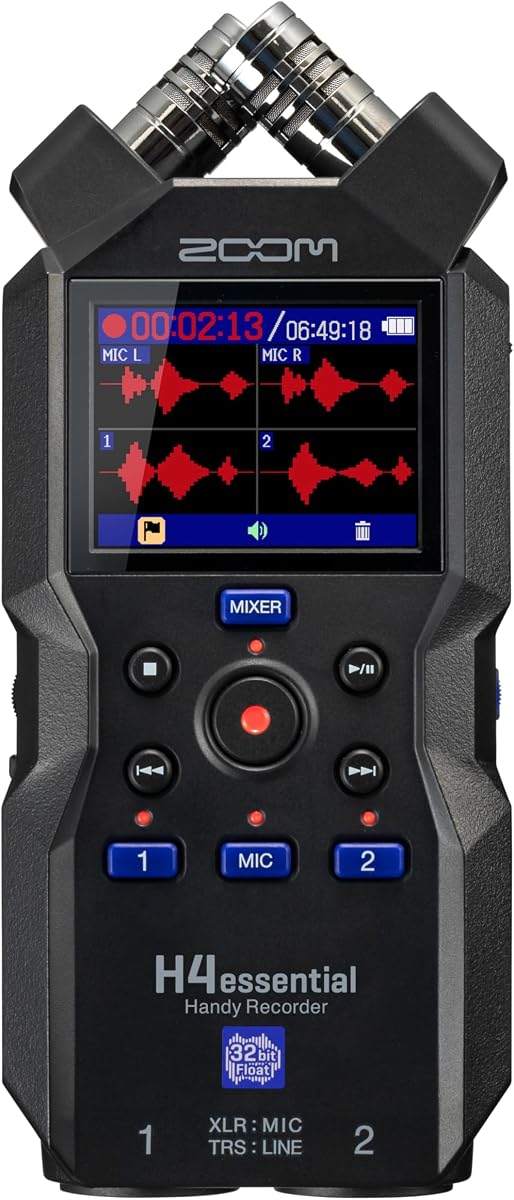
The Zoom H4 Essential is designed to help creators capture detailed audio without complexity. It functions as a 4-track recorder and includes two XLR/TRS inputs for connecting external gear. This makes it a great option for journalists who need to record interviews while managing camera audio.
We may earn a commission when you buy through this link, at no additional cost to you.
Its spoken menu guidance makes it accessible and easier to navigate. You can record to SD card and your device simultaneously, providing a backup. The built-in stereo microphones are optimized for clear voices and ambient sound recording.
It is more affordable than the H5 but still offers professional input connections. The USB-C connectivity ensures fast file transfers. While it may lack some advanced features, it covers the essentials for field recording effectively.
We recommend the H4 Essential for journalists upgrading from a basic recorder who need inputs. It is reliable for daily use and easy to operate. If you need a balance of features and price, this device is a smart choice.
Spoken menu prompts assist users who may need help navigating physical buttons quickly.
Recording to both SD and device ensures you never lose critical data during a session.
We may earn a commission when you buy through this link, at no additional cost to you.
The Pocket AI Voice Recorder is more than a standard device; it functions as an AI personal assistant. It captures conversations and instantly transcribes and summarizes them. This is a game-changer for journalists who need quick access to key points from long interviews.
We may earn a commission when you buy through this link, at no additional cost to you.
One-tap recording ensures effortless note-taking without interruptions. The device supports MagSafe compatible devices, allowing for hands-free recording during travel. Long-lasting battery life of up to 4 days ensures you are powered during extended news cycles.
While core features are included, advanced tools may require a subscription. This model relies on cloud processing for its AI functions. For reporters looking to streamline their post-interview workflow, it offers significant efficiency.
We recommend this for journalists who prioritize speed and organization. It is ideal for capturing meetings and calls where text notes are as important as audio. If you want to reduce time spent transcribing, this is a powerful tool.
It generates structured maps of conversations, helping you find specific quotes quickly.
Attaching to your iPhone ensures the recorder is always with you and positioned correctly.
We may earn a commission when you buy through this link, at no additional cost to you.
The Zoom H1 Essential is a compact handheld recorder designed for creators needing better sound. It captures clear stereo audio for videos and interviews. The USB-C connection allows it to function as a microphone for livestreams and remote meetings.
We may earn a commission when you buy through this link, at no additional cost to you.
It is ready when inspiration hits with easy to use recording modes. The built-in microphones capture natural stereo sound that helps voices come through clearly. It is suitable for recording conversations and ambient sounds.
While it lacks external inputs, its internal audio performance is strong for its size. It is a good step up from smartphone recording. This device is portable and durable for daily field use.
We recommend this for journalists starting out or needing a simple backup. It is budget-friendly and effective for clear voice capture. If you want better audio without high complexity, this is a solid choice.
Connecting to a computer via USB allows for professional audio quality during online calls.
The small form factor fits easily in a pocket for quick recording access.
We may earn a commission when you buy through this link, at no additional cost to you.
The Zoom H2 Essential features three built-in microphones with nine selectable recording patterns. This versatility captures everything from intimate interviews to wide stereo soundscapes. It records at 32-bit float, making it easy to use without adjusting gain.
We may earn a commission when you buy through this link, at no additional cost to you.
You can use it as a high-quality USB microphone while backing up to an SD card. Bluetooth allows wireless control and syncing multiple units for better coverage. It also features audible menu navigation for accessibility.
It is a reliable recorder for those who value ease of use. The clip-free audio ensures you never lose a moment to distortion. It is compact and suitable for various recording scenarios.
We recommend the H2 Essential for journalists needing flexible mic patterns. It simplifies the recording process while maintaining quality. If you need a device that handles various environments without setup, this is a strong contender.
32-bit float technology handles sudden volume changes without distortion.
Wirelessly align multiple units to capture complex sound environments.
We may earn a commission when you buy through this link, at no additional cost to you.
Selecting the right handheld recorder depends on your specific reporting style and audio needs. Below are key factors to consider when choosing a device.
High audio quality is crucial for interviews and field work. Look for devices offering 32-bit float recording, which prevents clipping and distortion regardless of volume levels. This ensures professional sound quality for broadcasts and archives.
Prioritize recorders with 32-bit float capabilities to handle unpredictable sound environments safely.
Integrated microphones vary in quality. Omnidirectional mics capture sound from all directions, while directional mics focus on a specific source. Some devices allow external microphone inputs via XLR for professional setups.
Choose integrated mics for convenience or external inputs for specialized audio needs.
USB-C or USB interfaces simplify file transfer and allow recording directly to computers. Bluetooth connectivity can enable wireless control and monitoring. Ensure the device matches your existing workflow tools.
Look for USB-C and Bluetooth support to enhance workflow efficiency.
Field reporting often requires long recording sessions. AA battery powered devices allow quick changes in the field, while built-in batteries offer simplicity. Check ratings to ensure they meet your typical shift duration.
Select a device with battery life matching your daily reporting requirements.
SD cards or internal storage options affect how long you can record before transferring files. Higher capacity is beneficial for long events. Consider models with expandable storage options for flexibility.
Ensure sufficient storage space to avoid interruptions during recording.
Field work exposes equipment to rough conditions. Metal bodies and rugged designs protect your investment. Devices with physical buttons are often easier to use than touchscreens in cold weather.
Prioritize durable materials and physical controls for field reliability.
Complex setups can hinder recording speed. Devices with one-touch recording or simple menus are ideal for quick situations. Look for audible guidance or large screens for better navigation.
Choose intuitive interfaces to speed up your workflow during events.
Features like voice activation, transcription, or simultaneous recording add value. Consider if AI notes or file backup features fit your workflow. Extra tools can save time in post-production.
Select special features that directly improve your reporting efficiency.
Before using your recorder, ensure it has sufficient battery and storage. Format your SD card in the device settings to prevent file corruption. Always test microphone levels with a short recording to verify clarity.
When recording interviews, hold the device away from clothing to avoid friction noise. Speak clearly and ask subjects to minimize background noise. Use external mics if available for better isolation.
After use, store the recorder in a padded case to protect it from impact. Clean the microphones with a soft brush regularly. Keep firmware updated to maintain performance and security.
WAV format is typically preferred for interviews as it offers uncompressed, high-quality audio. This ensures you have the best file for editing and archival purposes. MP3 is useful for quick transfers but loses quality.
While many handheld recorders have excellent internal microphones, external options are beneficial for noisy environments. They allow for directional pickup and better isolation. For general interviews, built-in mics are usually sufficient.
Battery life varies by model and usage. Most devices offer 10 to 20 hours of continuous recording. It is wise to carry spare AA batteries or a power bank for extended field work.
Yes, many modern recorders support USB audio interface functionality. You can connect them to your PC via USB-C or USB to function as a high-quality microphone for calls or streaming.
Voice activation can save storage and battery by recording only when sound is detected. This is helpful for long meetings. However, it may miss quiet statements, so manual recording is safer for critical interviews.
Always store a backup of your files on a separate device or cloud service. Some recorders allow simultaneous recording to internal memory and SD card. Regularly transfer and organize files to prevent accidental deletion.
If audio is too quiet, check your gain settings and microphone placement. Move the device closer to the source. If your device supports it, increase the microphone gain slightly for better capture.
Some models offer water resistance but few are fully waterproof. For outdoor reporting, look for devices with protective covers. Always dry your equipment thoroughly after exposure to moisture.
We have reviewed ten top handheld recorders that cater to different needs and budgets. The TASCAM DR-05XP leads in versatility with its 32-bit float capability. The EVISTR L357 offers great value for those seeking affordability.
When choosing, consider your priority between audio fidelity and portability. Professionals will appreciate the modular Zoom H5 while casual users may prefer the simplicity of the Zoom H1 Essential. Ensure the device supports your daily workflow.
Prices for these devices may change, so always verify current deals before purchasing. We hope this guide helps you select the right tool to capture your stories effectively. Happy reporting with high-quality sound.