
ELEGOO UNO R3 Smart Robot Car Kit V4 with Camera Compatible with Arduino
4.5Editor score
FPV live camera streaming
Ultrasonic obstacle avoidance
Line tracking sensors included
Rechargeable lithium ion battery
Discover the top 10 electronics kits for teens in October 2026, comparing starter kits, robot cars, and soldering projects for STEM learning and coding.
Finding the right electronics kit for teens means balancing educational value with hands on fun. These kits introduce real coding concepts and circuit building without needing expensive lab equipment or formal classroom settings for beginners starting out.
We evaluated these products based on component variety, tutorial quality, and project longevity. The list covers Arduino based sets, soldering challenges, and snap circuits ensuring you find a match for any skill level or classroom environment.
Each pick shows specific strengths like sensor counts or build complexity so you can choose confidently. Prices and stock fluctuate often so verify current details before buying to ensure you get the right components for your learning goals.
4.5Editor score

4.7Editor score
4.8Editor score
This side by side comparison reviews ten distinct electronics kits ranging from beginner snap circuits to advanced Arduino robotics. We analyze component counts, learning curves, and project variety to help you select the ideal educational tool.


The ELEGOO Mega 2560 R3 Kit stands out as the most comprehensive option for serious teen learners. It offers a massive array of components and a controller board with significantly more memory and pins than standard Arduino boards.
We may earn a commission when you buy through this link, at no additional cost to you.
This kit excels in scalability allowing teens to build complex systems that combine multiple sensors and displays simultaneously. The 35 guided projects range from simple LEDs to environmental monitoring systems ensuring a smooth learning curve.
While the Mega board is larger and might overwhelm absolute beginners it pays off when projects grow more complex. The included storage case keeps parts organized which is crucial for long term hobbyists building multiple different systems.
Buy this if you want a kit that grows with your skills over years rather than months. It is the ideal choice for coding clubs or teens planning to move into professional engineering pathways.
The 256 KB flash memory and 54 I/O pins allow for running complex code and connecting dozens of devices without running out of space.
The 35 guided lessons help students progress logically from basic wiring to advanced control logic ensuring foundational concepts are mastered.
We may earn a commission when you buy through this link, at no additional cost to you.
The ELEGOO UNO R3 Project Starter Kit is the standard benchmark for beginners entering the world of Arduino. It provides a balanced mix of sensors and output modules without overwhelming the user with too many parts.
We may earn a commission when you buy through this link, at no additional cost to you.
Teens can start with simple LED blinks and progress to RFID access systems and motor controls. The tutorial focuses on modifying code which encourages creativity rather than just following step by-step instructions blindly.
While it lacks the massive expansion capabilities of the Mega board it is sufficient for 90 percent of learning projects. The organization of parts in a clear box makes finding components easy during experiments.
This kit is perfect for students who need a reliable foundation before investing in more expensive modules. It offers high value and clear documentation that supports classroom or home use effectively.
Pre soldered modules and a breadboard allow students to plug and play without needing soldering iron skills on day one.
Includes essential sensors like ultrasonic PIR and temperature humidity enabling diverse projects from alarms to weather stations.
We may earn a commission when you buy through this link, at no additional cost to you.
The ELEGOO UNO R3 Smart Robot Car Kit V4 transforms abstract coding into a tangible driving experience. It combines mechanical assembly with advanced sensors and a camera module for real time video feedback.
We may earn a commission when you buy through this link, at no additional cost to you.
Teens can control the car via a smartphone app or IR remote while programming it to avoid obstacles or follow lines. The FPV feature adds a layer of realism that standard robot kits often lack.
Building the chassis requires patience but the keyed connectors reduce wiring errors significantly. The rechargeable battery ensures long play sessions without constant battery replacements which is a great convenience for testing.
Choose this kit if your teen loves robotics and wants a project that moves in the real world. It bridges the gap between simple circuits and advanced engineering applications perfectly.
The onboard ESP32 camera allows for live video feeds which is crucial for remote control and advanced autonomy experiments.
Pre programmed modes like obstacle avoidance and line tracking give immediate feedback on sensor accuracy and code logic.
We may earn a commission when you buy through this link, at no additional cost to you.
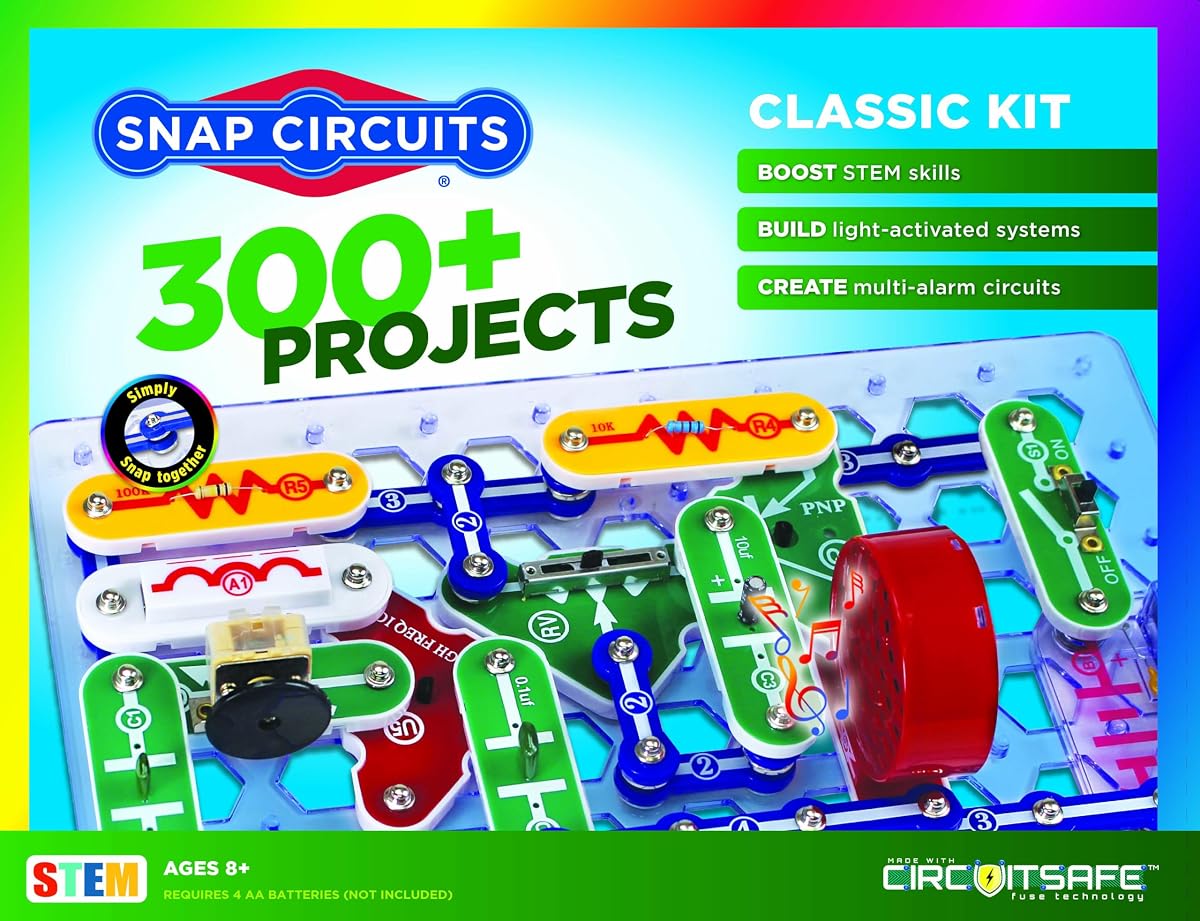
SNAP CIRCUITS Classic SC-300 offers a safe and intuitive entry point into electronics without any coding or soldering required. The color coded pieces snap onto a grid making circuit visualization immediate and rewarding.
We may earn a commission when you buy through this link, at no additional cost to you.
Teens can build over 300 projects ranging from simple alarms to AM radios. The physical connection of parts helps understanding how electricity flows through a circuit before moving to digital logic.
Because there are no tools needed kids can set up and dismantle projects instantly. This speed encourages experimentation and rapid iteration which is key to scientific discovery and engineering design.
This kit is ideal for households where safety is a primary concern or for younger teens just starting out. It complements coding kits by teaching the physical side of electronics effectively.
The snap connection method eliminates exposed wires and heat risks making it safe for unsupervised play or younger children.
The grid layout makes it easy to see how circuits are connected helping students understand complex logic visually.
We may earn a commission when you buy through this link, at no additional cost to you.
The MiOYOOW DIY Bluetooth Speaker Kit provides a practical reason to learn soldering skills. Instead of abstract experiments teens build a speaker they can actually use in their room or dorm.
We may earn a commission when you buy through this link, at no additional cost to you.
The kit focuses on the amplifier circuit and soldering techniques allowing users to connect components and create a functional audio device. It supports Bluetooth USB and SD card inputs for versatile music playback.
While the instructions vary by batch the process teaches fundamental soldering confidence that applies to many other electronics projects. The visual LED lights add a fun element to the finished build.
This is a great secondary project for teens who want to master physical connections. It bridges the gap between hobby electronics and real world utility effectively.
Building a speaker that works gives immediate gratification and reinforces the value of precision in electronic assembly.
Focusing on the amplifier board helps understand how audio signals are processed and amplified in real devices.
We may earn a commission when you buy through this link, at no additional cost to you.
The ELEGOO UNO R3 Super Starter Kit offers excellent value for its price point. It covers the essentials like LCD displays motors and sensors without the premium price of larger kits.
We may earn a commission when you buy through this link, at no additional cost to you.
Students can follow 22 lessons that teach the logic behind input and output. The inclusion of a fan blade and various display options adds variety to the projects you can build.
The tutorial is straightforward and helps beginners set up their software correctly. This reduces the friction often associated with new technology adoption and keeps motivation high.
This kit is perfect for classrooms or parents looking for an efficient way to introduce coding. It balances cost with educational content better than most competitors.
Focused lessons ensure students cover core concepts quickly without getting bogged down by unnecessary complexity.
From LCDs to servos the kit includes a wide range of output devices to demonstrate different control techniques.
We may earn a commission when you buy through this link, at no additional cost to you.
This DIY Bluetooth Speaker Kit stands out for its dynamic LED light visualizer that syncs with music. It makes the learning experience visually engaging which helps maintain interest during assembly.
We may earn a commission when you buy through this link, at no additional cost to you.
The high resolution manual uses photos to guide every step reducing confusion during soldering. It is designed for those with basic skills but helps refine them through practice on a useful project.
Building the speaker helps understand how audio amplification works in a real product. The transparent case allows you to see the wiring and components working together once assembled.
It is an excellent project for teens who want to combine electronics with entertainment. The finished product is something they can proudly use and show off to friends.
The LED visualizer adds an element of fun that encourages teens to keep the build going to see the lights in action.
Assembling dual speakers gives insight into stereo sound and speaker placement for better audio quality.
We may earn a commission when you buy through this link, at no additional cost to you.
The MicroKits Theremin Electronics Kit allows teens to build an instrument controlled by hand movements through electric fields. It is a fantastic way to demonstrate capacitance and signal processing in a fun context.
We may earn a commission when you buy through this link, at no additional cost to you.
Since it uses a breadboard no soldering is required. Teens can experiment with how their hand position changes the pitch and volume of the sound created.
The kit focuses on the science behind the device making it a great addition to physics lessons. It shows how invisible forces can be converted into audible signals.
This is perfect for creative teens who might be interested in music or physics. It offers a unique build experience that stands out from standard electronic kits.
Learning how human body capacitance affects electronic circuits provides a deep understanding of physics principles.
Controlling sound without physical buttons encourages intuitive design and thinking about user interaction.
We may earn a commission when you buy through this link, at no additional cost to you.
The ELEGOO 37-in-1 Sensor Modules Kit is an expansion pack rather than a starter kit. It provides a massive collection of modules that can be plugged into any compatible Arduino board.
We may earn a commission when you buy through this link, at no additional cost to you.
It includes specialized sensors for flame detection tilt angle and environmental monitoring. This allows teens to expand projects with advanced capabilities without buying individual modules.
The kit works well with existing starter kits by adding new inputs. It is essential for teens who want to build smart home systems or weather stations.
If you already have a basic board this kit unlocks endless possibilities. It turns simple projects into complex interactive systems.
Having a wide range of sensors on hand makes it easy to test different ideas without waiting for shipments.
From light to sound to magnetic fields the kit covers almost every standard sensor used in modern electronics.
We may earn a commission when you buy through this link, at no additional cost to you.
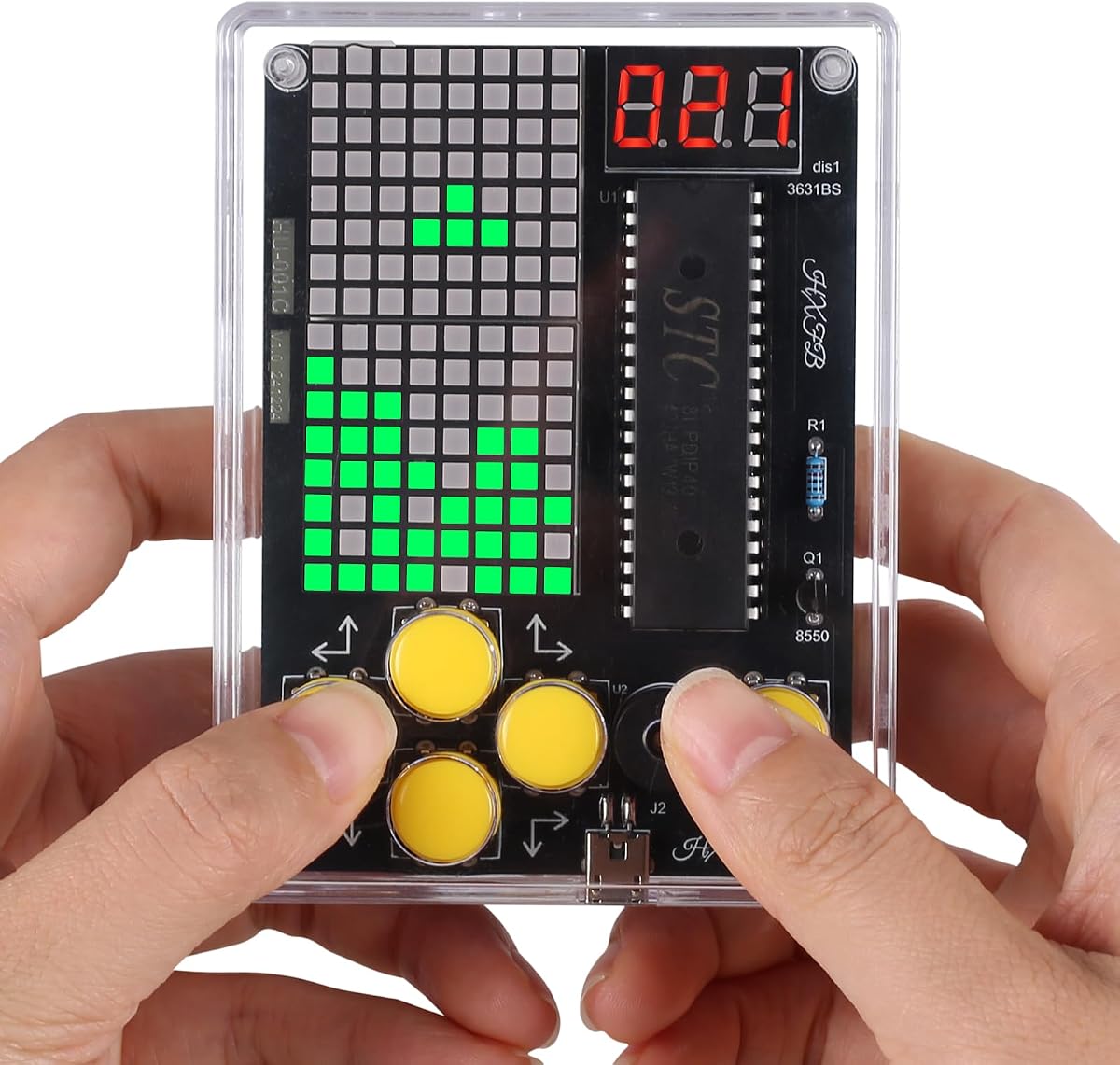
The PEMENOL 7-in-1 DIY Game Kit focuses on creating interactive gaming experiences through assembly. It offers three difficulty levels allowing teens to start simple and add complexity.
We may earn a commission when you buy through this link, at no additional cost to you.
After assembly users can explore seven different game functions which provides immediate entertainment. The video guidance helps troubleshoot assembly issues ensuring the project is completed successfully.
It is designed for teens 15 and above who want to understand the hardware behind games. The soldering practice is solid and prepares them for more advanced electronics.
This kit is a great introduction to hardware gaming for those who enjoy coding. It connects the dots between physical circuits and interactive fun.
The tiered difficulty levels ensure that teens are challenged appropriately as their skills improve.
Having video guidance makes troubleshooting easier and keeps motivation high during complex assembly steps.
We may earn a commission when you buy through this link, at no additional cost to you.
Choosing the right kit depends on skill level interests and long term goals. We break down the critical factors to consider before making a purchase.
Evaluate whether the teen has any prior coding or soldering experience. Beginners often benefit from snap circuits or pre soldered kits to build confidence before tackling complex wiring.
Start with beginner friendly options that minimize frustration and provide clear successes.
Determine if the focus is on coding mechanical engineering or pure electronics theory. Robotics kits emphasize movement while sensor kits focus on data and programming logic.
Align the kit with the teen's specific interests to maintain long term engagement.
Higher component counts usually mean more project variety but also more complexity. Ensure the kit includes enough sensors to build distinct projects without needing extra purchases.
Look for kits with diverse components like motors displays and environmental sensors for a complete learning experience.
Consider whether the kit allows for future upgrades. A good base kit should be compatible with additional sensors or modules that can be added later.
Choose platforms like Arduino that have vast third party support for long term usability.
Safety should be a primary concern especially for younger teens. Kits that require soldering may need supervision or protective gear.
Snap kits or breadboard options are safer alternatives for unsupervised home use.
High quality manuals and video tutorials are essential for success. Look for kits that provide clear step by-step guides and accessible support.
Strong documentation reduces frustration and helps teens learn independently.
For students who might want to take their work to school or clubs a portable kit is valuable. Check if the components come in a travel friendly case.
Compact kits are easier to store and transport for ongoing projects.
Electronics kits range from affordable to expensive. Balance the cost against the number of projects possible and the longevity of the kit.
Invest in quality components that will last through multiple builds and projects.
Start with the provided tutorials to understand the basic components and their functions. Do not rush into complex projects immediately as mastering the fundamentals is crucial for success.
Store components in the provided cases or labeled containers to prevent loss. Losing small parts like resistors or wires can disrupt projects and cause unnecessary delays.
Keep the workspace organized and free of clutter to prevent accidental short circuits. Clean the work area after every session to ensure safety and readiness for the next build.
Yes many of these kits are designed specifically for beginners. They include clear tutorials and often do not require soldering making them accessible to teens with no prior experience.
Most Arduino based kits require a computer to write and upload code. However some snap kits or pre programmed devices can function without a PC but coding flexibility is limited.
Most kits are suitable for teens aged 12 and up. Some simpler snap kits work for younger children while advanced robotics or soldering kits are better for 15+.
Many kits require batteries or a power supply to run. Some include a battery in the box while others require you to purchase AA or lithium batteries separately.
Basic kits need a small table surface. Larger robotics kits or multiple breadboards require more space so ensure you have an area dedicated to building projects.
Arduino based kits are highly upgradeable. You can add sensors or motors later. Snap kits are more fixed but offer many projects within their own ecosystem.
We reviewed the top electronics kits for teens ranging from beginner snap circuits to advanced robotics and coding platforms. Each kit offers unique strengths depending on the specific goals of the learner.
Prioritize a kit that balances educational value with fun to keep engagement high. The best choice is one that aligns with your teen's interests in coding or building.
Check current stock and prices before purchasing as availability changes. Select the kit that best fits your learning goals today to start building tomorrow.