
Handheld Fish Finder Portable Fishing Kayak
4.2Editor score
Portable and easy to carry
Works in fresh and salt water
Battery powered for convenience
Finding the right tool to locate fish and measure water depth is essential for any angler. A cheap depth finder offers affordability without sacrificing critical functionality for casual or serious fishermen alike.
We evaluated ten top-rated models based on accuracy, ease of use, durability, and value. Our selection includes handheld units, kayak-specific devices, and in-dash sounders for various vessels.
Each pick highlights unique strengths to help you match a device to your fishing style. Please note that specifications and availability may change over time as manufacturers update their lineups.
4.2Editor score
4.6Editor score

4.5Editor score
As an Amazon Associate we earn from qualifying purchases.
The following table provides a side-by-side look at the specifications and key features of each model we reviewed to help you compare options quickly and easily.


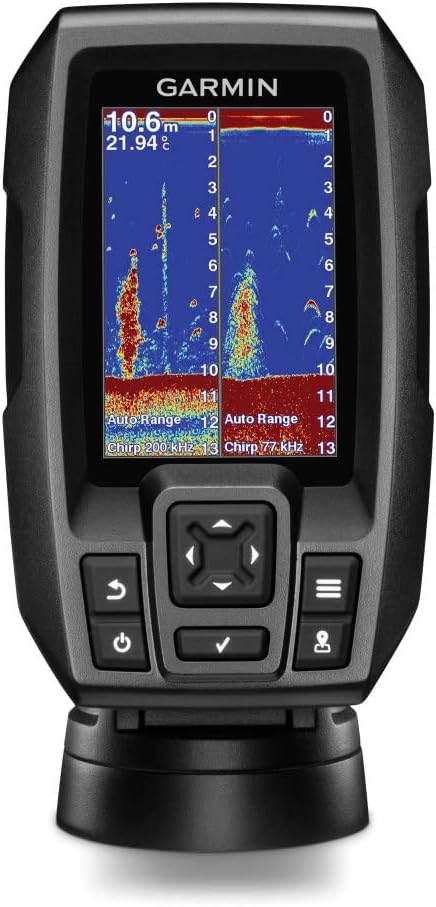
The Garmin Striker 4 stands out as a top choice for anglers seeking reliable depth and fish location data. It combines GPS functionality with CHIRP sonar technology to deliver clear underwater images.
We may earn a commission when you buy through this link, at no additional cost to you.
Its ClearVu scanning sonar provides near photographic images of objects and fish, while the dedicated buttons make operation simple even in rough conditions. The waypoint map helps you mark productive spots easily.
Although it lacks a touchscreen, the simplicity of the interface is a benefit for those who prefer quick access to controls. The display is bright enough to be seen in sunlight without significant glare issues.
This unit is ideal for small boat owners or kayakers who need robust performance without a complex setup. It offers a great balance of features and usability for most recreational fishing scenarios.
The CHIRP sonar sends a continuous sweep of frequencies, resulting in crisper fish arches and better target separation compared to standard sonar units.
Built-in GPS allows you to view, mark, and navigate to specific locations like brush piles or docks, adding value beyond just depth measurement.
We may earn a commission when you buy through this link, at no additional cost to you.
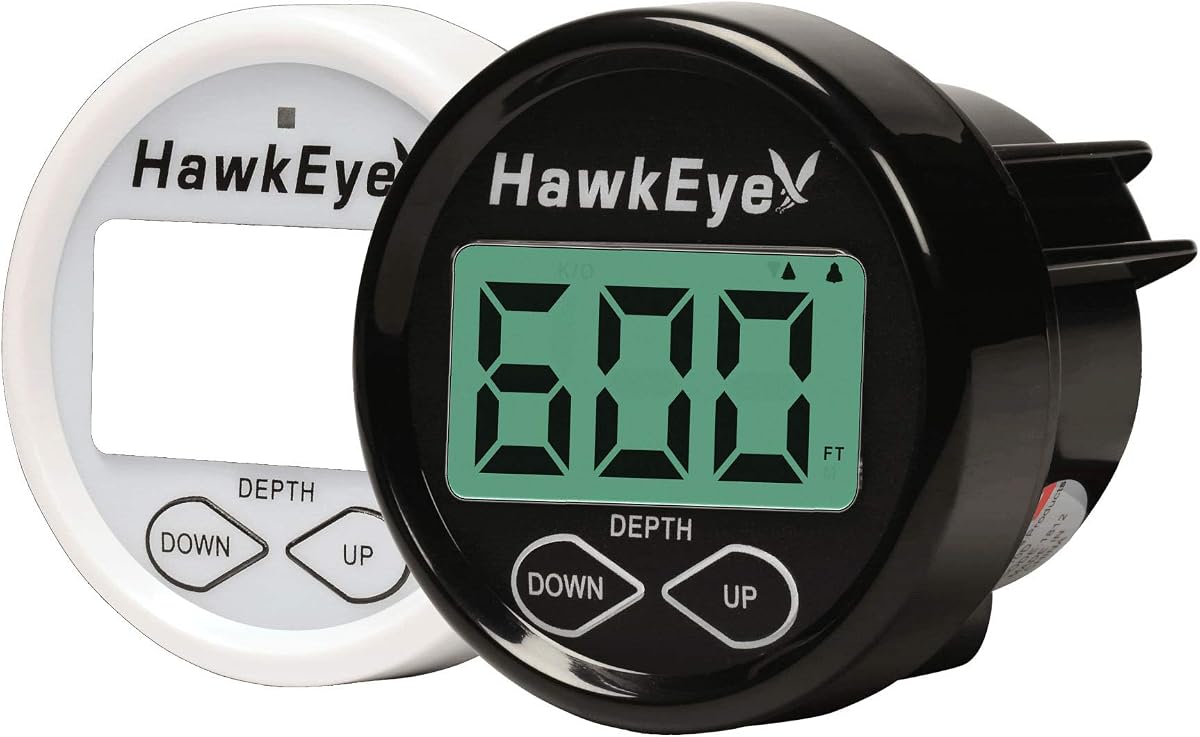
The DepthTrax 2B is designed specifically for in-dash mounting on larger vessels where visibility and durability are critical. It delivers uninterrupted depth readings from 2.5 to 600 feet.
We may earn a commission when you buy through this link, at no additional cost to you.
Its 3-stage advanced warning system provides audible and visual alerts for shallow water, which is vital for safety at high speeds. The polarized LCD ensures clear viewing even with sunglasses.
Installation can be tricky as it offers options for transom or glue-in mounting, but the latter requires specific hull types. Users must ensure their vessel meets the requirements for a secure fit.
This device is perfect for serious boaters who need a permanent, reliable depth solution that integrates seamlessly into the dashboard. It prioritizes safety and precision over portability.
The audible alarm, bright LED warning light, and LCD indicators work together to ensure you never miss a shallow water warning.
Algorithmic programming significantly reduces false readings, providing unmatched precision for critical depth measurements in varied water conditions.
We may earn a commission when you buy through this link, at no additional cost to you.
The Hawkeye DT1H is a straightforward handheld unit that provides essential depth and temperature data. It is built for anglers who want a no-fuss device for quick checks.
We may earn a commission when you buy through this link, at no additional cost to you.
Its ability to display water temperature helps in tracking fish activity, which often correlates with specific thermal layers in the water. The unit is small enough to fit in a tackle box easily.
While it lacks advanced graphical features like fish arches, it gets the job done for basic depth sounding. The battery life is sufficient for short fishing trips but may need replacement on long outings.
This model is best for casual fishermen or those who need a backup unit for shore or kayak fishing. It offers great value for its simplicity and core functionality.
Tracking water temperature can help identify fish-holding areas, making this feature a valuable tool for understanding fish behavior.
Its small form factor makes it easy to carry along on any type of fishing trip without adding bulk to your gear.
We may earn a commission when you buy through this link, at no additional cost to you.
This portable unit offers an incredibly accessible entry point for anglers needing basic depth and fish location info. It uses a 200 kHz sonar to detect bottom structure and fish schools.
We may earn a commission when you buy through this link, at no additional cost to you.
The device works in both fresh and salt water, and the included neck strap allows for hands-free use while on a kayak. It is powered by 4 AAA batteries which are easy to replace.
Sensitivity settings can be adjusted to suit different water conditions, though the display is not as sharp as higher-end models. It serves well for quick checks while drifting or fishing from shore.
If you are looking for the most affordable way to get sonar readings, this is a strong contender. It sacrifices advanced features for ease of use and low cost.
Whether you are fishing in a local lake or a coastal area, this device functions effectively in all water types.
Tossing the transducer into the water and turning on the display is all it takes to start seeing depth readings immediately.
We may earn a commission when you buy through this link, at no additional cost to you.
Designed with the kayak angler in mind, this unit is compact and easy to manage while paddling. It displays fish location, water depth, and bottom structure clearly on its screen.
We may earn a commission when you buy through this link, at no additional cost to you.
The fish alarm is a useful feature that alerts you when a school is detected, allowing you to focus on casting without staring at the screen constantly. A backlight ensures visibility in low light.
You can attach the transducer to the hull or cast it out, offering flexibility for different fishing styles. The sensitivity levels help adjust the device for turbid or clear water conditions.
This is a solid option for those who need a portable tool that fits easily into their kayak gear. It balances performance with portability for a wide range of fishing activities.
The ability to cast the transducer or attach it to the hull allows you to adapt to changing fishing spots quickly.
The fish alarm combined with visual display helps keep your attention on the water and your line instead of the screen.
We may earn a commission when you buy through this link, at no additional cost to you.
The PiranhaMAX 4 offers a classic fish finding experience with the added versatility of dual beam sonar. This allows you to choose between a narrow beam for detail or a wide beam for coverage.
We may earn a commission when you buy through this link, at no additional cost to you.
A tilt and swivel mount lets you adjust the viewing angle quickly, which is helpful if you move between different seating positions. The display is clear enough for day or night use.
It includes a transom-mount transducer and mount in the box, so there are no extra purchases needed for installation. The build quality is sturdy and designed to withstand regular use.
This model is great for small boat owners who want a trusted brand without a high price tag. It focuses on core functionality that gets you on fish reliably.
Switching beams helps you identify fish in different depths and structures by optimizing either detail or coverage area.
Receiving a transducer and mount in the box simplifies setup and ensures compatibility out of the box.
We may earn a commission when you buy through this link, at no additional cost to you.
Lowrance brings its reputation for quality with this unit that features a crisp IPS screen visible even in bright sunlight. The portrait design fits well in limited spaces on a boat.
We may earn a commission when you buy through this link, at no additional cost to you.
Auto-Tuning Sonar automatically adjusts settings to current conditions, so you do not need to fiddle with menus constantly. The included 200 kHz bullet skimmer provides wide coverage below the boat.
Fish icons help with quick identification of targets without needing to interpret complex sonar returns. The twist-lock connector makes it easy to remove the display when not in use.
This unit is a good choice for anglers who prioritize screen clarity and ease of use. It simplifies the sonar process so you can focus on fishing.
The IPS technology ensures that you can view the display from wide angles even while wearing polarized sunglasses.
Auto-Tuning Sonar saves time by automatically optimizing settings, allowing you to spend less time adjusting gear.
We may earn a commission when you buy through this link, at no additional cost to you.
This handheld device offers a unique contour readout feature that helps visualize the bottom structure. It is robust and waterproof, making it suitable for rough conditions and even snorkeling use.
We may earn a commission when you buy through this link, at no additional cost to you.
The lure fish lamp can attract light-sensitive fish, though its effectiveness varies. It also provides temperature readings which can be crucial for locating fish in deeper water.
Data updates four times per second, giving you a near real-time view of depth and fish presence. The rugged design ensures it can withstand accidental drops or splashes.
If you need a versatile tool for various water conditions including ice fishing, this unit is a strong candidate. It offers a mix of features that go beyond simple depth measurement.
The contour readout provides a better view of the bottom than standard depth numbers alone, helping you spot structure.
Water resistance up to 100 feet makes this device more versatile for use near the water surface without worry.
We may earn a commission when you buy through this link, at no additional cost to you.
The LUCKY wireless sonar offers a significant advantage with its massive 853-foot operation distance, allowing you to fish without wires. The castable design means you can cast the sensor like a bobber.
We may earn a commission when you buy through this link, at no additional cost to you.
The horizontal LCD displays fish icons with depth numbers, and the screen scrolls to show a history of what passed under the sensor. This helps in tracking fish movement over time.
It is rechargeable and portable, making it convenient for spontaneous trips. The wide beam angle helps scan schools of fish effectively in a variety of water bodies.
This unit is ideal for those who want high-end wireless convenience in a portable package. It bridges the gap between handheld and advanced chartplotter functionality.
No wires or complex mounting means you can use this device anywhere without worrying about cables or drilling holes.
The scrolling screen allows you to see a continuous history of fish movement, aiding in tracking schools.
We may earn a commission when you buy through this link, at no additional cost to you.
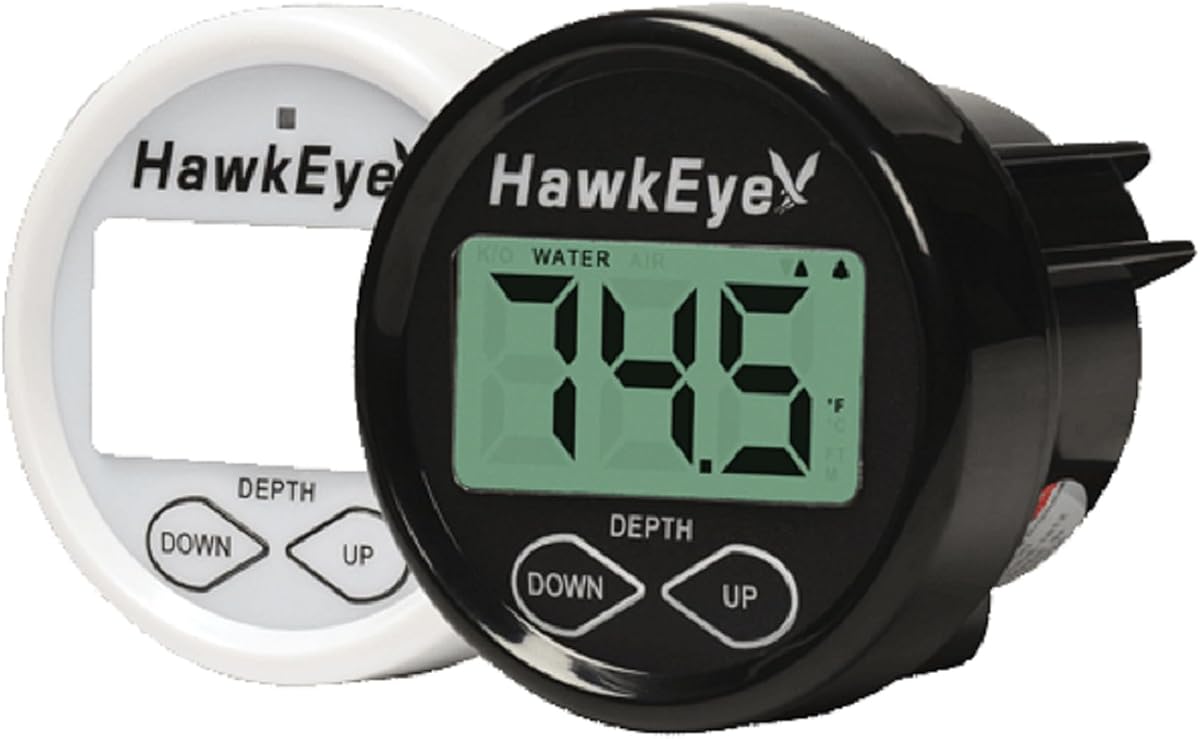
This HawkEye model provides both air and water temperature readings on its display, which is a rare feature for this price point. It is designed for in-dash installation on smaller boats.
We may earn a commission when you buy through this link, at no additional cost to you.
The 3-stage warning system includes audible and LED alerts for shallow water, and the one-touch alarm muting is convenient when false alarms occur. The polarized LCD ensures spot-free viewing.
It includes a transom-mount transducer with 30 feet of cable, which is sufficient for most transom setups. The flush mounting requires a 2-inch hole in the dashboard.
If you want a permanent solution that tracks temperature and depth, this is a reliable choice. It delivers consistent performance for those who prefer a fixed display.
Tracking both air and water temperature helps in understanding local weather patterns and their effect on fish activity.
One-touch alarm muting makes it easy to silence alerts quickly without navigating through complex menus.
We may earn a commission when you buy through this link, at no additional cost to you.
Selecting the right depth finder depends on your fishing style, vessel type, and budget. This guide breaks down the key factors to consider.
A clear display is crucial for reading data in various lighting conditions. Look for polarized LCDs or IPS screens that remain visible in bright sunlight.
Prioritize screens with backlighting if you plan on fishing at dawn or dusk to ensure visibility.
Standard sonar provides basic depth, but CHIRP technology offers better target separation and detail. Higher frequency sonars give sharper images but have less depth penetration.
Choose CHIRP or Dual Beam if you need to distinguish between fish and weeds clearly.
Handheld units are perfect for kayakers or shore anglers who need flexibility. In-dash units suit larger boats where a fixed solution is preferred.
Consider a castable transducer if you want to move your gear between different vessels easily.
Ensure the device covers the depths of the waters you typically fish. Most budget models range from 100 to 600 feet, which covers most freshwater and coastal areas.
Check the maximum depth capability to ensure it meets your deepest fishing needs.
Some units require drilling into the boat for transom or in-dash mounting. Handhelds often need minimal setup, just a battery and transducer.
Opt for plug-and-play models if you want to avoid permanent modifications to your boat.
Temperature sensors, fish alarms, and GPS waypoint maps add value to your unit. Decide which features are essential for your specific fishing style.
Avoid paying for advanced features you will not use to keep costs down.
Look for units with water resistance ratings to prevent damage from splashes or drops. Rugged builds are essential for rough outdoor conditions.
Check for warranties to protect your investment against manufacturing defects.
Long battery life ensures your device lasts through a full day of fishing. Rechargeable units can be more convenient than those requiring disposable batteries.
Consider the power source if you plan on using the device for extended periods.
Always calibrate your transducer before entering the water to ensure accurate readings. Make sure the transducer is securely attached and submerged completely to avoid signal loss.
Clean the device after each use, especially if used in salt water, to prevent corrosion. Rinse the transducer and display with fresh water and dry them thoroughly.
Store your unit in a cool, dry place when not in use to protect the electronics. Remove batteries if the device will not be used for long periods to avoid leaks.
Yes, many affordable models provide accurate depth readings suitable for recreational fishing. They use similar sonar technology to high-end units but with fewer advanced features.
A depth finder shows water depth, while a fish finder often displays fish locations as well. Many budget units combine both functions, so check the specs for dual capabilities.
Most handheld units are designed to work in both fresh and salt water. Just ensure you rinse the transducer and unit with fresh water after use to prevent corrosion.
CHIRP sonar sends a continuous sweep of frequencies, providing clearer images and better target separation. Standard sonar uses a single frequency, which can result in less detail.
No, many depth finders are designed for kayaks, shore fishing, and ice fishing. Handheld and portable units allow you to fish from various platforms.
Most budget models measure depths from a few feet up to 600 feet. This range is sufficient for most lakes and coastal areas where recreational fishing occurs.
Most devices require battery power to operate. Some newer models feature rechargeable batteries, but they still rely on a power source for functionality.
Yes, many units include simple installation guides. Transom mounts can be installed with basic tools, while glue-in models may require specific surface preparation.
The Garmin Striker 4 and LUCKY Wireless Sonar lead the pack with their balance of features and affordability. Each model offers unique strengths to match different angling needs.
Prioritize the features you need most, such as portability or display clarity, to narrow down your choices. A reliable depth finder enhances your fishing experience without breaking the bank.
Prices and availability fluctuate, so check current offers before making your purchase. Invest in a device that aligns with your fishing habits for the best value.