
Radial Mix 2:1
4.8Editor score
2-channel passive summing
1 mono output
Durable metal housing
This guide compares the top analog summing mixers for audio professionals seeking rich sound and precise control in their studio or live setups.
Analog summing mixers are essential tools for audio engineers who crave warmth and depth in their mixes. These devices combine multiple digital or analog tracks into a unified stereo signal, adding harmonic richness that digital plugins often lack.
We evaluated ten top-rated models based on channel count, build quality, sound character, and connectivity options. Our analysis focuses on units that deliver genuine analog summing capabilities rather than standard mixing consoles with basic summing buses.
Each pick highlights specific strengths like transformer saturation, filter design, or hybrid workflow integration. Note that pricing and availability fluctuate frequently, so verify current details before making your final purchase decision.
4.8Editor score

5.0Editor score
The following table provides a side-by-side overview of all ten models, highlighting key specifications to help you identify the unit that best matches your workflow and budget constraints.




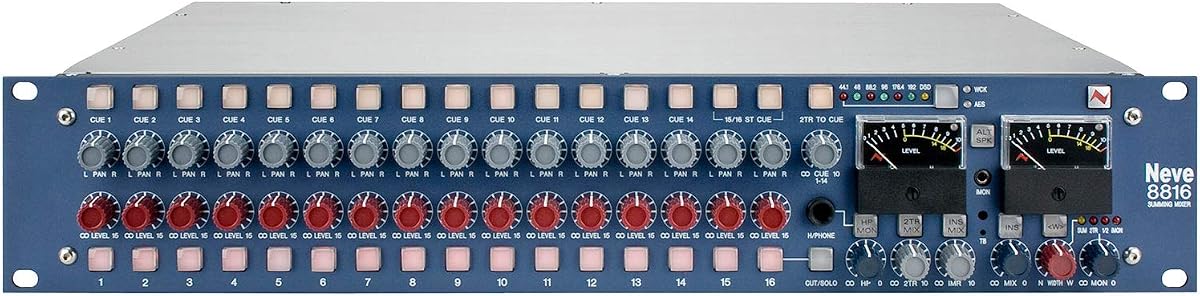
The Neve 8816 stands as a benchmark for classic analog summing, offering 16 channels of transformer-balanced mixing. It delivers the warmth and depth expected from legacy Neve gear without requiring a massive console footprint.
We may earn a commission when you buy through this link, at no additional cost to you.
Its main and alternate speaker outputs allow for versatile monitoring setups, while dual headphone jacks support collaborative sessions. The transformer-balanced design ensures signal integrity and adds subtle harmonic coloration prized by engineers.
Trade-offs include a steep investment and fixed channel count, which may limit expansion. However, these are acceptable given the unit's sonic character and robust construction intended for serious production environments.
This mixer is ideal for studios seeking authentic analog coloration on mixed stems. Professionals prioritizing sound quality over cost will find this unit a worthy investment for mastering and mixdown stages.
The use of high-quality transformers minimizes noise and adds rich harmonic content to the summed signal.
Multiple outputs enable seamless switching between different monitoring systems during critical listening sessions.
We may earn a commission when you buy through this link, at no additional cost to you.
The Radial Mix 2:1 is a minimalist passive mixer designed for simple two-channel summing tasks. It requires no external power and fits easily into compact rack or desktop setups.
We may earn a commission when you buy through this link, at no additional cost to you.
Its passive circuitry ensures transparency without adding unwanted noise, making it perfect for summing a synth and vocal or two instrument sources. The metal housing withstands rough handling in live or studio environments.
While it lacks flexibility beyond two inputs, this simplicity is its strength for specific routing needs. Users needing basic mono summing without cost or complexity will appreciate its straightforward functionality.
Ideal for home studios or mobile rigs where space and budget are constrained. It serves as a reliable utility box for merging signals before hitting an interface or recorder.
Without active components, the mixer preserves the original signal integrity while combining sources seamlessly.
The absence of power requirements simplifies setup and reduces points of failure during critical sessions.
We may earn a commission when you buy through this link, at no additional cost to you.
The Rupert Neve Designs 5059 brings the coveted Shelford sonic signature to a compact 16-channel summing format. It allows engineers to inject classic coloration into hybrid digital workflows efficiently.
We may earn a commission when you buy through this link, at no additional cost to you.
Features like 16 x 2+2 routing enable flexible channel pairing and stereo summing options. The shelford Edition badge indicates specific circuit tuning for rich harmonics and tight low-end response.
The rack mountable design saves space but may require additional cabling for complex setups. These minor inconveniences are outweighed by the sonic benefits and pedigree of the Neve name.
Recommended for producers seeking authentic analog texture without a full console. It bridges the gap between digital precision and vintage warmth in modern production environments.
Specifically tuned to replicate the sonic characteristics of the larger Shelford console in a modular format.
The 2+2 configuration allows for advanced bus routing and creative summing techniques.
We may earn a commission when you buy through this link, at no additional cost to you.
The Headliner R4 combines classic rotary design with modern analog filters for precise control. It is built for DJs but offers high-quality analog summing suitable for live music applications.
We may earn a commission when you buy through this link, at no additional cost to you.
ALPS potentiometers ensure smooth operation over time, while wood side panels add aesthetic appeal. The filter section allows resonance and frequency shaping, making it versatile beyond standard mixing.
Its focus on DJ functionality like mic inputs and cue sections may limit pure audio engineering use. However, the signal path remains clean and robust for performance-oriented mixing scenarios.
Ideal for live DJs or musicians needing tactile control and filter effects. The build quality and design make it a standout piece in any performance setup.
Genuine Alps pots deliver smooth, reliable control that maintains consistency over years of use.
High and low pass filters with resonance control add creative dimension to the summed output.
We may earn a commission when you buy through this link, at no additional cost to you.
The Mackie Onyx Series 16-Channel offers a robust analog path with integrated multi-track USB recording capabilities. Its award-winning Onyx preamps provide clean gain and British-style EQ for rich tonality.
We may earn a commission when you buy through this link, at no additional cost to you.
Bluetooth streaming allows direct audio routing from mobile devices, enhancing workflow flexibility. The robust digital effect engine includes customizable reverbs and delays, reducing reliance on external processors.
Digital conversion and basic effects may not satisfy high-end mastering needs, but it excels for recording and live sound. It balances cost and features effectively for versatile production tasks.
Suitable for home studios and live bands needing full channel count and USB integration. It serves as a reliable workhorse for tracking, mixing, and playback in one unit.
Legendary British-style EQ and low noise floor deliver professional tone on every input channel.
USB connectivity captures individual tracks directly, streamlining post-production workflows significantly.
We may earn a commission when you buy through this link, at no additional cost to you.
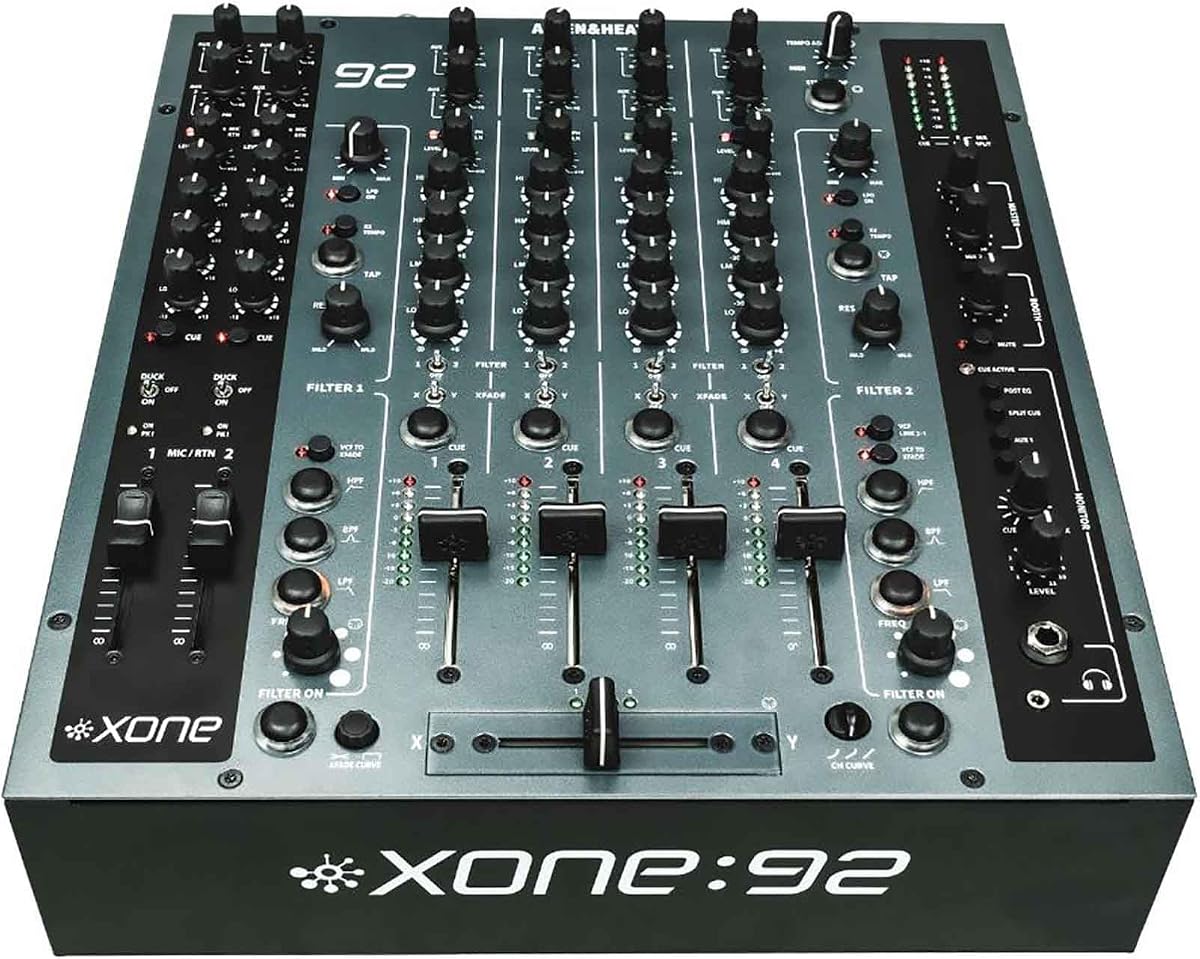
The Allen & Heath Xone:92 Mk2 is a high-performance analog mixer featuring the renowned Xone:VCF switching system. It delivers deep sonic sculpting through dual multimode filters and high channel isolation.
We may earn a commission when you buy through this link, at no additional cost to you.
Four channels support various inputs including phono and line, with dedicated send/return loops for external effects processing. The analog design ensures warm, punchy sound even at high volumes.
Its DJ-centric layout and price point may limit use in traditional studio environments. However, for live electronic performances and sonic experimentation, it offers unparalleled control.
Best for professional DJs and live electronic artists requiring tactile filter control. The sound quality and build justify the investment for those prioritizing performance flexibility.
Voltage controlled filters offer precise resonance and frequency manipulation for dynamic sound shaping.
High separation between channels ensures no bleed during complex mixing scenarios.
We may earn a commission when you buy through this link, at no additional cost to you.
The Allen & Heath Xone:43 provides a compact 4+1-channel analog solution with the signature Xone VCF system. It integrates external effects easily via send/return connections with individual dry/wet controls.
We may earn a commission when you buy through this link, at no additional cost to you.
Innofader compatibility ensures smooth crossfader movement for scratch DJs. Dedicated booth outputs and high-quality analog circuitry maintain clarity during live transitions.
While compact, it lacks some advanced routing options found in larger models. However, its sound quality and control remain top-tier for DJs and live performers.
Recommended for DJs needing a reliable, portable analog mixer. It balances portability with high-performance features suitable for club or tour environments.
Designed to work seamlessly with aftermarket Innofader units for extended crossfader control.
Send and return per channel allow flexible integration of external effects units.
We may earn a commission when you buy through this link, at no additional cost to you.
The Mackie 1202VLZ4 delivers exceptional sound with four Onyx mic preamps offering ultra-wide gain and low noise. It is perfect for broadcast, live sound, and recording with minimal distortion.
We may earn a commission when you buy through this link, at no additional cost to you.
Extended frequency response and remarkable dynamic range ensure accurate signal reproduction. Three-band EQ and low-cut filters provide precise tonal shaping for each channel.
Routing options include aux sends and stereo feedback, though USB is absent on this specific model. Its rugged chassis and reliability make it a staple for professional and semi-pro settings.
Ideal for studios and live setups needing clean analog summing on a budget. It provides professional performance without compromising on essential audio quality.
Legendary mic preamps deliver clean gain and low noise for pristine recording quality.
Distortion remains under 0.0007% ensuring transparent audio even at high output levels.
We may earn a commission when you buy through this link, at no additional cost to you.
The Solid State Logic BiG SiX combines 18-input summing with comprehensive monitoring and USB audio interface features. Its SuperAnalogue technology delivers studio-grade mic pres and dynamic processing.
We may earn a commission when you buy through this link, at no additional cost to you.
The stereo master bus compressor adds cohesive glue to mixes, while 24-bit converters ensure high fidelity. Listen mic compression and talkback enhance communication during recording sessions.
As a desktop unit, it may lack the physical layout of large consoles. However, its feature set bridges analog summing and digital recording seamlessly for hybrid studios.
Perfect for producers wanting full console control in a compact form. It justifies its cost through professional sound quality and robust I/O flexibility.
Advanced circuitry ensures ultra-low noise and high headroom for pristine audio capture.
Built-in stereo bus compressor adds depth and consistency to the final summed output.
We may earn a commission when you buy through this link, at no additional cost to you.
The Yamaha MG10 is a standalone 10-channel mixer featuring studio-grade D-PRE preamps for natural bass and smooth highs. Its rugged metal chassis ensures durability in touring and live environments.
We may earn a commission when you buy through this link, at no additional cost to you.
Three-band EQ and high-pass filters provide precise control over tone. One-knob compressors simplify dynamics processing for guitars and vocals without complex tweaking.
Lacking USB, it serves best as an analog summing or mixing hub. Its reliability and sound quality make it a trusted choice for entry-level and portable setups.
Ideal for musicians needing simple, robust analog mixing. It delivers professional tone and durability at a price accessible to newcomers.
Class-A D-PRE circuitry delivers rich harmonic detail and tight low-end response.
Quick compressor controls allow instant dynamics shaping for consistent vocal and instrument levels.
We may earn a commission when you buy through this link, at no additional cost to you.
Selecting the right analog summing mixer depends on your workflow, budget, and desired sonic characteristics. This guide breaks down key factors to consider before purchasing.
Determine how many inputs you need to sum simultaneously. Some units offer 4 to 16 channels, while others allow flexible routing. More channels provide more creative control but increase cost.
Choose a channel count that matches your typical session size to avoid unnecessary expense or limitations.
Transformers and specific circuits add harmonic saturation or warmth. Transformer-balanced units like the Neve 8816 offer distinct color, while passive mixers remain transparent.
Decide if you want coloration or transparency based on your existing studio sound.
Look for robust metal chassis and high-quality potentiometers like ALPS. Durability matters if you plan to move the unit or use it live.
Invest in units with proven build standards to ensure longevity in demanding environments.
Check for main, alternate, and booth outputs. Multiple headphone jacks and cue sections are vital for collaborative sessions.
Prioritize models with flexible routing to adapt to different monitoring setups.
Some mixers include filters, compressors, or USB interfaces. The SSL BiG SiX adds master compression and recording capability, while others focus purely on summing.
Decide if extra features align with your workflow before paying extra.
Prices vary widely from budget passive boxes to high-end consoles. Assess the trade-offs between price and performance to find value.
Balance your financial limits with the sonic improvements you expect.
Active units need power supplies while passive mixers do not. Consider power options for portability or rack installations.
Check power needs before installation to ensure compatibility with your gear.
Ensure input and output connectors match your interface and monitors. XLR and balanced inputs help avoid ground loops.
Verify connectivity options match your studio infrastructure for seamless integration.
Connect your source signals to the mixer inputs using balanced cables. Ensure gain staging is correct to avoid distortion during summing. Route outputs to your monitor system or interface.
Use EQ and compression on the mixer if available to shape sound before it hits the master bus. Avoid overdriving levels to preserve headroom and clarity in your mix.
Store the unit in a dry environment and keep dust off the knobs and faders. Regular inspection of cables and connectors prevents signal loss over time.
Analog summing adds harmonic depth and warmth that digital summing lacks. It creates a more cohesive stereo image by combining signals through analog circuitry with subtle distortion.
No, passive mixers like the Radial Mix 2:1 do not require external power. They rely on the incoming signal strength to operate, reducing setup complexity.
If you sum stems from a digital audio workstation, 16 channels offer flexibility. For simpler setups, 4 to 6 channels may suffice and save money on hardware.
Yes, many units like the Yamaha MG10 work for live sound. Ensure they have robust outputs and enough channels for your instruments and microphones.
Transformers reduce noise and add warm harmonic content. They help maintain signal integrity over long cable runs and offer a desirable sonic color.
Not necessarily. Many mixers work alongside existing interfaces. However, hybrids like the SSL BiG SiX add recording capability for all-in-one workflows.
Entry-level passive units start under $200 while premium active consoles exceed $3000. Mid-range units like the Onyx series offer balanced value.
Yes, mastering engineers often use high-quality analog summing for final glue. Models with high headroom and clean paths are preferred for this stage.
The top picks like the Neve 8816 and SSL BiG SiX offer premium sound and build for serious studios. Budget options like the Radial Mix 2:1 deliver value without compromising core functionality.
Prioritize features that match your workflow whether that is channel count, filter controls, or monitoring flexibility. The right unit should enhance your sound without adding unnecessary complexity.
Verify current availability and pricing before purchase since market conditions change. Investing in quality analog gear ensures long-term satisfaction and sonic improvement.