
Dorhea 7 Pack 3.3V DC-DC Buck Converter 3 Pins AMS1117-3.3V DC 4.75V-12V to 3.3V Voltage Regulator Step Down Power Supply 800mA Buck Module
4.2Editor score
Linear AMS1117 regulator chip
800mA current output capacity
Simple three pin design
This guide compares the top 5V to 3V voltage regulators for stable power conversion in electronics projects and portable devices.
Finding the right voltage regulator is essential for powering sensitive electronics like microcontrollers and sensors. A good 5V to 3V regulator ensures stable output with low ripple to prevent device damage or malfunction.
We compared ten highly rated products based on efficiency, size, current capacity, and user feedback. This list covers both linear and switching regulators to suit various project needs and budget constraints.
Each pick highlights key features and real-world applications to help you choose quickly. Keep in mind that availability and pricing can change, so check the links for the latest details before buying.
4.2Editor score

4.6Editor score
4.9Editor score
Below you will find a side by side comparison of all ten products to help you quickly spot the best fit for your power needs.


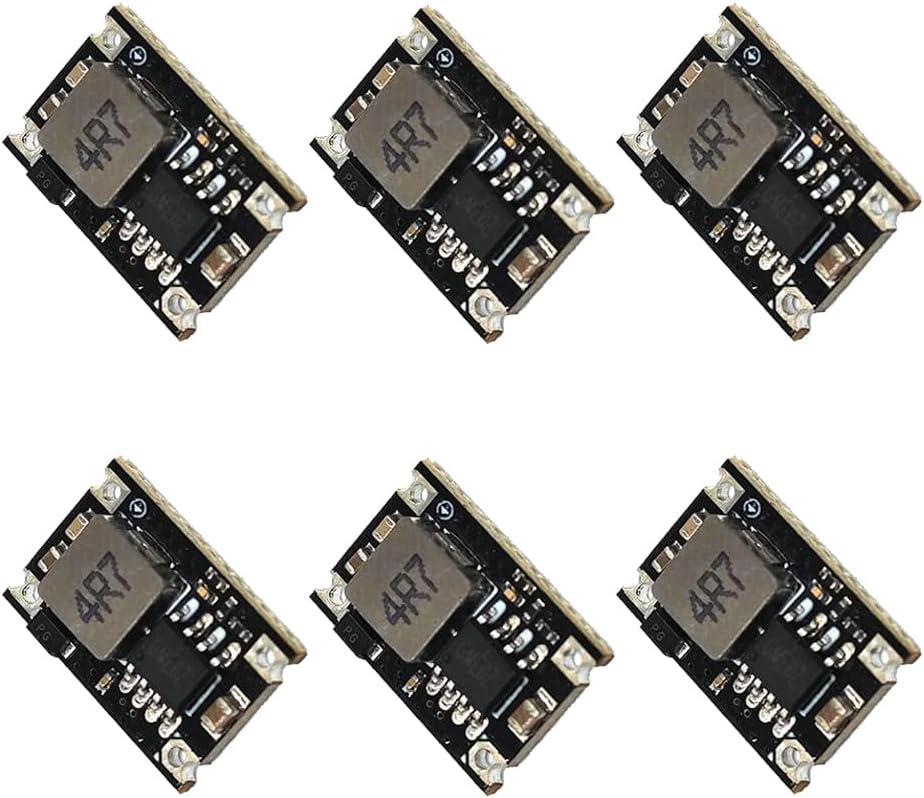
This pack of buck converters is our top choice for general purpose 5V to 3V power conversion. It offers a broad input range from 4.5V to 24V which makes it versatile for many power sources including batteries and adapters.
We may earn a commission when you buy through this link, at no additional cost to you.
Each module delivers a stable 3.3V output with less than 30 millivolts ripple thanks to a switching frequency of 1 megahertz to 1.5 megahertz. The compact 17.5mm by 12mm footprint allows it to fit easily into tight enclosures.
While the design is straightforward it does require external protection diodes when driving motors or servos to avoid voltage spikes. This is a common requirement for switching regulators and does not detract from its overall performance.
Hobbyists and makers will appreciate the five module pack which is ideal for prototyping multiple circuits or sharing with friends. We recommend this regulator for any project needing reliable low voltage power from varied input sources.
The 4.5V to 24V input range means you can use this with almost any common power supply without worrying about overvoltage or undervoltage issues.
The low ripple output ensures clean power for sensitive microcontrollers and sensors reducing the risk of resets or measurement errors.
We may earn a commission when you buy through this link, at no additional cost to you.
This AMS1117 based regulator provides a straightforward linear solution for stepping down voltages to 3.3V. It is a great choice for low noise applications where efficiency is not the primary concern.
We may earn a commission when you buy through this link, at no additional cost to you.
The module supports input voltages from 4.75V to 12V and delivers a steady 0.8A output. The dual panel design with single row pins makes it easy to connect to breadboards or PCB headers.
Linear regulators do dissipate more heat than switching types especially with large voltage differences but this unit includes over heat shutdown for safety. It is best used in low to medium current scenarios.
For simple electronics projects like Arduino boards or sensor arrays this regulator offers a reliable and cost effective power supply. The 10 pack ensures you have plenty on hand for multiple builds.
Linear regulators like the AMS1117 produce minimal electrical noise making them suitable for sensitive analog circuits.
The three pin layout simplifies wiring and reduces the chance of incorrect connections during assembly.
We may earn a commission when you buy through this link, at no additional cost to you.
This converter stands out because it can step up or down to maintain a steady 3.3V output from inputs as low as 1.8V. This feature is essential for battery powered devices that drain over time.
We may earn a commission when you buy through this link, at no additional cost to you.
With a maximum current of 100mA it is well suited for low power microcontrollers and sensors that do not require much energy. The ability to handle a wide input range ensures consistent performance.
The main limitation is the low current capacity which means it cannot drive motors or high draw components. For tiny projects this is rarely an issue but it is important to check your power needs.
If you are building a small IoT device or a wearable this regulator is a smart choice for maintaining voltage stability. The five pack offers good value for prototyping multiple low power prototypes.
The step up capability allows you to use batteries even when their voltage drops below 3.3V keeping your device running longer.
Its small footprint makes it easy to integrate into compact designs where space is limited.
We may earn a commission when you buy through this link, at no additional cost to you.
This Mini360 based regulator delivers a high current 1.5A output from a very small 17mm by 12mm board. It is an excellent option for projects that need more power but have limited space.
We may earn a commission when you buy through this link, at no additional cost to you.
The input range of 4.5V to 24V covers most common voltage sources and the output ripple is kept under 30 millivolts. The high switching frequency ensures efficient power conversion with less heat.
Like other buck converters it is advisable to add protection components when using inductive loads to avoid voltage spikes. The overall design is robust and well suited for demanding applications.
Users will find this pack ideal for robotics or portable electronics that require stable high current power. The combination of size and performance makes it a strong contender for many builds.
The switching design minimizes heat loss allowing for continuous operation without large heat sinks.
Accepting up to 24V input means it can work with 12V or 24V batteries directly.
We may earn a commission when you buy through this link, at no additional cost to you.
This Dorhea pack offers a budget friendly solution for projects that do not need switching efficiency. It is a solid choice for low current applications where simplicity and cost are key.
We may earn a commission when you buy through this link, at no additional cost to you.
The module supports up to 800mA output and includes overheat protection to prevent damage. The three pin design ensures that wiring is quick and straightforward for any skill level.
Keep in mind that the linear topology generates more heat than switching regulators especially with higher input voltages. It is best used when the input voltage is close to the output voltage.
For hobbyists on a tight budget this pack provides excellent value. You can build multiple projects without worrying about spending much on power regulation components.
The standard pin layout matches many development boards making it easy to drop into existing circuits.
At this price point it is one of the most cost effective options available for small scale projects.
We may earn a commission when you buy through this link, at no additional cost to you.
This fifteen pack of AMS1117 regulators is perfect for makers who run frequent projects or need spare parts. The output accuracy of plus or minus two percent ensures consistent performance across the batch.
We may earn a commission when you buy through this link, at no additional cost to you.
Each module provides up to 800mA of current and includes built in overheat protection. The dynamic voltage difference control helps reduce power consumption in battery powered scenarios.
Since it is a linear regulator efficiency is lower than switching options but this is acceptable for many low power applications. The plug and play design simplifies installation on prototyping boards.
If you need a large supply of reliable regulators for a workshop this pack is a smart investment. It eliminates the need to order small quantities repeatedly and saves time over the long run.
Getting fifteen units at once ensures you always have replacements ready without waiting for shipping.
The tight voltage tolerance helps keep sensitive electronics stable under varying loads.
We may earn a commission when you buy through this link, at no additional cost to you.
This buck converter board stands out for its ability to deliver up to 1.8A from a tiny footprint. The input range from 5V to 30V makes it flexible for various power sources.
We may earn a commission when you buy through this link, at no additional cost to you.
Features like reverse polarity protection help prevent damage if the power leads are connected incorrectly. The stable output ripple under 30 millivolts ensures clean power for sensitive devices.
While the product offers strong specs the user rating suggests some inconsistencies in quality or performance. It is worth testing each unit before final assembly to ensure reliability.
For projects requiring higher current this board is a capable option. Just be sure to verify its performance to match your specific needs before relying on it for critical circuits.
The 1.8A capacity allows for powering larger microcontrollers or small servos without additional boosters.
Reverse polarity protection adds a layer of safety against wiring mistakes during prototyping.
We may earn a commission when you buy through this link, at no additional cost to you.
This buck converter handles a very wide input range of up to 30V making it suitable for industrial or automotive power systems. It delivers a stable 3.3V output with low ripple.
We may earn a commission when you buy through this link, at no additional cost to you.
Each unit is sold in a five pack ready for prototyping. The compact dimensions allow it to fit into wearable or IoT devices easily.
The lack of customer reviews means testing is recommended before deployment. It is designed for common microcontrollers and LED strips with simple wire connections.
For versatile power needs this regulator offers a strong feature set. Just ensure you test each module to confirm performance before integrating it into critical designs.
Handling up to 30V allows use with 24V industrial rails or vehicle electrical systems.
The small form factor suits tight enclosures and portable electronics.
We may earn a commission when you buy through this link, at no additional cost to you.
This ten pack of AMS1117 regulators provides a simple solution for stepping down 5V to 3.3V. It is ideal for low current projects that prioritize reliability over efficiency.
We may earn a commission when you buy through this link, at no additional cost to you.
The input range of 4.5V to 7V covers most USB and 5V adapter sources. The 800mA limit is sufficient for most microcontrollers and sensors.
Since it is linear it may get warm with high loads but the module is designed to handle this safely. The automatic adjustable boost board ensures consistent performance.
For users needing a straightforward and affordable regulator for standard electronics this pack is a reliable choice. It simplifies power management for breadboard and PCB projects.
The 5V input support makes it easy to power from USB sources for portable prototypes.
Having ten units ensures you can work on multiple projects without waiting for additional shipments.
We may earn a commission when you buy through this link, at no additional cost to you.
This pack uses the MP1584EN chip which is known for high efficiency and performance. With a 1.8A output and ultra compact size it is perfect for demanding portable or small projects.
We may earn a commission when you buy through this link, at no additional cost to you.
The input range of 4.5V to 24V covers most common power supplies. The 1.5MHz switching frequency keeps ripple low and efficiency high.
Like other buck regulators you should add protection components when driving inductive loads. The small 17mm by 11mm size is ideal for aircraft models or drones.
For those seeking a high end regulator with excellent performance this pack is worth the investment. It delivers professional grade results for hobbyists and professionals alike.
The MP1584EN offers superior efficiency and stability compared to basic regulators.
The small size and light weight make it perfect for weight sensitive applications like drones.
We may earn a commission when you buy through this link, at no additional cost to you.
Choosing the right voltage regulator depends on your power needs and project constraints. Here are key factors to consider.
Ensure the regulator accepts your power source voltage. Some units accept 5V only while others handle up to 24V or 30V.
Select a model with an input range that covers your intended power supply.
Check the maximum current your load requires. Switching regulators often support up to 1.8A while linear ones may max out at 800mA.
Choose a regulator with current headroom to avoid overheating or voltage drops.
Switching regulators are efficient but may produce noise. Linear regulators are quieter but generate more heat.
Use switching types for battery efficiency and linear for noise sensitive circuits.
Compact modules save space on PCBs. Look for small dimensions if you are building portable devices.
Verify mounting holes or solder pin spacing matches your project.
Features like overheat or overcurrent protection add safety. Some units also have reverse polarity marks.
Prioritize regulators with built in protection for reliability.
Low output ripple ensures clean power for sensitive components. Aim for under 30 millivolts if possible.
Stable output prevents random resets in microcontrollers.
Buying packs of 5 to 15 offers value. Ensure the pack size fits your project needs.
Consider stocking spares for future builds.
Compare price per unit across packs. Higher quality chips may cost more but perform better.
Balance budget with required performance for your application.
Connect the input and output pins correctly. Most modules mark V in GND and Vout on the PCB.
Avoid connecting directly to inductive loads without protection diodes to prevent voltage spikes.
Check the voltage output with a multimeter before attaching sensitive electronics to confirm accuracy.
Linear regulators are simpler and quieter which suits noise sensitive circuits. Switching regulators are more efficient and handle higher currents better. Choose based on your heat and noise constraints.
Not all 5V regulators accept 9V. Check the input voltage range. Some buck converters accept up to 24V or 30V so they work fine with 9V sources.
Switching converters often work without external capacitors but adding them near the pins improves stability. Linear regulators may need input and output capacitors for best performance.
Buck regulators switch power to reduce voltage efficiently. Linear regulators dissipate excess voltage as heat. Buck types are better for higher currents and battery life.
If the regulator gets too hot to touch or the output voltage drops under load it may be overheating. Ensure you are not exceeding the current limit and provide airflow.
The Raspberry Pi requires more than 800mA so most single modules here are not enough. Use a power bank or higher current module designed for 5V devices.
Yes most have through hole pins suitable for soldering. Use a fine tip iron and ensure you apply enough heat for a solid joint without damaging the module.
If input equals output a linear regulator passes it through while a buck may not start. Ensure your source is slightly higher than 3.3V for stable operation.
We highlighted ten reliable regulators for converting 5V to 3.3V. The buck converters offer efficiency while linear types provide simplicity and low noise.
Prioritize current capacity and input range when selecting. Consider heat management for battery powered or high load scenarios.
Always verify current pricing and availability before purchase as they can change frequently. Check user reviews for any updates on quality.