
HiLetgo ENC28J60 ENC28J60-I/SO HR911105A
4.3Editor score
Main Chip ENC28J60-I/SO
RJ45 connector HR911105A isolation
3.3V power supply requirement
This guide compares ten top Arduino Lan Ethernet Module options for stable TCP/IP connectivity across various microcontroller projects and IoT applications.
Connecting your microcontroller to a network opens up endless possibilities for data exchange and remote control. Choosing the right Arduino Lan Ethernet Module ensures reliable communication without compromising performance or stability in your designs.
We evaluated ten leading Ethernet modules based on interface type, power requirements, and compatibility with popular boards like Arduino and STM32. Our analysis focuses on real-world usability and robustness for both hobbyists and professional developers.
Each pick highlights specific strengths like speed, buffer size, or ease of integration to help you find the perfect match for your project. Please note that availability and specific terms may vary by vendor and region at any given time.
4.3Editor score

4.2Editor score
5.0Editor score
This side-by-side comparison highlights key specifications and features across the top ten Ethernet modules to help you decide which one fits your specific connectivity needs best.




The HiLetgo 2pcs W5500 Ethernet LAN Network Module stands out as a top choice for developers seeking robust network integration. With a strong user rating, it offers reliable performance for connecting microcontrollers to local networks or the internet.
We may earn a commission when you buy through this link, at no additional cost to you.
This module supports eight independent sockets simultaneously, which is excellent for projects needing multiple connections at once. The internal 32Kbytes memory for TX/RX buffers ensures smooth data handling, while Wake on LAN over UDP adds power-saving utility to your design.
While the module is powerful, users should note that proper voltage alignment is crucial to avoid damage. Some assembly may be required depending on your base board. These trade-offs are acceptable given the performance benefits it brings to complex IoT applications.
If you are building a project that requires stable Ethernet connectivity for Arduino or STM32 boards, this module is a highly recommended option. Its combination of speed, memory, and multi-socket support makes it ideal for demanding networked systems.
Supporting eight independent sockets allows you to manage multiple network connections efficiently, which is essential for advanced server or client applications.
The internal 32Kbytes memory provides ample space for TX/RX buffers, reducing the chance of data loss during high traffic periods.
We may earn a commission when you buy through this link, at no additional cost to you.
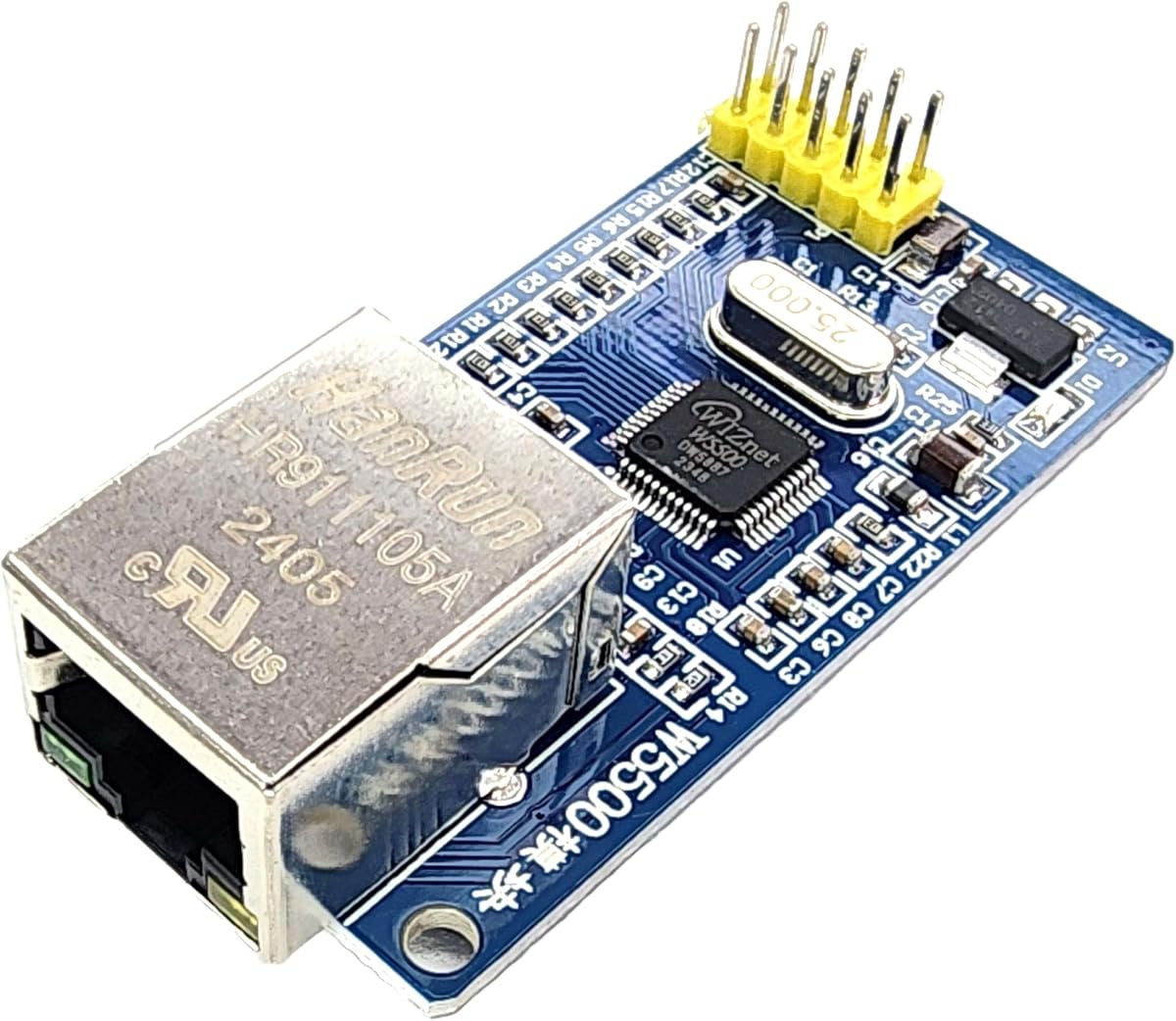
This W5500 SPI to LAN Ethernet Network Module offers a solid balance between performance and ease of use. It is designed to work seamlessly with STM32 interfaces and is compatible with various Arduino boards like the WIZ820io and RC5.
We may earn a commission when you buy through this link, at no additional cost to you.
The module supports both 3.3V and 5V operations, making it versatile for different microcontroller environments. Its TTL level 3.3V SPI interface ensures straightforward communication, and the external power supply mode allows for flexibility in system design.
However, users need to ensure the current supplied is at least 200mA to maintain stable operation. While the hardware is robust, finding detailed setup guides might take extra time for newcomers. This is a minor hurdle for such a capable hardware unit.
For developers working on embedded systems requiring reliable Ethernet access, this module provides the necessary tools. Its compatibility and interface support make it a practical choice for projects that need consistent network presence.
Supporting both 3.3V and 5V means you can use this module across a wide range of microcontroller boards without additional level shifters.
The TTL level SPI interface simplifies wiring and reduces the complexity of integrating network capabilities into your existing circuit.
We may earn a commission when you buy through this link, at no additional cost to you.
ACEIRMC offers this pack of five W5500 Ethernet modules, providing excellent value for projects requiring multiple units. Each module follows the USR-ES1 design with an SPI interface and supports TCP IP connectivity via STM32 standards.
We may earn a commission when you buy through this link, at no additional cost to you.
The compact PCB size of 23 by 25 mm makes it easy to fit into space-constrained enclosures. The TTL level 3.3V interface ensures efficient communication, and the consistent power supply requirement helps maintain stability across all five units.
Keep in mind that the power supply must be continuous and stable at 3.3V with at least 200mA current. Any voltage drop could disrupt operations, so a reliable power source is key. Despite this, the price point for a five-pack is highly competitive.
If you need several modules for a batch production or large network of devices, this pack is an ideal solution. It combines reliability with affordability, making it accessible for prototyping and production alike.
The small 23 by 25 mm footprint allows you to integrate network capabilities into smaller embedded projects without crowding the board.
Buying five modules in one package reduces per-unit costs, which is beneficial for educators or businesses deploying multiple nodes.
We may earn a commission when you buy through this link, at no additional cost to you.
This 2-Pack W5500 Ethernet LAN Module includes features like a full hardware TCP/IP stack and support for eight simultaneous sockets. It operates on both 3.3V and 5V systems, which is convenient for mixed voltage projects.
We may earn a commission when you buy through this link, at no additional cost to you.
The module supports High-Speed SPI Mode 0/3 and includes an industrial-grade PHY for reliable 10/100Mbps connectivity. Wake-on-LAN capabilities via UDP add utility for remote management, making it suitable for energy-conscious designs.
However, the low user rating suggests that some buyers have experienced inconsistencies with these units. Potential defects or configuration hurdles could affect your deployment. You should test these thoroughly before committing to a larger rollout.
If you need dual voltage support and can verify the quality upon arrival, this pack might work for your needs. Just be prepared to handle potential setup challenges to ensure stable operation in your application.
Supporting SPI Mode 0/3 at high speeds ensures that data transmission remains fast and responsive for real-time control scenarios.
The embedded industrial-grade PHY provides robust auto-negotiation capabilities, improving connection stability in varied network environments.
We may earn a commission when you buy through this link, at no additional cost to you.
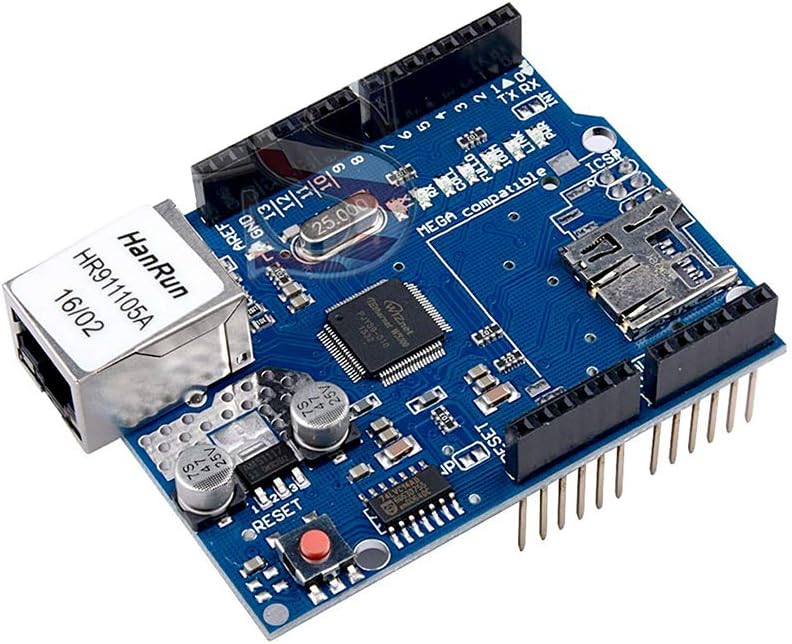
The DEVMO W5100 Ethernet Network Shield connects your Arduino board to the internet quickly and efficiently. It is designed to stack directly onto UNO R3 and MEGA boards, offering plug-and-play convenience for many users.
We may earn a commission when you buy through this link, at no additional cost to you.
This shield includes an SD Card Slot for local data logging alongside network capabilities. The W5100 chip provides a reliable TCP and UDP stack, and the standard RJ45 jack ensures easy cable connections to routers or switches.
While the W5100 is a proven chip, it is older compared to newer W5500 options. The shield also occupies more space on your board, which might be an issue in compact enclosures. Still, it remains a functional choice for basic needs.
If you need a shield that integrates SD storage and Ethernet, this module fits the bill. It is a practical solution for projects that need to log data locally while also communicating over a network.
The included SD Card Slot allows you to log sensor data locally, which is perfect for projects needing offline storage capability.
Using a standard RJ45 Ethernet jack makes it easy to connect to existing network infrastructures without extra adapters.
We may earn a commission when you buy through this link, at no additional cost to you.
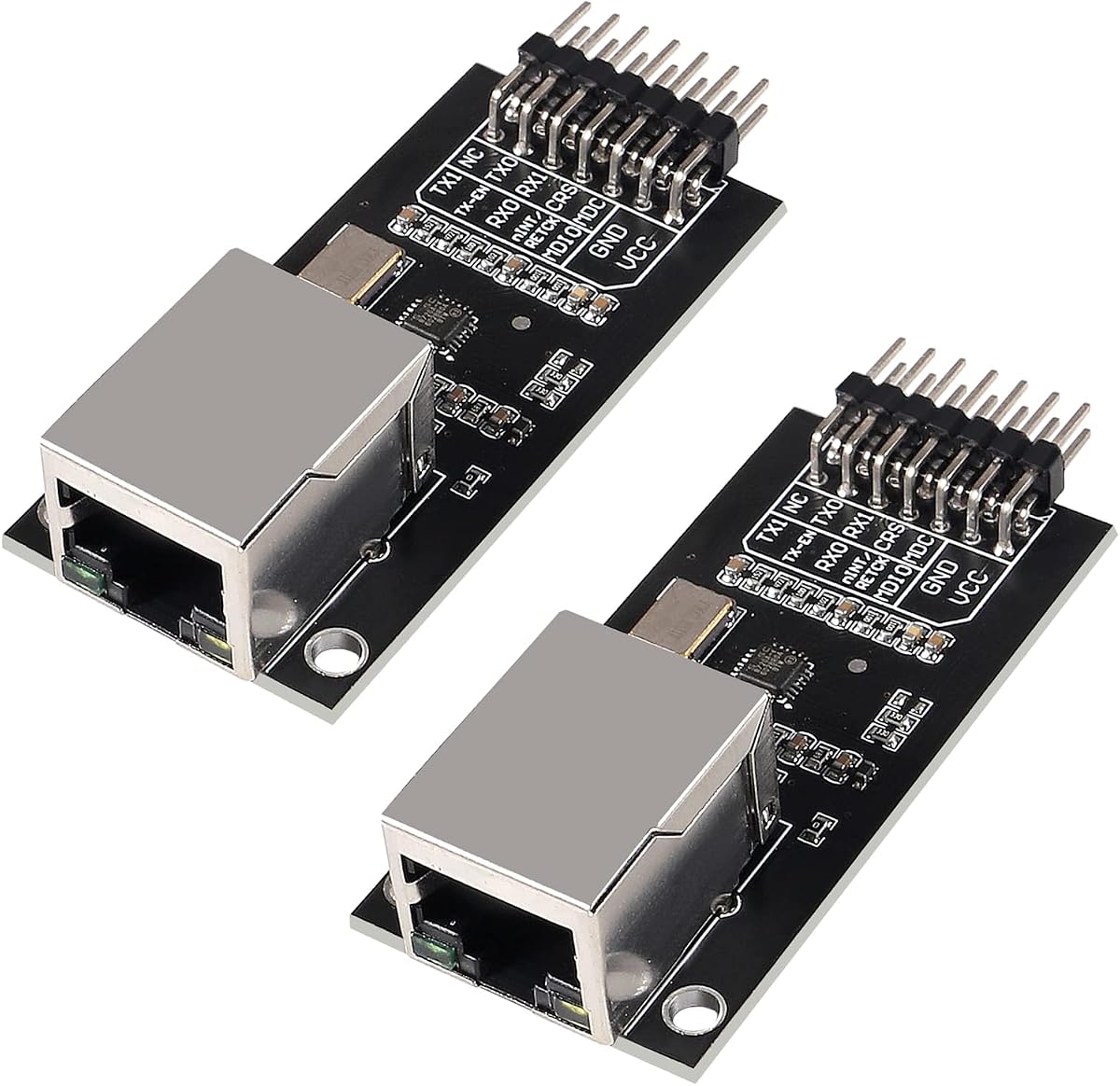
This HiLetgo module centers on the ENC28J60-I/SO chip, offering a cost-effective way to add Ethernet to your projects. It includes a 25MHZ crystal and an HR911105A isolation transformer for stable signal processing.
We may earn a commission when you buy through this link, at no additional cost to you.
The module operates on 3.3V power and supports a range of microcontrollers like AVR, PIC, and STM32. Its compact design allows for flexible placement, and the SPI interface simplifies communication with your main board.
While the ENC28J60 is known for low power usage, it may not match the speed of newer chips like the W5500. Users should ensure proper wiring for the SPI interface to avoid signal issues. This trade-off suits budget-conscious projects.
For projects where power efficiency is more important than maximum bandwidth, this module is a strong contender. It provides reliable connectivity for basic web servers or monitoring tasks without demanding high resource usage.
The ENC28J60 chip is known for its low power consumption, making it suitable for battery-operated IoT devices.
An HR911105A isolation transformer ensures that data signals remain clean and secure during transmission.
We may earn a commission when you buy through this link, at no additional cost to you.
ACEIRMC offers this pack of five ENC28J60 Ethernet modules, designed for users needing multiple units at a reasonable cost. Each module uses the ENC28J60-I/SO chip and complies with IEEE 802.3 Ethernet standards.
We may earn a commission when you buy through this link, at no additional cost to you.
The modules operate at 3.3V with an SPI interface and include the HR911105A isolation transformer. This setup ensures reliable data transfer and allows you to connect these units to AVR, PIC, and STM32 boards efficiently.
Users should note that the data rates are lower than newer chips, which may limit bandwidth-intensive tasks. Proper voltage management is essential to avoid instability. However, the high rating suggests these units perform well for standard needs.
If you are building several low-power network devices, this pack is a smart choice. It delivers consistent performance and compatibility, making it accessible for educational and light IoT applications alike.
Compliance with IEEE 802.3 standards ensures that your device will work correctly with standard network infrastructure and routers.
Supporting AVR, PIC, and STM32 gives you the freedom to choose your preferred microcontroller platform without hardware changes.
We may earn a commission when you buy through this link, at no additional cost to you.
This W5500 Ethernet Module delivers exceptional performance with its stable TCP/IP and UDP network connectivity. It features a full-size RJ45 port and works seamlessly with Arduino, ESP32, and ESP8266 microcontrollers.
We may earn a commission when you buy through this link, at no additional cost to you.
The SPI interface allows for quick integration without complex wiring. Users appreciate the reliable connection quality, which makes it ideal for IoT and smart home projects. The high rating reflects strong user confidence in its performance.
While it comes as a single piece, the value lies in its stability and versatility. Ensure you have access to appropriate sample code and tutorials for setup. This investment pays off with consistent network operations.
If you need a premium module that guarantees reliable connectivity for your IoT or educational projects, this is a top pick. It balances ease of use with professional-grade network capabilities effectively.
Compatibility with Arduino, ESP32, and ESP8266 means you can use this module across a wide variety of development platforms.
The simple SPI interface simplifies the process of connecting network capabilities to your board, saving valuable development time.
We may earn a commission when you buy through this link, at no additional cost to you.
The LAN8720 Ethernet Board is designed for high-performance 10/100 Ethernet connectivity. It includes an integrated 1.2V regulator and supports HP Auto-MDIX, simplifying cable connections in embedded web server setups.
We may earn a commission when you buy through this link, at no additional cost to you.
The flexible power management architecture allows for efficient energy use, which is crucial for long-term server applications. Its transceiver quality ensures stable data transfer, making it suitable for professional Arduino projects.
However, beginners might find the setup more complex compared to standard shields. Specific driver support could be necessary depending on your microcontroller environment. Despite this, its performance capabilities are notable for demanding tasks.
If you need a high-performance transceiver for embedded server or development board interfaces, this module is worth considering. It provides robust connectivity for applications that require stable and efficient data transfer.
The 10/100 Ethernet transceiver ensures that your device can handle substantial data traffic without dropping connections.
Flexible power management helps reduce energy consumption, extending the life of battery-operated devices or reducing heat in servers.
We may earn a commission when you buy through this link, at no additional cost to you.
This Hailege module offers a reliable budget-friendly option for Ethernet connectivity. It uses the DIP28 ENC28J60-I/SO chip and includes a 25MHZ crystal oscillator for stable operation across 51, AVR, LPC, and STM32 controllers.
We may earn a commission when you buy through this link, at no additional cost to you.
The RJ45 connector with HR911105A isolation transformer ensures good signal quality and safety. Users value its simplicity and performance for basic web server and network monitoring tasks, making it a popular choice in the community.
While it lacks the high throughput of modern W5500 modules, its low power needs and broad compatibility are strong assets. Proper wiring is required for the SPI interface. Overall, it delivers great value for the cost.
If you need a cost-effective way to connect Arduino or similar boards to a network, this module is a solid pick. It balances affordability with the features needed for successful project completion.
Supporting 51, AVR, LPC, and STM32 means you can use this module with almost any standard microcontroller you own.
The onboard 25MHZ crystal oscillator ensures precise timing for network data packets, reducing errors during transmission.
We may earn a commission when you buy through this link, at no additional cost to you.
Selecting the right Ethernet module requires considering factors like speed, power, and compatibility. Here are key aspects to evaluate before purchasing.
Most modern modules use SPI interfaces which are simple and fast. Some older models might use different protocols so check your microcontroller support.
Always verify the module matches your controller's supported interfaces for seamless integration.
Modules operate at 3.3V or 5V. Using the wrong voltage can damage components. Ensure your board supplies the correct power.
Check power compatibility before connecting to avoid hardware failures.
Some modules like W5500 support eight sockets while others support fewer. This affects how many connections you can manage simultaneously.
Choose a module with enough sockets for your project needs.
Internal TX/RX buffer sizes affect data handling efficiency. Higher capacity reduces dropouts during high traffic.
Look for at least 32KB memory for smooth operations.
Ensure the module works with your specific board like Arduino Uno or STM32. Cross-compatibility saves time on adapters.
Read product descriptions for confirmed board support.
For battery projects choose low-power chips like ENC28J60. For mains power this matters less.
Consider your energy source when selecting the chip.
Compact PCB sizes fit better in small enclosures. Measure available space before buying.
Select a form factor that fits your design constraints.
Modules with tutorials and sample code simplify development. Look for community forums for help.
Prioritize products with strong documentation and examples.
Connect the module to your microcontroller using the SPI pins MOSI MISO SCK and CS. Ensure all connections are secure to prevent signal loss during operation.
Install the appropriate Ethernet library in your IDE that matches the chip used. Configure your IP settings using DHCP or static addresses in the setup function.
Keep the module away from moisture and heat sources. Periodically check connections and ensure the power supply remains stable to prolong device life.
W5500 modules offer higher speeds and eight sockets compared to ENC28J60. They are better for complex apps while ENC28J60 is more power-efficient for simple tasks.
Most require stable 3.3V power at 200mA or more. If your board cannot provide this, an external supply is recommended to avoid brownouts.
Yes many are compatible with ESP32 and ESP8266 due to standard SPI interfaces. Verify voltage levels and library support for your specific board model.
Use the library's IP constructor to define your static IP before initialization. This ensures your device has a fixed address on the network.
Many come as bare PCBs requiring header soldering. Others may have pin headers pre-installed for direct insertion into breadboards.
The Ethernet library works for W5500 and W5100. For ENC28J60 you may need the UIPEthernet library based on community support.
The W5500 series offers the best performance with multiple sockets and speed while ENC28J60 provides a low-power budget option for simpler needs.
Prioritize compatibility and power supply stability when selecting a module to ensure reliable long-term operation in your specific environment.
Remember to check current availability and terms as these can vary by vendor and region at any given time before finalizing your order.