
WWZMDiB 6 Pcs 5MM LDR Light Sensor
4.4Editor score
LM393 comparator included
Digital and analog output
Adjustable brightness threshold
This guide compares ten top light sensors for Arduino, evaluating performance, compatibility, and features to help you choose the right module for your project.
Choosing the right light sensor for Arduino can significantly enhance your project's capabilities. Whether you need simple ambient light detection or precise illumination measurements, the right module ensures accurate readings and reliable performance across various applications.
We evaluated ten popular light sensor modules based on their accuracy, ease of integration, and compatibility with common microcontrollers like Arduino, ESP32, and Raspberry Pi. Each product was assessed for its output options, power requirements, and suitability for different project needs.
Each pick highlights specific strengths and ideal use cases to help you make an informed decision. Please note that prices and availability can change over time, so check the latest details before purchasing to ensure you get the best value for your needs.
4.4Editor score
4.7Editor score
5.0Editor score
This table provides a side-by-side comparison of all ten selected light sensor modules, highlighting key specifications and unique features to help you identify the best match for your specific Arduino project requirements.


This six-pack of LDR sensors offers an excellent entry point for hobbyists needing reliable light detection. Each module combines a photoresistor with an LM393 comparator, providing both digital and analog outputs for flexible integration into Arduino projects.
We may earn a commission when you buy through this link, at no additional cost to you.
The built-in comparator ensures clean signal output with strong driving capability, making it suitable for triggering relays directly. The adjustable potentiometer allows you to fine-tune the brightness threshold without complex calibration, simplifying setup for automation tasks.
While it lacks the precision of dedicated lux meters, its affordability and ease of use make it ideal for simple on/off light control. Users should note that analog readings may vary slightly between individual sensors due to component tolerances.
If you need multiple sensors for a large project or are just starting out, this pack provides great value. Its compatibility with common microcontrollers like Arduino and ESP32 ensures it fits seamlessly into most existing circuit designs.
The module requires minimal wiring, connecting directly to 3.3V or 5V power sources without additional components for basic functionality.
Both digital and analog outputs allow you to choose between simple threshold detection or detailed light intensity measurements depending on your needs.
We may earn a commission when you buy through this link, at no additional cost to you.
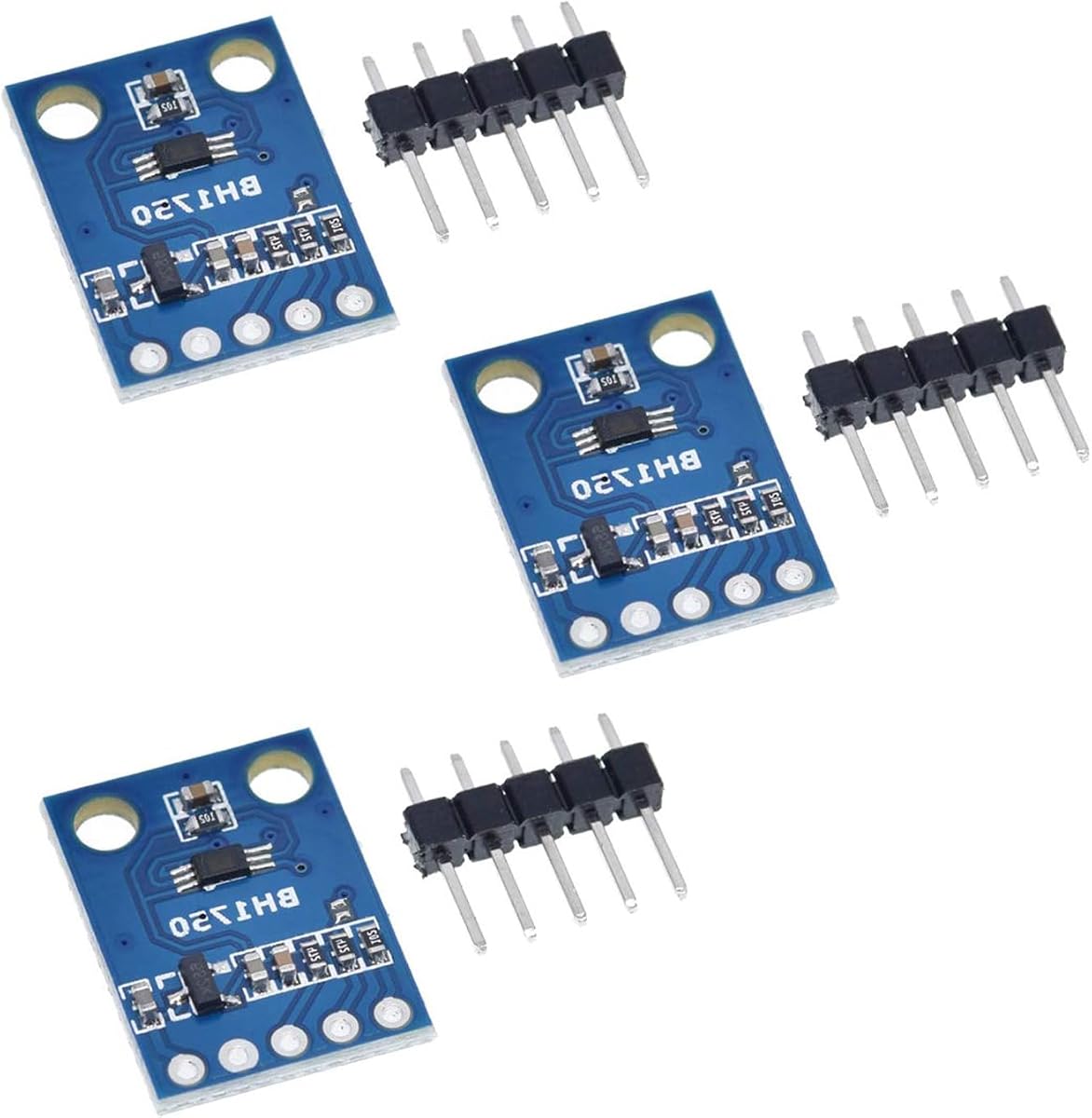
The GY-302 module stands out for its precise light intensity measurements using the BH1750FVI chip. It delivers digital lux readings via I2C, making it perfect for projects requiring exact illumination data rather than simple threshold detection.
We may earn a commission when you buy through this link, at no additional cost to you.
Its compact size allows for easy integration into tight spaces, while the high-quality chip ensures consistent performance across different lighting conditions. The digital interface simplifies data processing, as raw analog-to-digital conversion is handled internally.
Users should be aware that setup requires familiarity with I2C communication and appropriate libraries, which may be a barrier for absolute beginners. However, the accuracy and reliability justify the slight learning curve for most serious projects.
This three-pack is ideal for teams or those needing spares, offering significant savings compared to buying single units. Its compatibility with Arduino, ESP32, and Raspberry Pi makes it a versatile choice for both prototyping and production.
The sensor provides true light intensity values in lux, enabling sophisticated environmental monitoring and automated lighting control systems.
Using I2C reduces pin usage and ensures clean data transmission, avoiding issues common with analog signal interference over distance.
We may earn a commission when you buy through this link, at no additional cost to you.
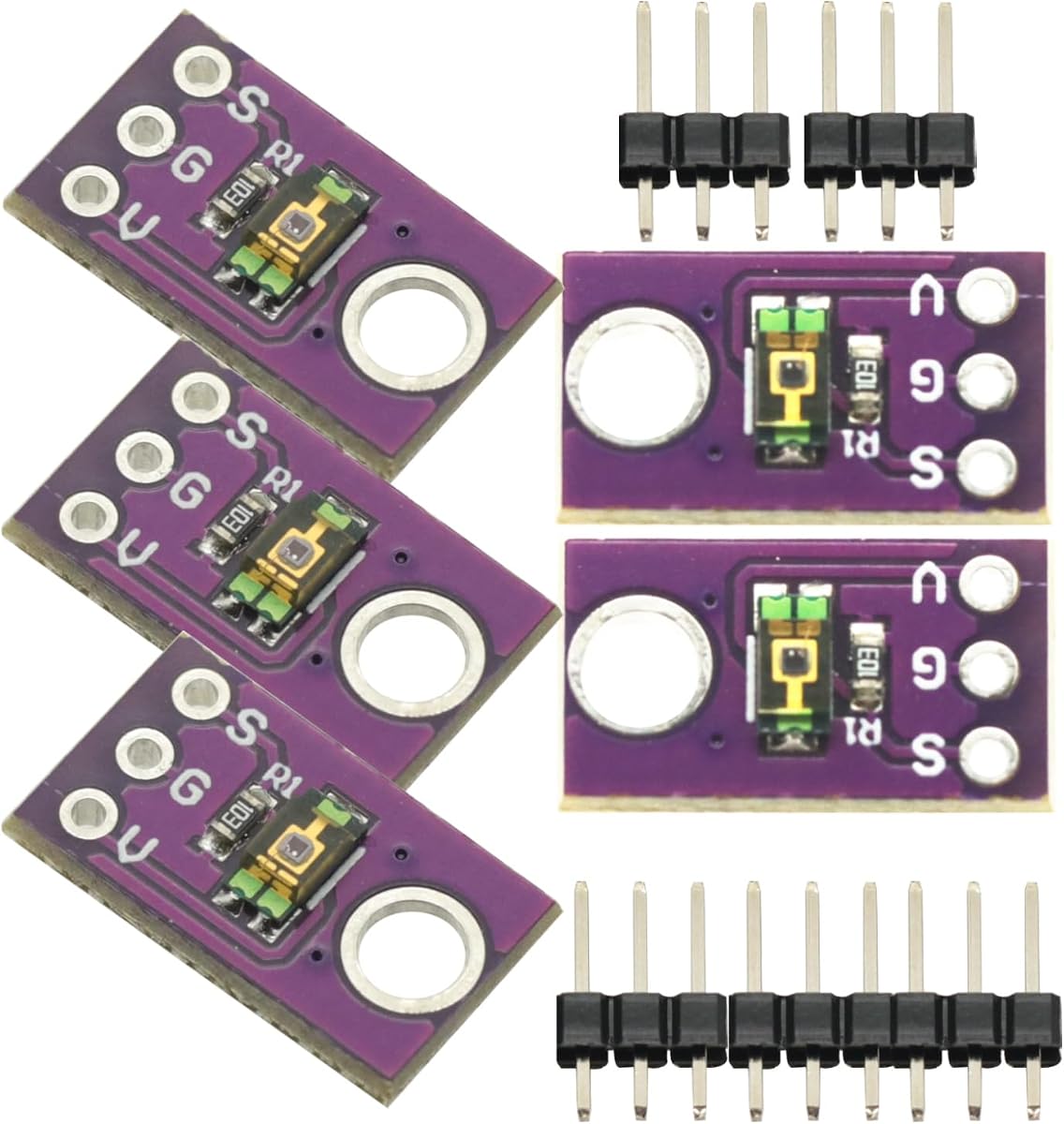
The TEMT6000 module is designed for professional applications requiring reliable ambient light detection. Its linear response curve and high sensitivity make it ideal for display backlight dimming and industrial lighting control where accuracy is critical.
We may earn a commission when you buy through this link, at no additional cost to you.
Built for stability, this sensor maintains consistent output over time, reducing the need for recalibration in deployed systems. Its compact design fits well in space-constrained environments while delivering precise analog voltage proportional to light levels.
While more expensive than standard photoresistors, the performance benefits justify the cost for critical applications. Users should note that it outputs analog signals, requiring ADC conversion, but the quality ensures minimal noise or drift.
This five-pack is suited for developers building production-ready devices or those needing multiple units for redundancy. Its compatibility with 3.3V systems like ESP32 ensures seamless integration without additional voltage regulators.
The sensor's linear output ensures proportional voltage changes with light intensity, simplifying calculations for precise lighting control systems.
Constructed for harsh environments, this module offers long-term stability ideal for commercial or industrial deployments requiring consistent performance.
We may earn a commission when you buy through this link, at no additional cost to you.
This photodiode module excels at detecting light from specific directions, making it suitable for applications requiring focused light sensing. Its directional design ensures only light directly in front of the sensor triggers the output.
We may earn a commission when you buy through this link, at no additional cost to you.
The adjustable digital potentiometer allows precise control over sensitivity, while the dual output provides flexibility for both threshold-based and continuous monitoring projects. Fixing bolt holes simplify installation in static setups.
While the narrow field of view limits general ambient detection, it is perfect for line-following robots or light-seeking mechanisms. Users should test individual units as performance may vary slightly across the pack.
With ten units included, this pack offers excellent value for larger-scale deployments. Its compatibility with standard microcontrollers ensures it integrates easily into various robotic and automation systems.
The directional design minimizes interference from ambient light, ensuring accurate readings from targeted sources in complex environments.
Digital and analog outputs allow you to switch between simple switching tasks and detailed light intensity mapping with ease.
We may earn a commission when you buy through this link, at no additional cost to you.
This thirty-piece pack of raw photoresistors provides flexibility for custom circuit designs. Each 5mm GM5539 resistor offers typical light-dependent resistance characteristics ideal for DIY and educational projects.
We may earn a commission when you buy through this link, at no additional cost to you.
While they lack built-in comparators or regulators, they are simple to wire into voltage divider circuits for Arduino analog inputs. This simplicity makes them perfect for learning basic sensor principles without module dependencies.
The spectral peak at 540nm aligns well with visible light sensitivity, though they may not be ideal for IR or UV applications. Users should ensure proper resistor pairing to achieve the desired voltage output range.
With 30 units, this pack is ideal for classrooms or prototyping labs needing multiple sensors. They are straightforward to use with any 5V or 3.3V system, offering great value for bulk needs.
Raw components allow full control over circuit parameters, enabling tailored voltage dividers and filtering for specific project requirements.
Students can learn how photoresistors work from scratch, gaining deeper understanding of analog sensor interfacing and circuit basics.
We may earn a commission when you buy through this link, at no additional cost to you.
This module specializes in ambient light detection for triggering relays directly. The LM393 comparator provides high driving capability, allowing direct connection to relay modules without additional transistors.
We may earn a commission when you buy through this link, at no additional cost to you.
Its digital output simplifies logic control, switching cleanly between high and low levels based on light intensity. This makes it ideal for automated lighting systems where immediate action is required.
While it lacks fine-grained analog data, the straightforward digital interface is perfect for simple on/off applications. Users should verify threshold settings during initial setup to ensure proper environmental response.
Included as a ten-pack, it is great for multi-zone lighting projects. Compatibility with standard microcontrollers ensures easy integration into Arduino and ESP-based systems.
Direct drive capability eliminates the need for extra components, streamlining wiring for lighting control applications.
Adjustable potentiometer allows quick calibration for different environments without requiring code changes or additional hardware.
We may earn a commission when you buy through this link, at no additional cost to you.
This digital sensor module supports a wide range of microcontrollers including ESP8266 and Raspberry Pi. Its adjustable threshold and dual output make it a flexible choice for various IoT and smart home projects.
We may earn a commission when you buy through this link, at no additional cost to you.
Included tutorials simplify setup, guiding users through wiring and code examples for popular platforms. This educational support accelerates development, especially for beginners new to sensor integration.
While not suitable for high-precision tasks, its reliability and compatibility ensure smooth operation in most standard applications. Users should ensure firmware matches their specific microcontroller's voltage requirements.
With four units, it is ideal for small multi-sensor deployments. Its design prioritizes ease of use, making it a strong candidate for rapid prototyping.
Comprehensive tutorials help new users get started quickly with practical examples for common development boards.
Compatibility with 3.3V and 5V systems ensures it works seamlessly across different microcontroller ecosystems.
We may earn a commission when you buy through this link, at no additional cost to you.
Offering fifty GL5516 light dependent resistors, this pack is perfect for large-scale or industrial deployments. Each resistor meets standard specifications, ensuring consistent performance across different units.
We may earn a commission when you buy through this link, at no additional cost to you.
Its low resistance in bright light makes it suitable for solar tracking projects requiring precise light detection. The bulk quantity eliminates the need for frequent restocking, saving time and effort over long projects.
While raw components require external circuitry, their simplicity allows full customization of sensor circuits. Users should store them properly to avoid humidity-related resistance changes over time.
With a high rating, these resistors are trusted for reliability. They integrate easily with common microcontrollers, making them a practical choice for extensive prototyping.
The large quantity ensures you never run out during extended prototyping, keeping projects moving without interruption.
Designed with solar tracking in mind, these resistors offer optimal resistance ranges for sun-following mechanisms.
We may earn a commission when you buy through this link, at no additional cost to you.
This module is designed for automotive applications like smart car lighting systems. Its LM393 comparator ensures stability against voltage fluctuations, making it reliable for dynamic environments.
We may earn a commission when you buy through this link, at no additional cost to you.
Both digital and analog outputs provide flexibility for controlling indicators or measuring light levels. The compact design fits well in tight vehicle spaces without compromising performance.
While it is optimized for automotive use, it can also serve general Arduino projects. Users should account for vehicle voltage ranges when integrating it into standard 5V systems.
Three pieces are included, sufficient for small projects or testing. Its reliability makes it a solid choice for any application requiring stable light detection.
The LM393 chip ensures consistent output even with power supply variations, crucial for automotive or industrial settings.
Dual outputs let you choose the most suitable signal type for your specific control logic or processing needs.
We may earn a commission when you buy through this link, at no additional cost to you.
HiLetgo uses original ROHM chips in this module, ensuring genuine performance and reliability. The digital light intensity readings are consistent, making it a trusted choice for precision applications.
We may earn a commission when you buy through this link, at no additional cost to you.
Its compact design allows easy integration into crowded circuit boards. Users benefit from extensive online resources, simplifying development and troubleshooting for both beginners and experts.
While setup requires I2C communication, the digital interface ensures clean data without noise. Those needing high accuracy in lighting projects will find this module performs well over long-term use.
With three units, it offers a good balance of quantity and quality. It works seamlessly with most popular microcontrollers, fitting easily into existing workflows.
Original components ensure consistent behavior and long-term reliability without drift or calibration issues.
Widely used community support provides easy access to code examples and integration guides for faster project completion.
We may earn a commission when you buy through this link, at no additional cost to you.
Selecting the right light sensor depends on your project requirements, from simple threshold detection to precise illumination measurement.
Digital sensors provide clear high/low signals for switching tasks, while analog sensors allow detailed light intensity analysis through voltage readings. Choose based on whether you need simple on/off control or variable data.
Ensure your microcontroller supports the required input types for seamless integration.
Modules like BH1750 or TEMT6000 deliver precise lux values suitable for environmental monitoring, whereas photoresistors offer general light sensitivity for basic tasks. Consider the precision needed for your application.
Higher accuracy often comes with higher cost, so balance performance needs against budget constraints.
Check if the sensor operates at 3.3V or 5V to match your microcontroller's logic levels. Mismatched voltages can lead to inaccurate readings or component damage.
Most modern sensors support both ranges, but always verify specifications before purchasing.
Compact modules fit better in space-constrained designs while larger boards may offer additional features like mounting holes. Consider your enclosure's dimensions and mounting needs.
Smaller boards are often easier to route but may be harder to handle during prototyping.
I2C sensors save pins and reduce wiring complexity compared to analog inputs. If using multiple sensors, digital interfaces simplify the setup significantly.
However, analog sensors are often simpler for beginners who do not need multi-sensor setups.
Different sensors respond to varying light wavelengths. Ensure the sensor matches the light source type whether ambient visible or specific wavelengths for industrial use.
Incorrect spectral matching may lead to inconsistent or inaccurate readings under certain lighting conditions.
Buying in bulk can reduce costs and ensure spares for failed units. For small projects, single units may suffice, but larger deployments benefit from multi-packs.
Consider future expansion needs when deciding how many units to purchase initially.
Modules with tutorials and libraries simplify setup and reduce development time. Look for products with active community support and clear guides.
Good documentation ensures you can quickly resolve issues without extensive research or troubleshooting efforts.
Start by connecting the sensor to the appropriate power supply and ground. For analog modules, connect the output pin to an ADC input on your microcontroller to read voltage levels corresponding to light intensity.
For digital sensors using I2C or comparator outputs, connect SDA/SCL pins or digital pins accordingly. Install necessary libraries in your development environment to simplify reading values and calibrating thresholds.
Keep sensors away from direct moisture or excessive heat to maintain accuracy. Periodically check connections and clean the sensor surface to ensure consistent light detection performance over time.
LDR sensors change resistance based on light levels, providing analog output suitable for simple detection. Photodiodes produce current directly when exposed to light, offering faster response and better accuracy for directional sensing.
Yes, most modern modules operate at both 3.3V and 5V. Check specific product specifications to ensure compatibility with 3.3V systems to avoid signal level issues.
Analog sensors do not require libraries, but digital modules like BH1750 need specific drivers. Libraries simplify data reading and calibration, making integration more efficient.
Place the sensor in known lighting conditions and map output values to lux levels. Use code thresholds or calibration factors to adjust readings based on your environment.
Most modules are not waterproof unless specified. For outdoor applications, use protective enclosures or choose IP-rated alternatives to prevent moisture damage.
Yes, analog sensors share pins but require individual ADC inputs. I2C sensors share SDA/SCL lines but need unique addresses or multiplexers for multiple devices.
Choosing the right light sensor depends on your project's complexity and accuracy needs. Options like the GY-302 provide precision, while LDR modules offer simplicity and cost-effectiveness for basic tasks.
Prioritize compatibility with your microcontroller and the specific application requirements. Consider future scalability to ensure your sensor choice supports growth and experimentation.
Always verify current pricing and availability before purchasing to secure the best deal. With the right module, your Arduino projects can achieve reliable and efficient light detection performance.