
Celestron 114LCM Computerized Reflector Telescope for Beginners
4.2Editor score
Computerized GoTo mount
Includes Starry Night software
Full-height tripod included
Computerized telescopes for adults offer a seamless blend of precision optics and automated tracking systems. These devices eliminate the need for manual alignment, allowing users to focus on observing celestial objects with ease and clarity.
We evaluated ten leading models based on optical quality, mount stability, software capabilities, and user experience. Our analysis highlights key features that define a superior computerized telescope for serious hobbyists and beginners alike.
Each pick below showcases specific strengths ranging from compact portability to professional-grade imaging. Please note that product specifications and availability may change over time, so verify details before purchasing.
4.2Editor score

4.3Editor score

4.4Editor score
As an Amazon Associate we earn from qualifying purchases.
The following table provides a side-by-side overview of all ten products to help you compare key specifications quickly and make an informed decision based on your specific needs.




The Celestron NexStar 8SE ranks as our top choice due to its balanced combination of optical power and user-friendly automation. With a 4.3 rating, it offers reliable performance for both beginners and intermediate astronomers seeking a powerful computerized telescope.
We may earn a commission when you buy through this link, at no additional cost to you.
Its 8-inch aperture collects significant light, revealing detailed views of planetary surfaces and deep-sky objects like galaxies. The NexStar+ hand control provides access to over 40,000 celestial objects, ensuring endless exploration without manual searching.
SkyAlign technology simplifies setup by requiring only three bright stars for alignment, making it accessible even for novice users. While the tripod is sturdy, users may experience minor vibrations on uneven surfaces which is a manageable trade-off.
This model is ideal for adults ready to upgrade from manual scopes or wanting precision tracking for extended viewing sessions. Its compatibility with various accessories ensures the system grows with your skills and interests over time.
The Schmidt-Cassegrain design delivers sharp images with high contrast, perfect for resolving lunar craters and planetary cloud bands.
The fully automated GoTo mount handles tracking automatically, allowing you to focus entirely on the visual experience without constant adjustments.
We may earn a commission when you buy through this link, at no additional cost to you.
The Celestron 114LCM stands out as the best budget option, offering essential computerized features at an accessible price point. With a 4.2 rating, it serves as a reliable introduction to automated stargazing for families and casual observers.
We may earn a commission when you buy through this link, at no additional cost to you.
Its computerized GoTo mount locates 4,000 celestial objects, removing the guesswork from finding targets. The Sky Tour button generates a list of current best objects, helping users learn what is visible without complex planning.
While the 114mm aperture offers decent views of planets and the moon, it may struggle with faint deep-sky objects. However, the included tripod and eyepieces provide immediate usability without needing extra purchases.
This telescope is perfect for beginners who want to explore automation without a significant financial commitment. It balances cost and functionality well, making it a solid starting point for new astronomy enthusiasts.
The inclusion of Starry Night software allows users to simulate the sky on their computer, enhancing the learning process before looking through the scope.
All necessary components are included in the box, ensuring you can set up and start observing immediately after unboxing without additional investments.
We may earn a commission when you buy through this link, at no additional cost to you.
The Odyssey PRO represents the pinnacle of smart telescope technology, blending traditional visual observing with advanced digital imaging. Its 4.4 rating reflects its ability to deliver stunning clarity and convenience for users seeking a premium experience.
We may earn a commission when you buy through this link, at no additional cost to you.
Automatic alignment completes in under two minutes, eliminating the need for polar alignment. The proprietary eyepiece technology offers a natural visual feel while simultaneously capturing high-resolution data for later processing.
While expensive, the telescope includes everything needed for imaging, such as onboard storage and export capabilities. Users can contribute to citizen science, adding significant value beyond personal observation.
This device is best for advanced enthusiasts willing to invest in a system that bridges visual and digital astronomy. It simplifies complex astrophotography processes, making high-quality imaging accessible to motivated adults.
The all-in-one system includes a digital camera and processing electronics, removing the need for separate accessories to capture deep-sky images.
Users can export RAW and FITS data to contribute to NASA and SETI research projects, turning casual observation into meaningful scientific participation.
We may earn a commission when you buy through this link, at no additional cost to you.
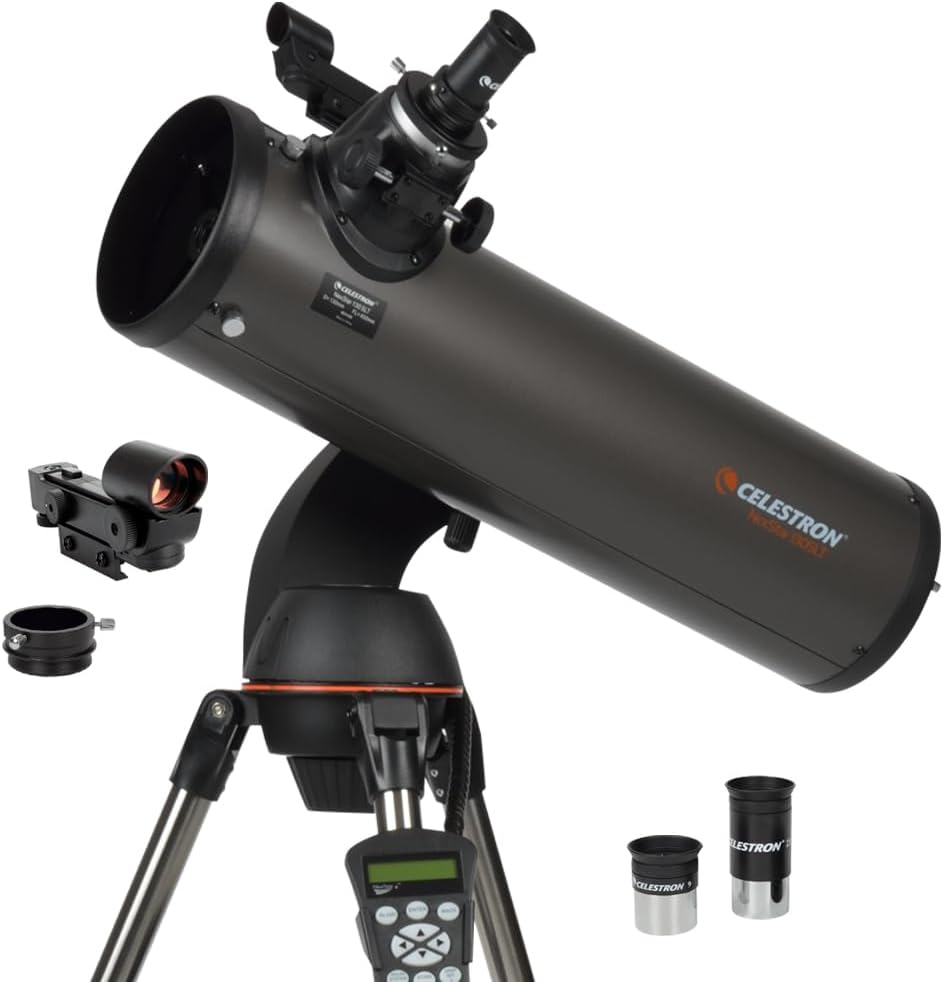
The NexStar 130SLT combines a substantial 130mm aperture with a compact form factor, making it an excellent choice for portable stargazing. With a 4.4 rating, it balances optical performance and ease of transport effectively.
We may earn a commission when you buy through this link, at no additional cost to you.
Its Newtonian reflector design gathers enough light to see planetary details and brighter deep-sky objects. The computerized mount locates targets accurately and tracks them, ensuring a smooth viewing experience.
Regular collimation is a minor trade-off for reflector optics, but the process is manageable with practice. The included tripod is sturdy, though users might prefer upgrading it for more stability.
Ideal for travelers or those with limited storage, this model offers powerful views without the bulk of larger telescopes. It is a strong contender for adults who prioritize portability alongside optical capability.
The 130mm mirror collects significant light, allowing users to see fainter objects than smaller refractors or smaller reflectors can typically handle.
The compact design makes it easy to pack into a car trunk for trips to dark sky sites, ensuring you can observe anywhere.
We may earn a commission when you buy through this link, at no additional cost to you.
The NexStar 127SLT uses a Maksutov-Cassegrain design to provide high-contrast views ideal for planetary and lunar observing. With a 4.2 rating, it is well-regarded for its versatility and ease of use.
We may earn a commission when you buy through this link, at no additional cost to you.
Its optical tube is closed, protecting the lenses from dust and reducing tube currents. This design delivers sharp images of the moon and planets, though cooling down may take longer than open reflectors.
The SkyAlign setup ensures you are ready to observe in minutes, minimizing downtime. While the aperture is slightly smaller than some competitors, the optical quality compensates for many users.
This model suits adults who want a single scope capable of handling both planetary and deep-sky views. It is robust enough for regular backyard use and portable enough for occasional trips.
The Maksutov-Cassegrain design corrects optical aberrations effectively, providing crisp views that are particularly appealing for high-magnification work.
Celestron’s proprietary SkyAlign procedure simplifies alignment, allowing users to start observing almost immediately after power-on.
We may earn a commission when you buy through this link, at no additional cost to you.
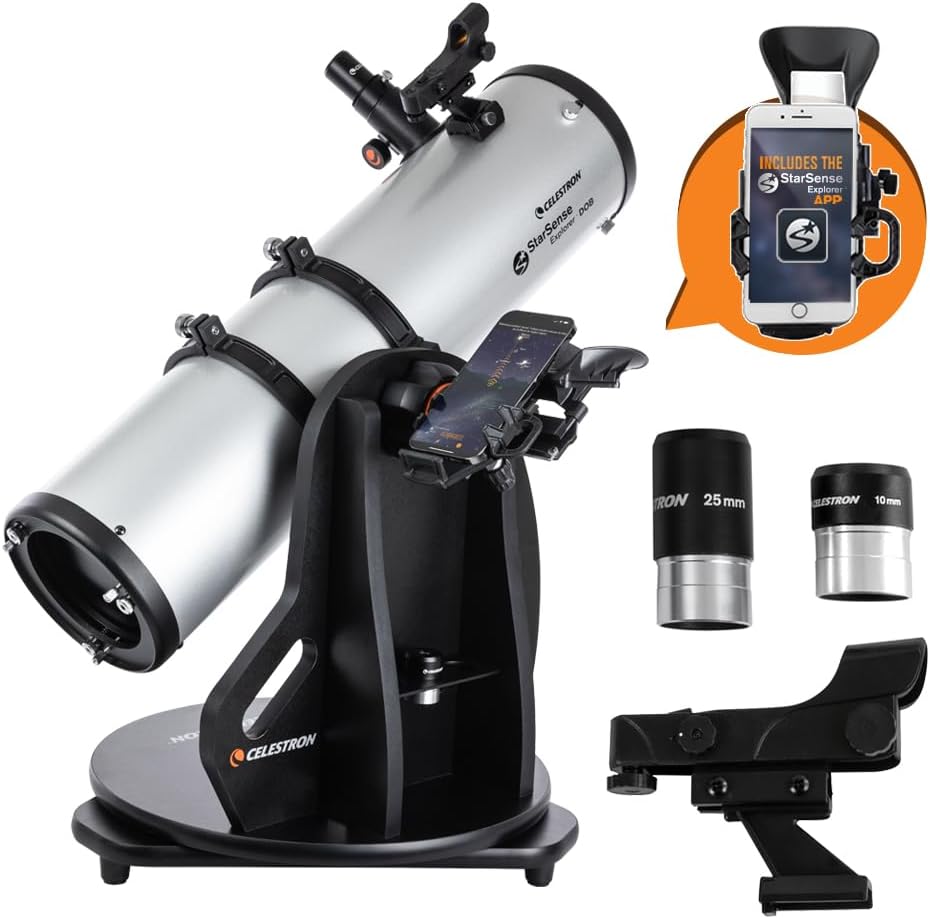
The StarSense Explorer 150mm introduces an innovative approach to amateur astronomy using smartphone technology. With a 4.3 rating, it simplifies star-hopping through an app that recognizes the sky to guide users.
We may earn a commission when you buy through this link, at no additional cost to you.
The 150mm Newtonian reflector provides impressive views of deep-sky objects and planets. The app displays on-screen arrows to point the telescope correctly, making it accessible for those unfamiliar with the night sky.
While it requires a smartphone and stable surface, the experience is remarkably seamless. The tabletop design limits height options but remains stable on flat surfaces like tables or tripods.
This is perfect for adults who want to avoid manual alignment steps entirely. It transforms the telescope into a smart device, bridging the gap between digital apps and traditional optics.
The StarSense technology analyzes star patterns to pinpoint the telescope's location, removing the need for manual coordinate entry or alignment.
Despite the digital guidance, the views through the eyepiece remain entirely optical, preserving the authentic feeling of stargazing.
We may earn a commission when you buy through this link, at no additional cost to you.
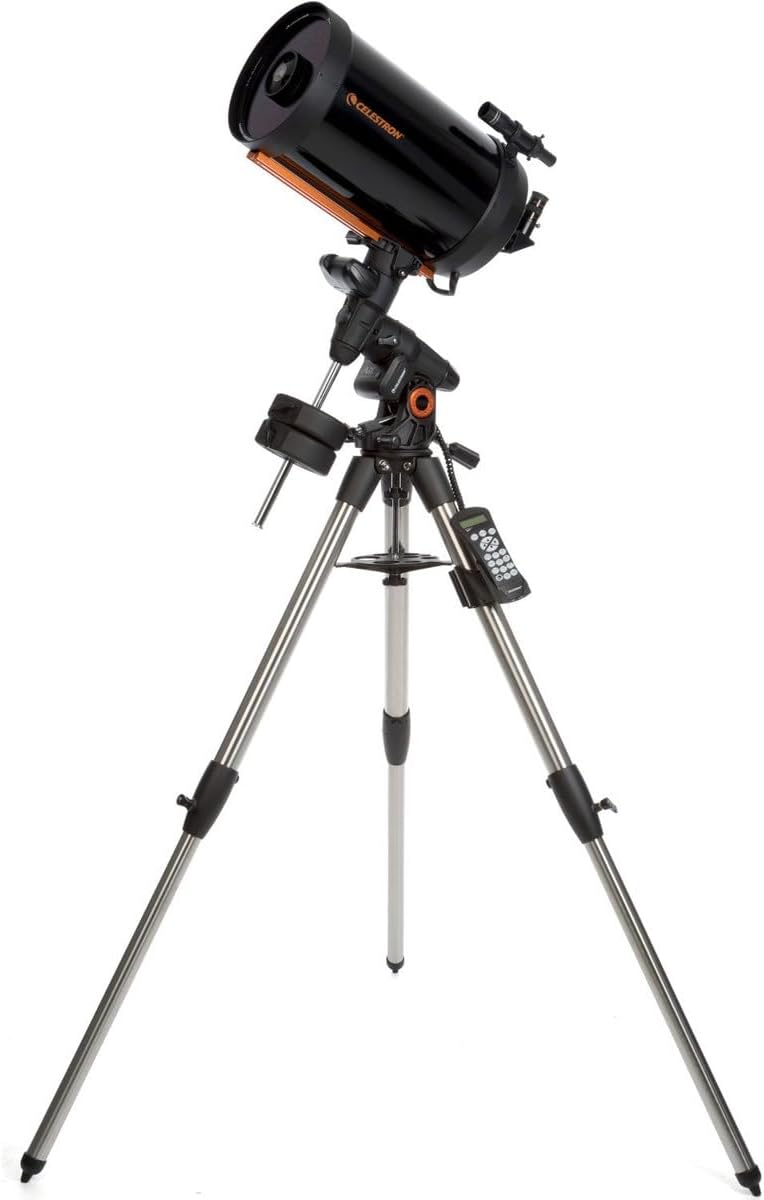
The Advanced VX 8" offers advanced tracking capabilities through its German Equatorial mount, appealing to serious amateurs. With a 4.2 rating, it delivers high optical quality and stability for detailed viewing.
We may earn a commission when you buy through this link, at no additional cost to you.
The mount ensures accurate tracking as the Earth rotates, essential for astrophotography or long observation sessions. The stainless steel tripod provides a solid foundation, minimizing vibrations during high-power viewing.
Setup is more involved than alt-az models due to polar alignment requirements. However, the tracking benefits make this a worthy investment for those focused on planetary detail or imaging.
This model suits adults looking to transition into advanced stargazing. The superior optics and mount stability support high-quality imaging and consistent viewing over extended periods.
The EQ mount tracks celestial objects along the celestial pole, keeping targets centered in the eyepiece for longer durations.
StarBright XLT coatings enhance light transmission, ensuring bright and sharp views across the entire aperture.
We may earn a commission when you buy through this link, at no additional cost to you.
The 9.25-inch aperture on the Advanced VX delivers exceptional light gathering and high magnification potential. With a 4.4 rating, it is designed for users seeking maximum detail in planetary and deep-sky observations.
We may earn a commission when you buy through this link, at no additional cost to you.
The mount ensures smooth tracking, essential for utilizing the telescope's full optical power. It allows users to explore the night sky with clarity, revealing features often missed by smaller scopes.
Due to its weight and size, this model is best suited for observatories or dedicated home sites. Portable transport is challenging, limiting its use for frequent travel.
Ideal for dedicated observers who prioritize image quality over portability, this is a powerful tool for adult enthusiasts. It delivers professional-level views for those willing to set up a permanent station.
The large aperture allows for brighter and clearer views of faint objects, making deep-sky observing significantly more rewarding.
The mount stability supports high magnification levels, ensuring that even at 500x, images remain steady and detailed.
We may earn a commission when you buy through this link, at no additional cost to you.
The 6-inch Advanced VX provides a balanced option for those wanting equatorial tracking without the bulk of larger models. With a 4.4 rating, it offers high resolution and stability for serious stargazing.
We may earn a commission when you buy through this link, at no additional cost to you.
Its StarBright XLT coatings ensure bright images, while the focal length allows for versatile observing across different targets. The EQ mount supports precise tracking, useful for detailed planetary views.
Setup involves aligning the mount to the pole, which takes time but pays off in tracking performance. It is lighter than the 8 and 9-inch models, offering better portability.
This model suits adults who need a reliable mid-size instrument for varied observing sessions. It balances optical quality with manageable size, making it a versatile choice for many setups.
StarBright XLT coatings increase light transmission, improving contrast and brightness for clearer views of faint objects.
The 1500mm focal length offers a range of magnification options, allowing you to switch between wide-field and high-power observations easily.
We may earn a commission when you buy through this link, at no additional cost to you.
The NexStar 5SE offers portability with an 5-inch Schmidt-Cassegrain design, ideal for travel. With a 4.4 rating, it provides solid performance for adults who prioritize convenience and quality.
We may earn a commission when you buy through this link, at no additional cost to you.
Its built-in wedge allows for astrophotography, adding versatility to visual observing. The SkyAlign technology ensures quick setup, getting you observing with minimal hassle.
While it collects less light than larger models, it is sufficient for planets and bright deep-sky objects. The compact design makes it easy to store and transport compared to bulkier options.
This is perfect for adults who want a portable but powerful scope. It offers a good balance of features and size for casual observers or those with limited storage space.
The integrated wedge enables polar alignment for long-exposure photos, making it suitable for entry-level astrophotography without extra equipment.
SkyAlign technology allows users to align the scope in minutes using any three bright objects, streamlining the process significantly.
We may earn a commission when you buy through this link, at no additional cost to you.
Selecting the right computerized telescope involves understanding key factors like aperture, mount type, and software features that impact your observing experience.
Aperture refers to the diameter of the main lens or mirror and determines how much light the telescope can gather. Larger apertures provide brighter and more detailed views of planets and deep-sky objects, but they also increase weight and cost.
For beginners, an aperture between 114mm and 130mm is a solid starting point, while experienced users often prefer 8 inches or more for maximum detail.
The mount holds the telescope and handles movement; automated computerized mounts simplify tracking significantly. Alt-azimuth mounts move up-down and side-to-side, while equatorial mounts align with Earth's axis for easier astrophotography.
Consider your intended use: alt-azimuths are simpler for visual observation, while equatorial mounts offer better tracking for long sessions and photography.
A GoTo system uses a database to locate and track celestial objects automatically based on your location. The size of this database can range from thousands to tens of thousands of objects, influencing how much you can explore.
Look for mounts with databases over 40,000 objects to ensure you have access to a wide variety of targets across different sky regions.
If you plan to travel to dark sky sites, the weight and setup time of the telescope are critical. Some models come as tabletop units, while others require heavy tripods and disassembly for transport.
Evaluate the total system weight and your ability to transport it comfortably before committing to a larger model.
Modern telescopes often come with companion apps or software that help simulate the sky or guide you to targets. Some models, like the StarSense Explorer, use smartphone integration to automate navigation.
Check if the software is intuitive and compatible with your devices to enhance your learning and observing experience.
Prices vary widely based on optics, mount quality, and automation features. While expensive models offer better stability and imaging capabilities, budget-friendly options provide reliable entry into automated astronomy.
Set a clear spending limit and prioritize features that match your immediate needs to avoid overspending on unnecessary extras.
Some packages include eyepieces, finderscopes, or software, which can save money initially. Others require purchasing these items separately to get started effectively.
Review the box contents carefully to ensure you have everything needed for your first session without extra trips to the store.
A solid warranty and accessible customer support are vital for electronic equipment that may require troubleshooting. Many major brands offer multi-year warranties and US-based technical support.
Choose reputable brands with strong support networks to protect your investment and resolve issues quickly.
Begin by ensuring the telescope is powered correctly using batteries or AC adapters as specified. Allow the optics to acclimate to outdoor temperatures before use to prevent image distortion from tube currents.
Use the alignment tools to point the scope to known stars or follow the app's guidance. Once aligned, select targets from the database to let the mount automate the movement and tracking process.
After use, cover the optics to prevent dust accumulation and store the unit in a dry place. Regularly check alignment screws and battery contacts to maintain performance over time.
Most models use SkyAlign or GPS technology to simplify alignment to a few minutes. You typically select three bright stars on the screen or use the app to guide you automatically.
Yes, but light pollution affects visibility. While computerized scopes find objects accurately, you may see fewer deep-sky targets in urban areas compared to dark sites.
Many models offer entry-level imaging options. For advanced photography, look for equatorial mounts and features like wedges that support tracking and camera attachments.
Most use AA batteries or rechargeable packs, with some accepting AC adapters for home use. Always check the requirements before purchasing to ensure you have the right accessories.
Yes, especially models designed for families with simple interfaces. Adult supervision is recommended for setup and operation due to electronics and moving parts.
Battery life varies, but many models last several hours per set. Using rechargeable batteries or an external power source extends usage for longer sessions.
The Celestron NexStar 8SE remains our top pick for its balance of power and automation. It delivers exceptional views and ease of use for most adult observers.
For those on a budget, the 114LCM provides excellent value and essential features without breaking the bank. It serves as a great gateway to automated stargazing.
Check current pricing and availability before purchasing to ensure you get the best deal available. Specifications and features may vary by region and retailer.