
ST to LCU Fiber Optic Adapter
5.0Editor score
Compact design for high density panels
Robust metal housing
Precision ceramic sleeves
This guide compares the top Lc to St Fiber Optic Adapter models for performance and value across single and multimode fiber networks in October 2026.
Finding the right adapter ensures seamless connectivity between legacy ST ports and modern LC interfaces in any fiber optic network setup or maintenance project today.
We evaluated ten highly rated products based on insertion loss, durability, connector polish type, and compatibility with single mode or multimode fiber standards worldwide.
Each pick highlights key specs and real world applications so you can choose the best solution for your specific optical power meter or patch panel needs confidently.
5.0Editor score

4.8Editor score

5.0Editor score
The table below provides a side by side overview of all ten products including connector types, fiber mode, wavelength support, and key physical specifications.
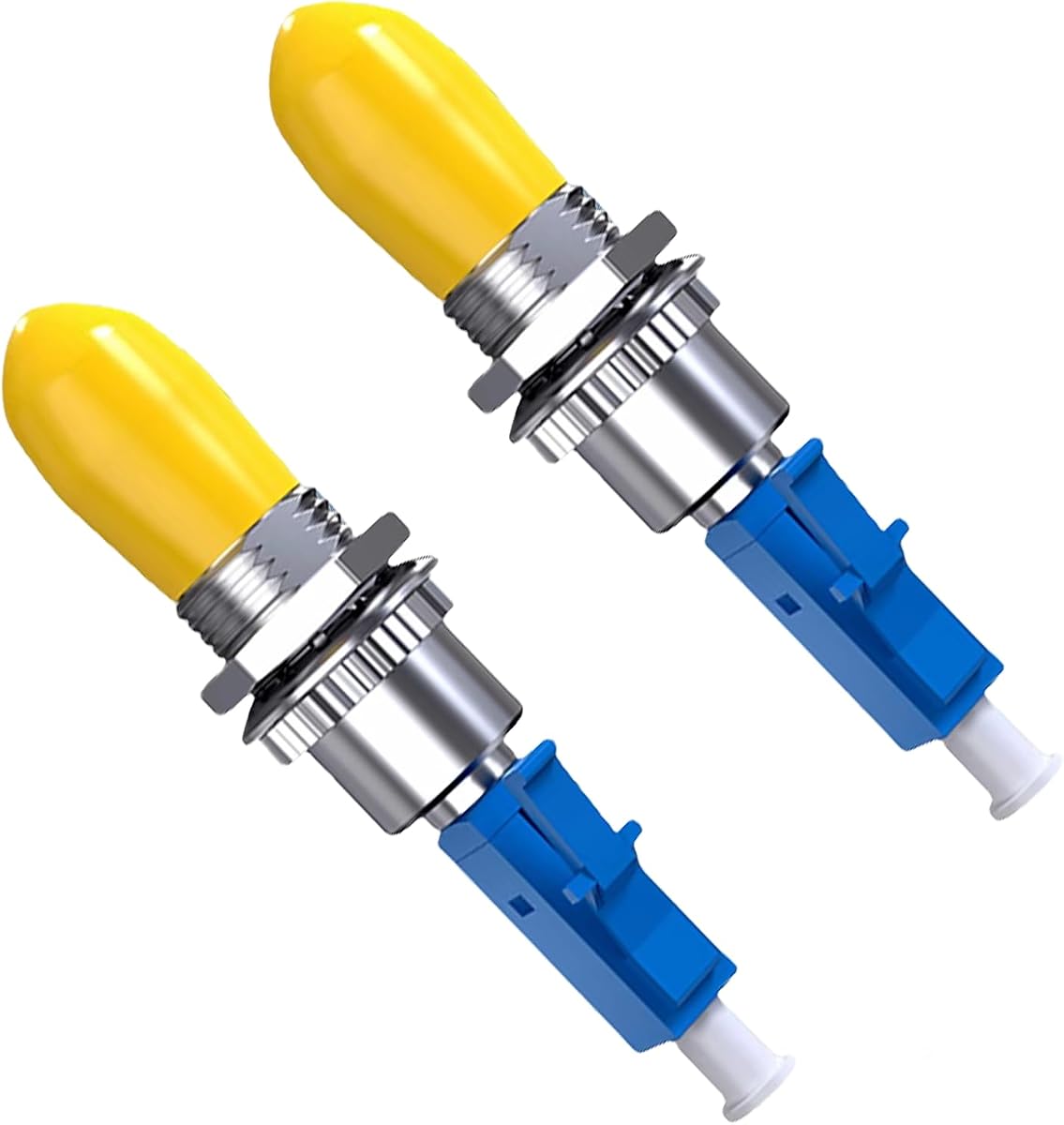


This three pack adapter set delivers exceptional performance for single mode networks by converting classic ST ports to modern LC interfaces efficiently.
We may earn a commission when you buy through this link, at no additional cost to you.
Users report minimal insertion loss around 0.2dB across standard wavelengths which ensures stable signal transmission during optical power meter checks or continuity tests.
While it supports over 1000 plug cycles the ceramic and metal sleeve construction provides high impact resistance and thermal stability for demanding field environments.
Technicians upgrading legacy telecom infrastructure will appreciate the reliable hybrid design that bridges old and new fiber systems without compromising optical integrity.
The precision polished UPC contacts maintain high return loss above 50dB which reduces back reflection and preserves signal strength over long distance links.
Beyond patching this adapter works seamlessly with visual fault locators and optical power meters making it a essential tool for maintenance and engineering tasks.
We may earn a commission when you buy through this link, at no additional cost to you.
This reverse adapter allows technicians to connect LC patch cables to legacy ST equipment easily which is crucial during network upgrades or equipment swaps.
We may earn a commission when you buy through this link, at no additional cost to you.
With a perfect five star rating users confirm it maintains signal integrity across 1310nm and 1550nm wavelengths with negligible insertion loss in real world conditions.
The robust sleeve material and temperature range make it suitable for both indoor telecom rooms and outdoor maintenance scenarios requiring reliable connectivity.
If your project requires bridging LC transceivers to ST ports this model offers a straightforward solution with excellent build quality and testing compatibility.
Its compatibility with optical power meters and visual fault locators ensures accurate readings during fiber link testing and troubleshooting procedures.
From local area networks to optic network maintenance this adapter supports various engineering tasks where standardization and reliability are critical requirements.
We may earn a commission when you buy through this link, at no additional cost to you.
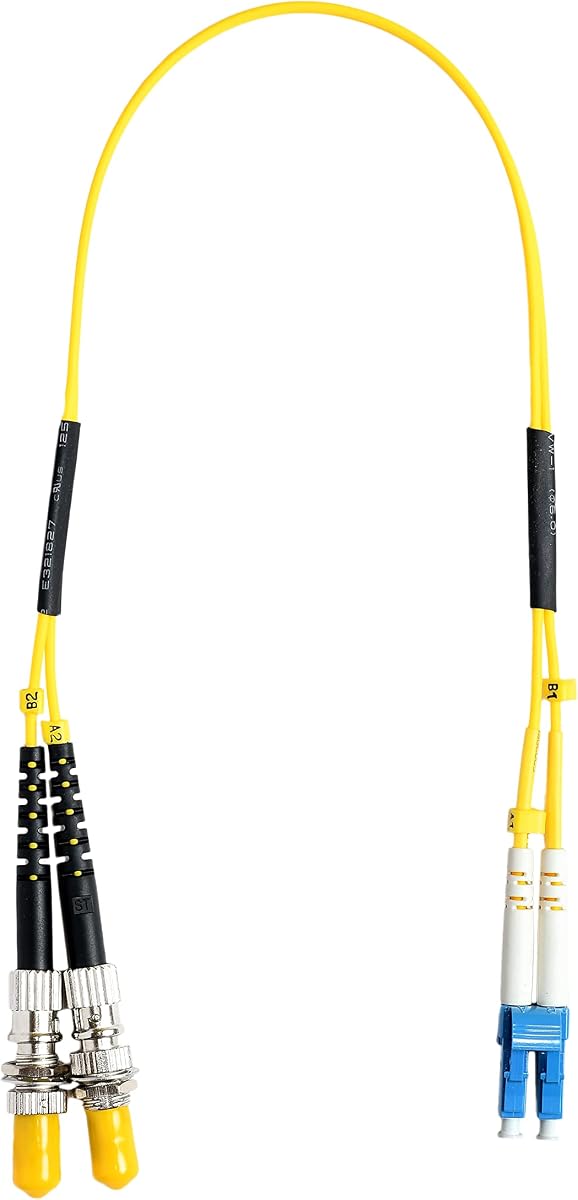
Unlike standalone adapters this cable combines the converter and patch cord into one unit simplifying connections for tight spaces or fixed installations.
We may earn a commission when you buy through this link, at no additional cost to you.
The high quality tight buffered duplex zip cord ensures durability while the LSZH jacket provides safety in enclosed cable trays or indoor environments.
Factory termination guarantees link loss performance which reduces the risk of user error during installation and ensures immediate plug and play functionality.
Engineers working in dense patch panels will value the slim profile and pre tested reliability that minimizes clutter and maximizes organizational efficiency.
The LSZH jacket prevents harmful halogen emissions during fire events which is a critical safety feature for data centers and commercial buildings.
At just one foot this cable is ideal for connecting patch panels to nearby equipment without excess slack that could interfere with airflow or organization.
We may earn a commission when you buy through this link, at no additional cost to you.
This adapter cable is specifically built for multimode systems supporting the 62.5/125 core cladding diameter which is common in older LAN environments.
We may earn a commission when you buy through this link, at no additional cost to you.
Its 850nm wavelength rating aligns with standard datacom transceivers ensuring reliable short distance connectivity between switches and legacy ST ports.
The standard zip cord duplex design provides flexibility and easy handling while maintaining signal integrity for typical office or server room applications.
Network administrators upgrading legacy multimode systems will find this cable an affordable and practical bridge between modern LC gear and existing ST infrastructure.
The 62.5/125 specification ensures backward compatibility with older multimode equipment that is still in active use in many enterprise networks.
Optimized for 850nm it delivers strong performance for local area network links where distances remain under typical multimode limits.
We may earn a commission when you buy through this link, at no additional cost to you.
This comprehensive kit offers a one stop solution for various fiber optic connector types making it ideal for professionals who handle diverse network standards.
We may earn a commission when you buy through this link, at no additional cost to you.
With insertion loss under 0.2DB and return loss over 45DB it delivers consistent high quality signal performance across single and multimode applications.
The durable metal housings resist corrosion and physical damage ensuring long term reliability even in demanding industrial or outdoor testing environments.
For field technicians or maintenance teams this versatile kit eliminates the need for multiple adapter purchases by covering LC SC ST and FC transitions efficiently.
Precision manufactured housings provide structural stability and excellent corrosion resistance which extends the lifespan of tools used in harsh conditions.
From OTDR testing to FTTX deployment and fiber optic network construction this kit supports a broad spectrum of modern fiber infrastructure projects.
We may earn a commission when you buy through this link, at no additional cost to you.
Delivering excellent value this two pack enables reliable conversion between classic ST and modern LC connectors specifically for single mode fiber networks.
We may earn a commission when you buy through this link, at no additional cost to you.
The precision ceramic sleeves ensure low insertion loss and stable signal transmission while the metal housing provides robust protection against physical stress.
Threaded ST coupling creates secure vibration resistant connections which are vital for environments with mechanical movement or frequent maintenance access.
Budget conscious network engineers will appreciate the compliance with telecommunications standards that ensures seamless interoperability with existing ST and LC equipment.
The bayonet style ST connections combined with threaded coupling ensure connectors stay firmly in place during transport or routine maintenance checks.
A compact design allows these adapters to fit standard adapter panels optimizing valuable space in high density patch panels and wall outlets.
We may earn a commission when you buy through this link, at no additional cost to you.
This specialized cable provides a female LC to male ST transition which is essential for connecting certain patch panels to specific legacy equipment interfaces.
We may earn a commission when you buy through this link, at no additional cost to you.
Designed for multimode 62.5/125 fibers it supports 850nm wavelength transmission ensuring reliable short distance links in data centers or office networks.
The standard zip cord duplex jacket offers flexibility and durability making it easy to manage cables in cluttered or tight rack environments.
Network specialists needing a reverse polarity solution will find this cable a reliable and straightforward way to adapt connections without custom wiring.
The specific LC female to ST male orientation addresses unique cabling configurations that standard male to female adapters cannot support effectively.
Supporting the 62.5/125 core specification ensures seamless integration with a wide range of existing multimode infrastructure components.
We may earn a commission when you buy through this link, at no additional cost to you.
This duplex cable supports full duplex communication by providing two strands in one compact unit ideal for single mode fiber systems in networks.
We may earn a commission when you buy through this link, at no additional cost to you.
Operating at 1310nm it ensures compatibility with standard single mode transceivers while maintaining low signal loss for high performance data transmission.
The standard zip cord duplex construction allows easy handling and management in tight spaces such as server racks or wall mounted termination points.
Engineers looking for a pre assembled duplex solution will appreciate the convenience of having both receive and transmit paths integrated into one short cable.
Carrying two strands in a single cable streamlines cabling in high density areas where separate simplex cables would create excess clutter and complexity.
The 9/125 core specification matches standard single mode fiber ensuring it works reliably with most long distance and telecom network standards.
We may earn a commission when you buy through this link, at no additional cost to you.
This high precision adapter offers exceptionally low insertion loss making it suitable for critical measurement tasks where signal quality is paramount.
We may earn a commission when you buy through this link, at no additional cost to you.
With specific support for red light pens and optical power meters it serves as an essential tool for field technicians verifying fiber continuity and health.
The UPC contacts ensure a reliable interface that minimizes reflection and maintains signal integrity across both 1310nm and 1550nm bands.
Network maintenance teams working on FTTH or CATV projects will benefit from its ability to bridge patch cords and instrument ports without introducing noise.
Insertion loss as low as 0.12dB ensures that minimal signal attenuation occurs during testing or temporary patching scenarios.
From fiber optic LAN to patch cord pigtail connections it supports a wide range of broadband and enterprise applications reliably.
We may earn a commission when you buy through this link, at no additional cost to you.
This unique cable offers a female LC to male ST transition for single mode duplex connections solving specific cabling needs in structured environments.
We may earn a commission when you buy through this link, at no additional cost to you.
It supports 1310nm wavelength transmission ensuring it works with standard single mode equipment while maintaining a compact footprint for tight spaces.
The standard zip cord duplex jacket provides the necessary flexibility and durability for safe handling during routine maintenance or installation tasks.
Network engineers dealing with legacy single mode systems requiring reverse polarity will find this cable a reliable pre assembled solution for connectivity.
The specific gender configuration allows connecting equipment with LC female ports to ST male legacy interfaces which standard adapters cannot achieve.
With just one foot of length it reduces excess cable slack that could otherwise interfere with airflow or organized cable management strategies.
We may earn a commission when you buy through this link, at no additional cost to you.
Selecting the right adapter depends on several technical factors including fiber mode, polish type, and intended application to ensure optimal network performance.
Always verify whether your network uses single mode or multimode fiber because adapters are often specific to one core diameter and light transmission type.
Mismatching modes will cause high signal loss so check product specs for 9/125um for single mode or 62.5/125 for multimode compatibility before purchasing.
Polish types such as UPC or APC determine the return loss performance and physical connector shape so match the polish of your existing cables exactly.
UPC connectors usually have blue bodies while APC are green and mixing them can damage connectors and degrade signal quality significantly in fiber links.
Low insertion loss below 0.2dB ensures minimal signal weakening while high return loss above 50dB prevents back reflections that can disrupt data transmission.
High quality adapters with precision ceramic sleeves typically offer better loss performance which is critical for professional testing and long distance links.
Look for adapters with metal housings and ceramic sleeves as they provide better structural stability and resistance to corrosion or physical impact.
Durable construction ensures the adapter withstands repeated plugging cycles and harsh environmental conditions without failing during critical network operations.
Adapters often come in packs so consider how many connections you need to avoid buying single units repeatedly which may be less cost effective.
A multi pack can save money and simplify inventory if you are deploying multiple connections across different panels or test stations simultaneously.
Decide between a standalone adapter or an integrated adapter cable as the latter offers convenience but limits flexibility in future network changes.
Standalone adapters allow you to reuse existing patch cords while integrated cables are easier to install and reduce clutter in tight patch panels.
Check operating temperature ranges if the adapter will be used outdoors or in unconditioned spaces where heat or cold could affect performance.
Products rated from -40°C to 95°C ensure reliability across extreme climates and protect your optical signals from environmental stress factors.
Always clean the fiber end faces before connecting to prevent dust or debris from causing signal loss or damaging the connector surfaces inside the adapter.
Insert the connector fully until it clicks or locks into place to ensure a secure physical connection that maintains optimal optical alignment and performance.
Avoid bending the fiber cables excessively near the adapter to prevent micro cracks in the glass core which can degrade signal quality over time.
A standalone adapter connects two existing patch cables together while an adapter cable has the connector integrated directly onto the fiber strand eliminating one connection point and saving space in tight panels.
Only if the adapter is specifically rated for multimode fiber such as 62.5/125um core diameter. Using a single mode adapter with multimode fiber will result in high insertion loss and connection failure.
Yes matching the polish type such as UPC or APC is critical because mismatched polishes can scratch the connector faces and increase signal loss leading to unreliable network performance.
Most quality adapters support over 1000 insertion cycles due to durable ceramic sleeves but frequent plugging over time can still degrade alignment and signal integrity if not handled carefully.
Insertion loss measures how much signal power is lost passing through the adapter and keeping it low ensures that your network maintains high speed data transmission without degradation over distance.
No they are not interchangeable because the core diameters differ significantly which causes light to scatter incorrectly and leads to signal loss or complete connectivity failure.
Some adapters have temperature ranges suitable for outdoor use but ensure the housing material is weather resistant and the cables are rated for outdoor installation to avoid damage from moisture or UV exposure.
Use a fiber cleaning pen or lint free swab with isopropyl alcohol to gently wipe the connector ends and avoid touching the ceramic sleeve with bare fingers to prevent oil contamination.
Our top picks cover a range of needs from budget friendly two packs to professional kits offering versatile connector options for complex network infrastructures.
Prioritize fiber mode compatibility and loss performance to ensure your chosen adapter maintains signal integrity across single or multimode systems reliably.
Always check current prices and availability since product listings can change quickly especially for specialized fiber optic components and accessories.